This is Part 20 of Beauty Secrets of India, our 20-part series on traditional beauty rituals from across the country. New here? Start with Part 1: Kerala Coconut Oil Hair Ritual, or read the previous instalment, Part 19: Kumkumadi Tailam.
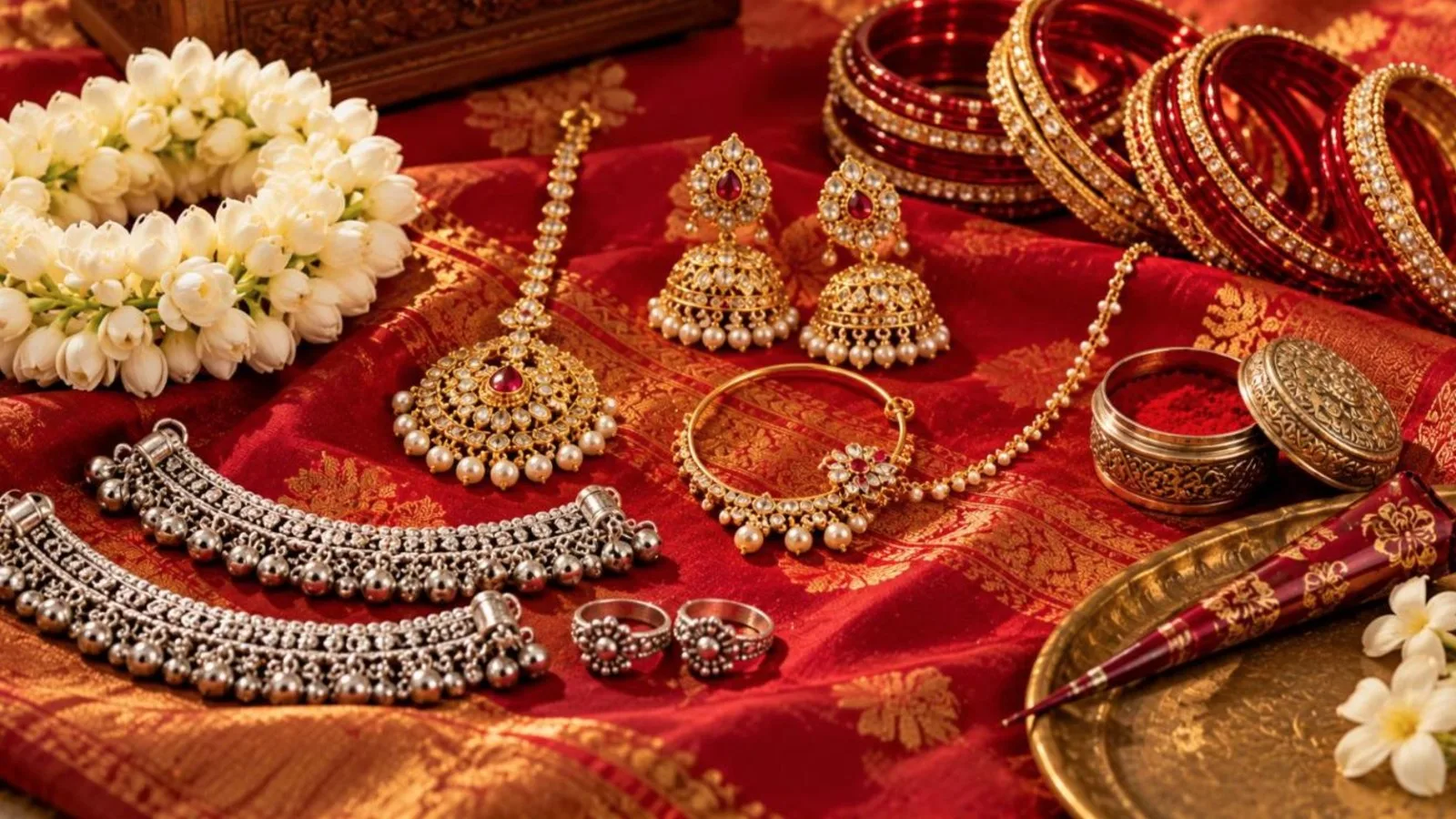
We end our series with the tradition that ties many of its rituals together. Solah shringar, "the sixteen adornments", is the traditional head-to-toe adornment of a bride in north and central India. It is described in Sanskrit literature and is still recreated at weddings and on festivals such as Karva Chauth and Teej. Lists vary by region and family, but a commonly cited set looks like this:
The sixteen adornments
- Bindi: The dot between the brows, red for a bride.
- Sindoor: Vermilion in the hair parting, applied by the groom during the wedding.
- Maang tikka: A jewel that hangs along the hair parting onto the forehead.
- Kajal: Kohl to outline the eyes. Read Part 3: Kajal.
- Nath: The nose ring, often large and linked by a chain to the ear.
- Karn phool: Earrings, literally "ear flowers".
- Haar or mangalsutra: Necklaces, including the sacred thread of marriage.
- Mehndi: Henna designs on the hands and feet. Read Part 8: Mehndi.
- Choodiyan: Bangles of glass, lac, gold, or the red-and-white chooda worn by Punjabi brides.
- Baajuband: An armlet worn on the upper arm.
- Aarsi: A thumb ring with a small mirror, once used to glimpse one's reflection or the groom.
- Kamarbandh: A jewelled waistband that holds the saree or lehenga in place.
- Payal: Silver anklets that chime with each step.
- Bichhiya: Silver toe rings, a sign of marriage in many communities.
- Gajra: Fresh flowers in the hair. Read Part 15: Jasmine and Gajra.
- Ittar and bridal attire: Perfume such as rose attar and the red bridal outfit complete the list. Read Part 12: Kannauj Rose Water.
In Bengal and Odisha, alta takes a place in the bride's adornment, which we covered in Part 4: Alta. South Indian brides have their own traditions, from temple jewellery to the flower-covered braid.
The beauty rituals behind the look
Before the jewellery comes the preparation: Part 2: Haldi and Ubtan for the skin, Part 16: Abhyanga for the body, and Part 1: Kerala Coconut Oil Hair Ritual for the hair. Together, these rituals show how Indian beauty has always mixed care, celebration and meaning.
Thank you for reading
Thank you for following Beauty Secrets of India. Every ritual here grew from local plants, kitchens and festivals, and each region has its own version. Tell us in the comments which tradition your family follows.
The complete Beauty Secrets of India series
- Kerala Coconut Oil Hair Ritual
- Haldi and Ubtan
- Kajal
- Alta
- Manjal Bath
- Kashmiri Saffron
- Besan and Malai Packs
- Mehndi
- Multani Mitti
- Mysore Sandalwood
- Neem and Tulsi
- Kannauj Rose Water
- Amla
- Reetha and Shikakai
- Jasmine and Gajra
- Abhyanga
- Ghee for Lips and Skin
- Methi Hair Mask
- Kumkumadi Tailam
- Solah Shringar
Patch test first: dab a little of any DIY mix on your inner forearm and wait 24 hours before using it on your face or scalp. These rituals are shared as cultural and personal-care traditions, not medical treatment. For persistent skin or hair problems, see a dermatologist.