This is Part 14 of Beauty Secrets of India, our 20-part series on traditional beauty rituals from across the country. New here? Start with Part 1: Kerala Coconut Oil Hair Ritual, or read the previous instalment, Part 13: Amla.
The word "shampoo" itself comes from Hindi: champo, from chāmpnā, meaning to press or massage the head. Before bottled shampoo reached Indian homes, the hair wash was brewed in the kitchen from two humble ingredients: reetha and shikakai.
Meet the ingredients
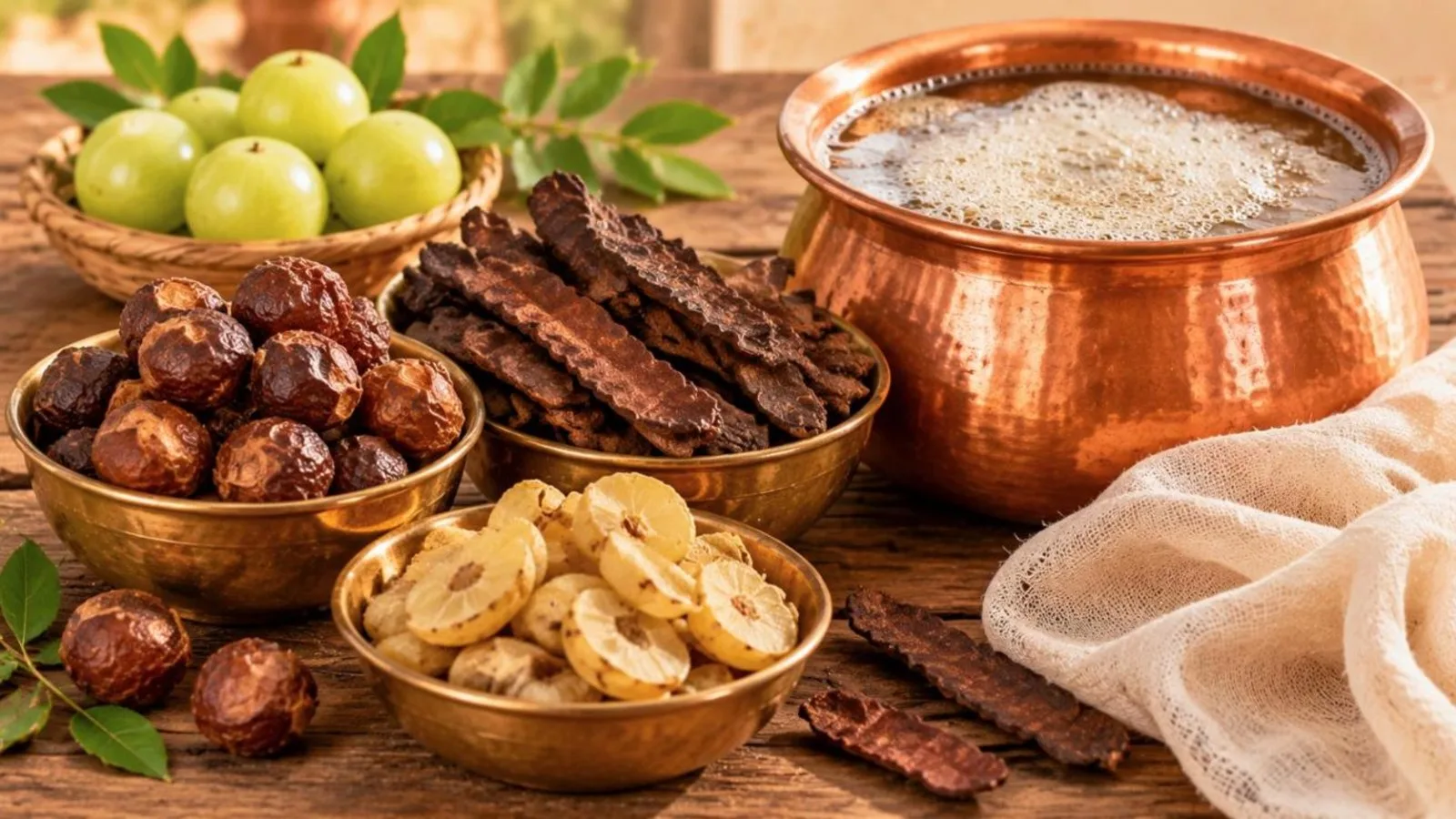
- Reetha (soapnut): The dried fruit of the Sapindus tree. Its shell contains saponins, natural compounds that foam in water and lift away oil and dirt. Reetha was also used to wash delicate silks and jewellery.
- Shikakai: Dried pods of Acacia concinna, a climbing shrub. Its name is often translated as "fruit for hair". It cleans mildly and is credited with leaving hair soft and less tangled.
- Amla: Often added for conditioning. Read more in Part 13: Amla.
Make the herbal hair wash
- Take about 8 to 10 reetha shells (seeds removed), 6 to 8 shikakai pods and a few dried amla pieces.
- Soak them overnight in two to three cups of water.
- In the morning, boil the mix for 15 to 20 minutes until soft, then cool.
- Mash with your hands, then strain through a muslin cloth.
- Wet your hair, pour the liquid on the scalp and massage gently. It will foam lightly.
- Rinse thoroughly with plain water.
Short on time? Mix one tablespoon each of reetha, shikakai and amla powders with warm water into a runny paste, and use it the same way.
Good to know
- It stings badly if it gets in your eyes. Tilt your head back and keep eyes closed while rinsing.
- Herbal washes clean more gently than shampoo. If you oiled your hair heavily, you may need two rounds.
- Hair can feel slightly rough at first. A rinse with diluted apple cider vinegar or hibiscus water helps.
- Store the liquid in the fridge and use within two to three days.
- Do not drink it or let children play with soapnuts, as saponins can upset the stomach.
Pair it with Part 1: Kerala Coconut Oil Hair Ritual for a full traditional hair day, and read our tips on taming monsoon frizz.
Patch test first: dab a little of any DIY mix on your inner forearm and wait 24 hours before using it on your face or scalp. These rituals are shared as cultural and personal-care traditions, not medical treatment. For persistent skin or hair problems, see a dermatologist.
Next in the series: Part 15: Jasmine and Gajra.