This is Part 10 of Beauty Secrets of India, our 20-part series on traditional beauty rituals from across the country. New here? Start with Part 1: Kerala Coconut Oil Hair Ritual, or read the previous instalment, Part 9: Multani Mitti.
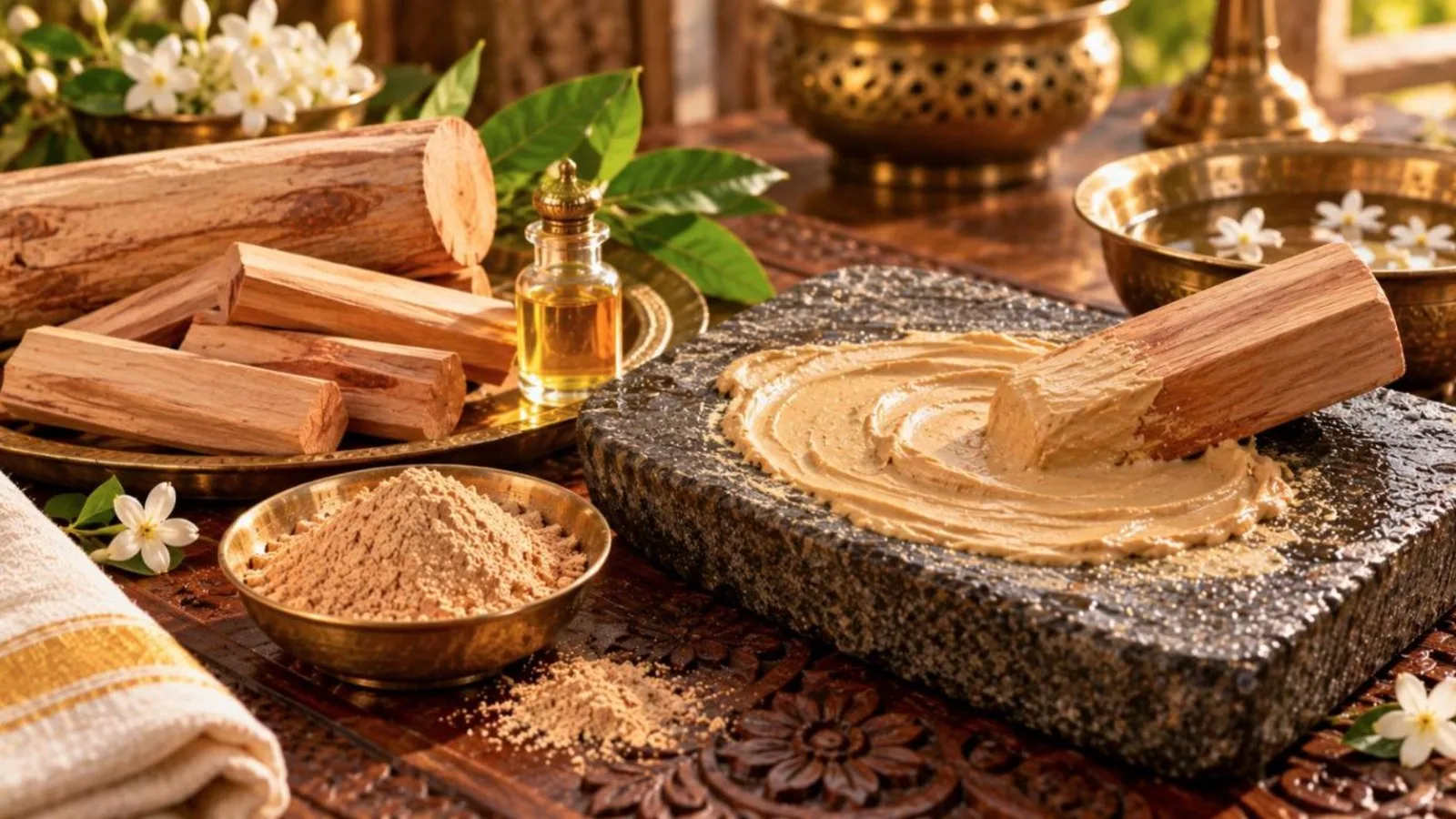
Rub a piece of sandalwood on a wet stone slab and the room fills with a warm, creamy fragrance. For centuries, chandan paste has been used in temples, rituals and beauty routines across India, and no sandalwood is as famous as the wood from Mysore in Karnataka.
The soap that started it
During the First World War, sandalwood exports from Mysore stalled. The Mysore government under Maharaja Krishnaraja Wadiyar IV set up a factory to distil sandalwood oil, and in 1916 launched Mysore Sandal Soap. Still made by the state-owned Karnataka Soaps and Detergents Limited, it remains one of India's most recognised beauty brands, and Mysore sandalwood oil and soap hold GI tags.
Why real sandalwood is precious
- Indian sandalwood (Santalum album) grows slowly and takes decades to build the fragrant heartwood.
- Overharvesting and smuggling made the wild trees scarce, so the trade is tightly regulated.
- Real sandalwood powder is expensive. Many cheap "chandan" products use synthetic fragrance or other woods.
Chandan in tradition
- Sandalwood paste is applied as a tilak on the forehead and offered to deities in temples.
- It is a classic ingredient in bridal ubtan, which we covered in Part 2: Haldi and Ubtan.
- In summer, a cooling layer of chandan paste was a household remedy for heat and prickly heat.
A cooling chandan face pack
- Mix one teaspoon of pure sandalwood powder with rose water into a smooth paste. If you have a sandalwood stick, rub it on a wet stone slab instead.
- For dry skin, add a few drops of milk or honey.
- Apply to clean skin for 10 to 15 minutes.
- Rinse with cool water and pat dry.
Good to know
- Buy powder from trusted sources such as government emporiums, and check the label for 100 percent sandalwood.
- Sandalwood oil is very concentrated. Never apply it undiluted to the skin.
- Fragrance can irritate sensitive skin, so patch test.
Visiting Mysuru? Read our Karnataka travel guide.
Patch test first: dab a little of any DIY mix on your inner forearm and wait 24 hours before using it on your face or scalp. These rituals are shared as cultural and personal-care traditions, not medical treatment. For persistent skin or hair problems, see a dermatologist.
Next in the series: Part 11: Neem and Tulsi.