This is Part 16 of Beauty Secrets of India, our 20-part series on traditional beauty rituals from across the country. New here? Start with Part 1: Kerala Coconut Oil Hair Ritual, or read the previous instalment, Part 15: Jasmine and Gajra.
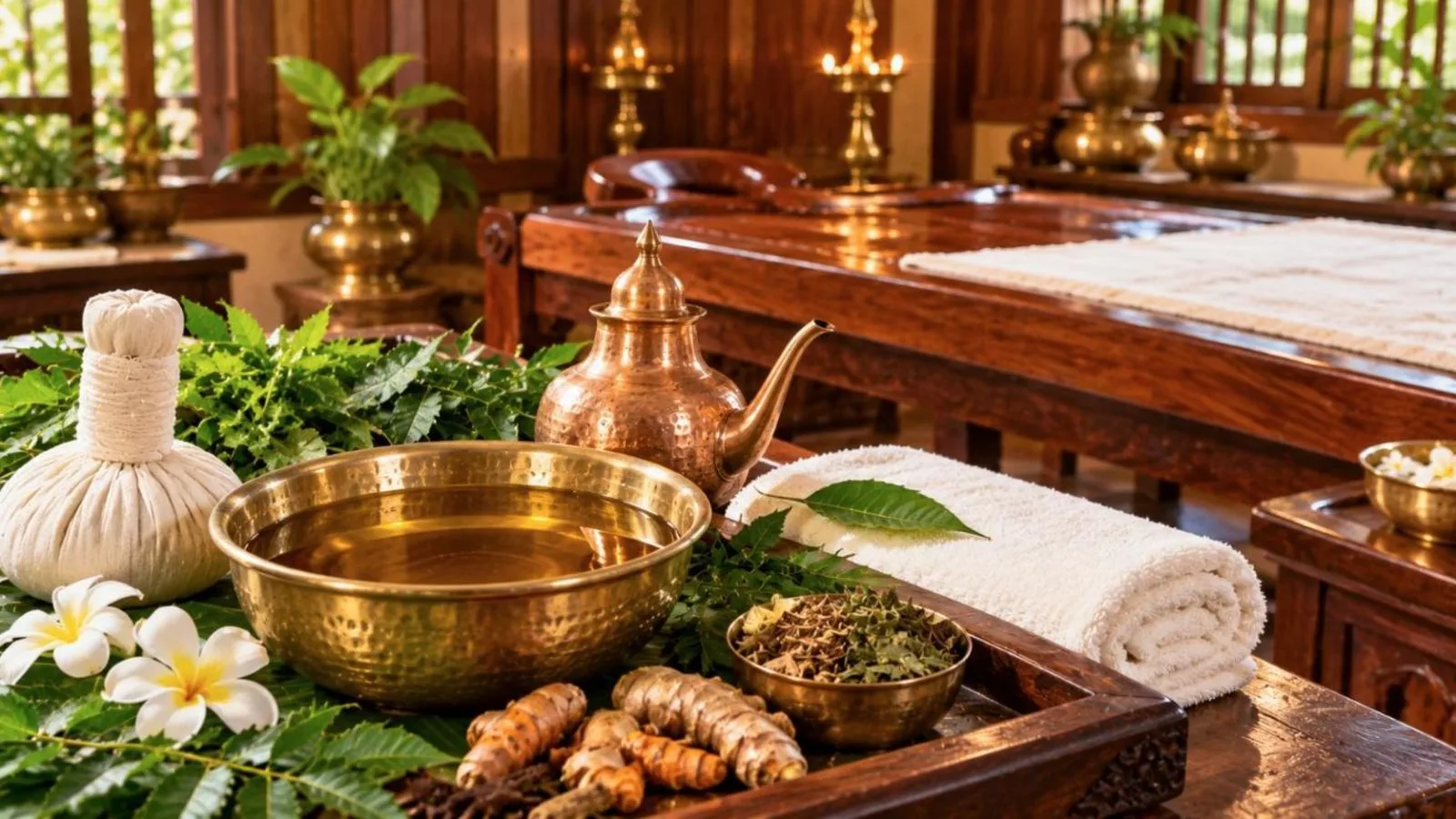
In Ayurveda, abhyanga is part of dinacharya, the ideal daily routine described in classical texts. It means anointing the whole body with warm oil and massaging it in before bathing. In Kerala it grew into a refined wellness tradition, and across South India it lives on as the weekly oil bath, a Saturday or Sunday ritual many people remember from childhood, and a must on Diwali morning.
Choosing an oil
- Sesame oil (til or nallennai): The traditional choice, warming and suited to dry skin and cooler weather. Use plain cold-pressed oil, not toasted cooking oil.
- Coconut oil: Lighter and cooling, popular in summer and in Kerala.
- Almond oil: Gentle and lightly scented, good for dry or sensitive skin.
- Herbal oils: Ayurvedic blends such as ksheerabala or dhanwantharam thailam are cooked with herbs. Buy from trusted Ayurvedic pharmacies.
A simple self-massage
- Warm about a quarter cup of oil by standing the bottle in hot water.
- Start with the scalp, massaging in small circles with your fingertips.
- Move to the face with gentle upward strokes, then the ears.
- Use long strokes on the arms and legs, and circular strokes on the joints.
- Massage the chest and belly in slow clockwise circles.
- Finish with the feet, which many people find the most relaxing part.
- Rest for 15 to 20 minutes to let the oil soak in.
- Bathe with warm water. Traditionally, besan or green gram flour is used to wash off the oil.
Why people keep doing it
Regular massage can ease muscle tension and help people relax, and oiling before bathing keeps skin soft, especially in dry weather. Many Ayurvedic claims, such as better sleep or slower ageing, are traditional beliefs with limited scientific study, so enjoy it mainly as a calming ritual.
Safety notes
- Oily floors are slippery. Use a mat and be careful in the bathroom.
- Skip it if you have a fever, cold, broken skin or a rash.
- If you are pregnant or have a medical condition, check with your doctor before starting.
- Wash oily towels separately, as oil can build up in fabric.
Pair abhyanga with Part 1: Kerala Coconut Oil Hair Ritual for your hair, and read our winter skin care guide for dry-season tips.
Patch test first: dab a little of any DIY mix on your inner forearm and wait 24 hours before using it on your face or scalp. These rituals are shared as cultural and personal-care traditions, not medical treatment. For persistent skin or hair problems, see a dermatologist.
Next in the series: Part 17: Ghee for Lips and Skin.