This is Part 9 of Beauty Secrets of India, our 20-part series on traditional beauty rituals from across the country. New here? Start with Part 1: Kerala Coconut Oil Hair Ritual, or read the previous instalment, Part 8: Mehndi.
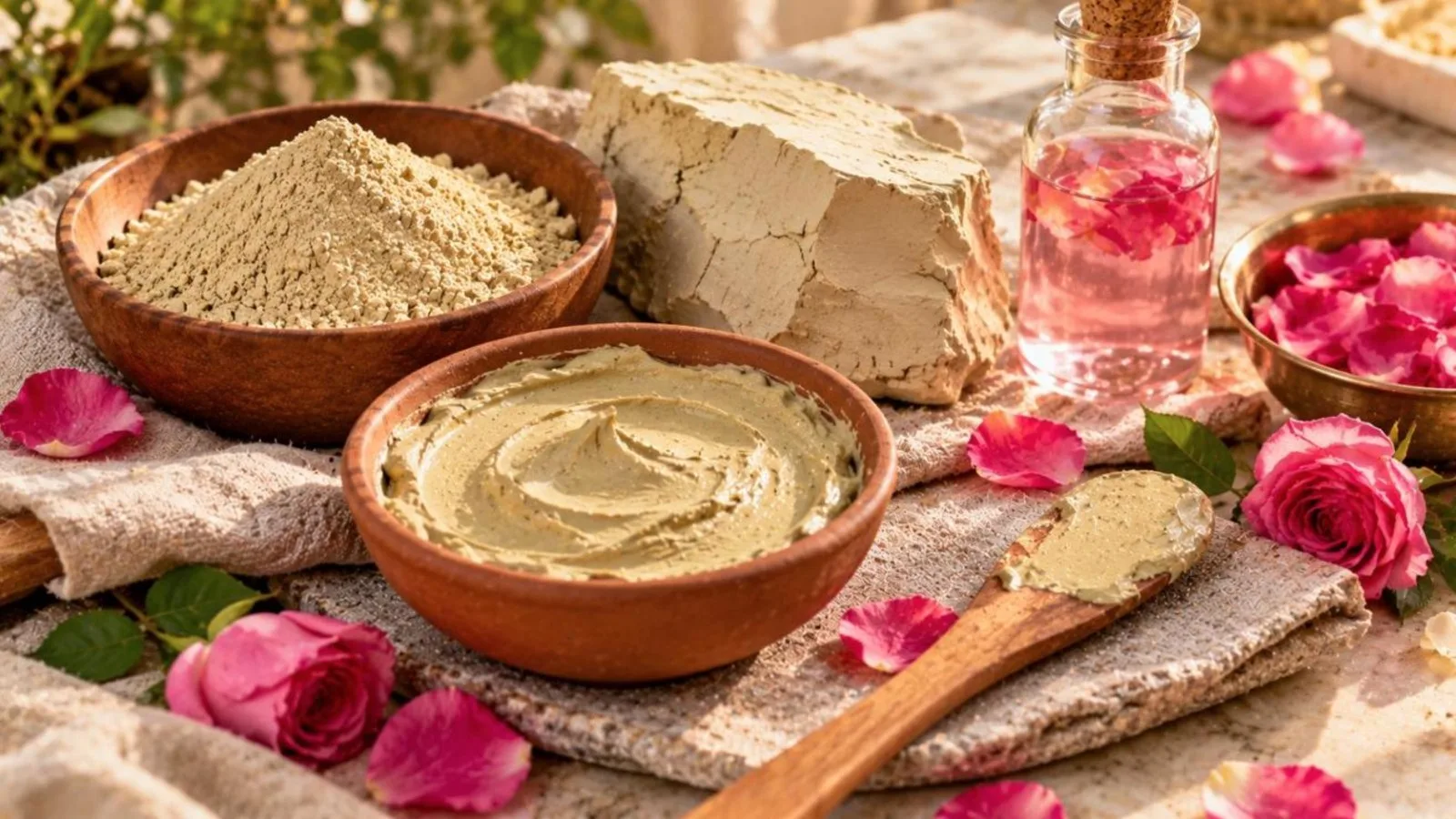
Multani mitti, or fuller's earth, is a soft, absorbent clay that has been used across India for washing hair, cleaning skin and even cleaning cloth. Its name comes from Multan, now in Pakistan, which was once a major source and trading hub for the clay. Today much of what reaches Indian markets is mined in Rajasthan.
Why people love it
- It is very good at absorbing excess oil, which makes skin feel fresh and matte.
- It has a cooling feel as it dries, which made it a favourite summer remedy for prickly heat.
- It is cheap, widely available and lasts for months.
Who it suits
Multani mitti suits oily and combination skin best. On dry or sensitive skin it can feel tight and leave skin flaky, so use a gentler mix and a shorter time, or skip it.
Simple multani mitti masks
- Oily skin: One tablespoon of multani mitti with rose water.
- Combination skin: Multani mitti with curd, applied to the T-zone only.
- Dull skin: Multani mitti with a little sandalwood powder and rose water. Read about chandan in Part 10: Mysore Sandalwood.
- Oily scalp: A thin paste with water, applied to the scalp for 15 minutes before washing.
How to use it
- Mix the clay with liquid into a smooth, yoghurt-like paste.
- Apply a thin, even layer on clean skin, avoiding the eyes and lips.
- Leave for 10 minutes, and rinse before it dries and cracks completely.
- Pat dry and apply a light moisturiser.
- Use once or twice a week at most.
Mistakes to avoid
- Leaving it on until it cracks can over-dry the skin.
- Using it daily strips the skin barrier. Once or twice a week is plenty.
- Buy sealed, branded packs. Loose clay can contain grit or impurities.
Explore the state where much of it comes from in our Rajasthan travel guide.
Patch test first: dab a little of any DIY mix on your inner forearm and wait 24 hours before using it on your face or scalp. These rituals are shared as cultural and personal-care traditions, not medical treatment. For persistent skin or hair problems, see a dermatologist.
Next in the series: Part 10: Mysore Sandalwood.