This is Part 2 of Beauty Secrets of India, our 20-part series on traditional beauty rituals from across the country. New here? Start with Part 1: Kerala Coconut Oil Hair Ritual.
Days before many Indian weddings, the bride and groom are smeared in a bright yellow paste by laughing relatives. This is the haldi ceremony, and the paste is ubtan, a mix of flour, spices and milk that has been used as a cleanser and body polish for centuries, long before soap reached Indian homes.
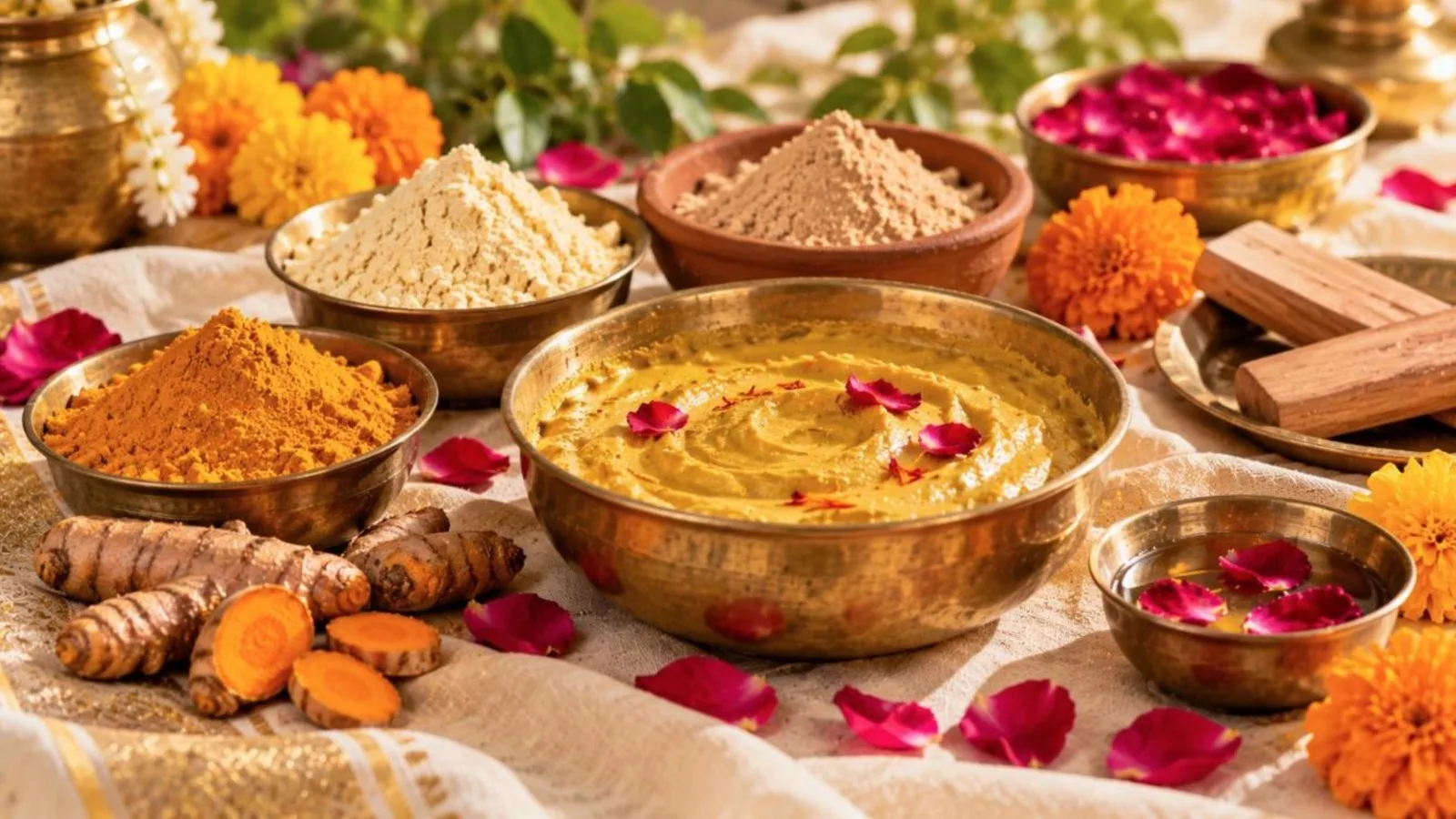
What goes into ubtan
Recipes change from region to region, but most include:
- Besan (gram flour) or ground lentils as a gentle scrubbing base.
- Haldi (turmeric) for colour, fragrance and ritual significance.
- Chandan (sandalwood powder) for its cooling scent.
- Milk, curd or malai to bind the paste and keep skin soft.
- Rose water or rose petals for fragrance.
- Sometimes almond powder, orange peel powder, oats or a pinch of saffron.
Why the bridal haldi matters
Beyond the glow, turmeric is considered auspicious in Hindu tradition, and the ceremony brings families together in a messy, joyful ritual. In some communities the leftover paste is sent to the other family, and unmarried guests hope a dab of it brings them luck too.
A gentle everyday ubtan
- Mix two tablespoons of besan, a quarter teaspoon of turmeric and one teaspoon of sandalwood powder.
- Add raw milk or curd a little at a time until you get a spreadable paste.
- Apply to clean face and arms, leave for 10 to 15 minutes until almost dry.
- Moisten your hands and rub in small circles to lift the paste, then rinse with lukewarm water.
- Use once a week and follow with moisturiser.
Avoiding the yellow stain
- Use a small amount of turmeric. More does not mean more glow, only more stain.
- Kasthuri manjal, the wild turmeric used in Tamil homes, stains far less. We cover it in Part 5: Manjal Bath.
- A cotton pad with a little milk or oil removes leftover tint from the skin.
- Ubtan does not replace sunscreen. See our simple guide to sunscreen in India.
Patch test first: dab a little of any DIY mix on your inner forearm and wait 24 hours before using it on your face or scalp. These rituals are shared as cultural and personal-care traditions, not medical treatment. For persistent skin or hair problems, see a dermatologist.
Next in the series: Part 3: Kajal.