This is Part 8 of Beauty Secrets of India, our 20-part series on traditional beauty rituals from across the country. New here? Start with Part 1: Kerala Coconut Oil Hair Ritual, or read the previous instalment, Part 7: Besan and Malai Packs.
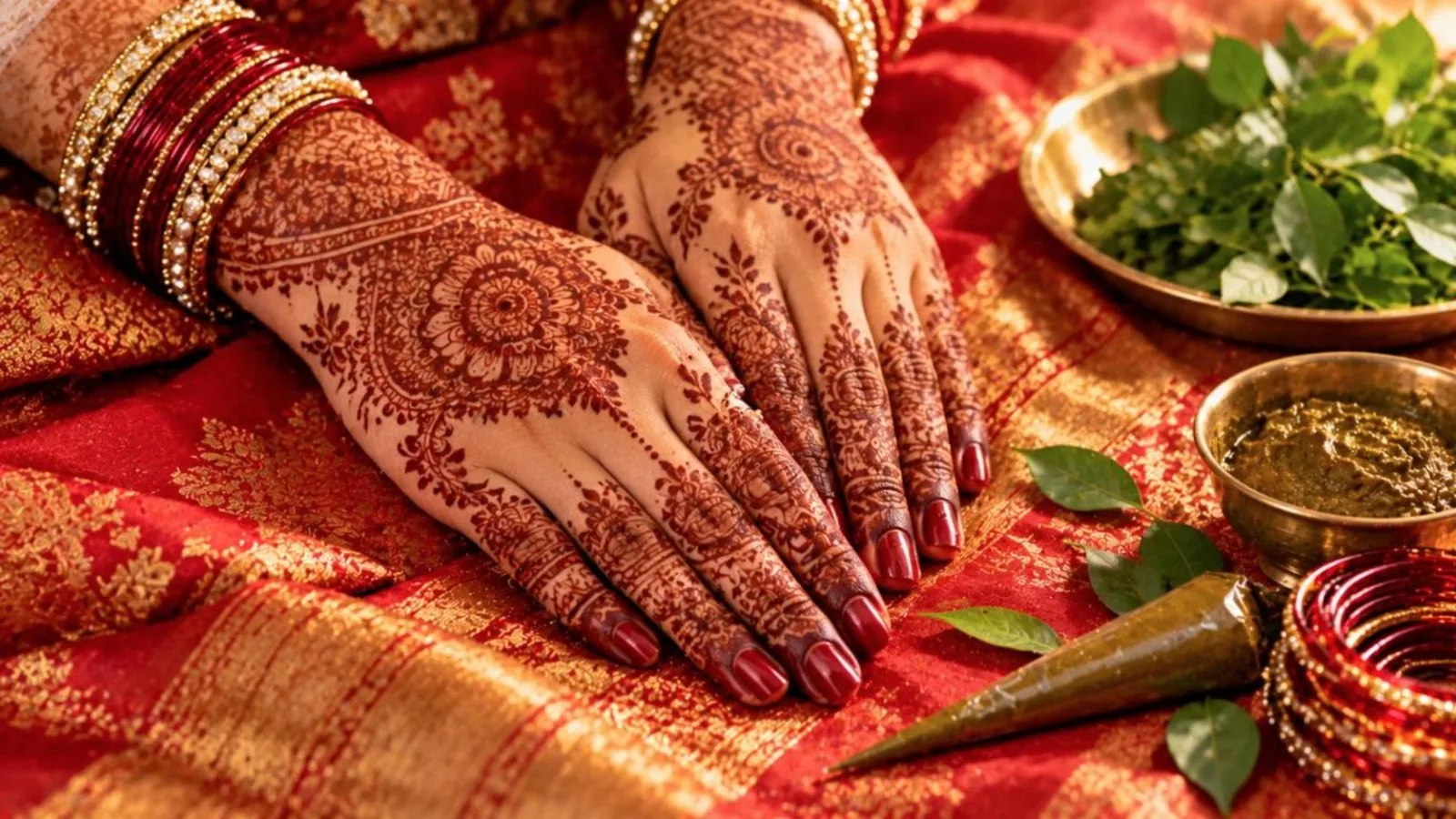
Few things say "celebration" in India like the smell of fresh mehndi. Made from the dried, powdered leaves of the henna plant (Lawsonia inermis), mehndi is drawn in intricate patterns on the hands and feet before weddings and festivals such as Karva Chauth, Teej, Eid and Diwali.
The mehndi night
- In many communities, the bride's mehndi ceremony is a full evening of music, dance and food, with designs reaching up to her elbows and knees.
- A popular tradition hides the groom's name or initials somewhere in the bride's design for him to find.
- An old saying claims the darker the stain, the deeper the love, which is why brides take the aftercare so seriously.
- Rajasthan is famous for its mehndi artists, and Rajasthani henna from the Sojat region holds a GI tag.
Making natural henna paste
- Sift two tablespoons of fresh henna powder through a fine cloth.
- Mix with strained lemon juice or strong tea into a thick paste, add a teaspoon of sugar to help it stick.
- Cover and rest for six to eight hours for the dye to release.
- Add a few drops of eucalyptus or clove oil, stir, and fill a cone.
Getting a deep stain
- Keep the paste on for at least six hours, ideally overnight.
- Dab a mix of lemon juice and sugar over dried mehndi to keep it moist.
- Scrape it off rather than washing, and keep water off for 12 to 24 hours.
- Warmth helps: some families hold their hands over the smoke of cloves on a tawa.
- The stain starts orange and deepens to reddish-brown over 24 to 48 hours.
Avoid "black henna"
Natural henna never stains jet black in minutes. So-called black henna often contains para-phenylenediamine (PPD), a hair-dye chemical that can cause severe allergic reactions, blisters and scarring on skin. Buy henna from trusted sources, and check with your artist what is in the cone.
Henna for hair
Mehndi is also a traditional natural hair colour and conditioner, often mixed with amla powder. We look at that in Part 13: Amla.
Patch test first: dab a little of any DIY mix on your inner forearm and wait 24 hours before using it on your face or scalp. These rituals are shared as cultural and personal-care traditions, not medical treatment. For persistent skin or hair problems, see a dermatologist.
Next in the series: Part 9: Multani Mitti.