This is Part 5 of Beauty Secrets of India, our 20-part series on traditional beauty rituals from across the country. New here? Start with Part 1: Kerala Coconut Oil Hair Ritual, or read the previous instalment, Part 4: Alta.
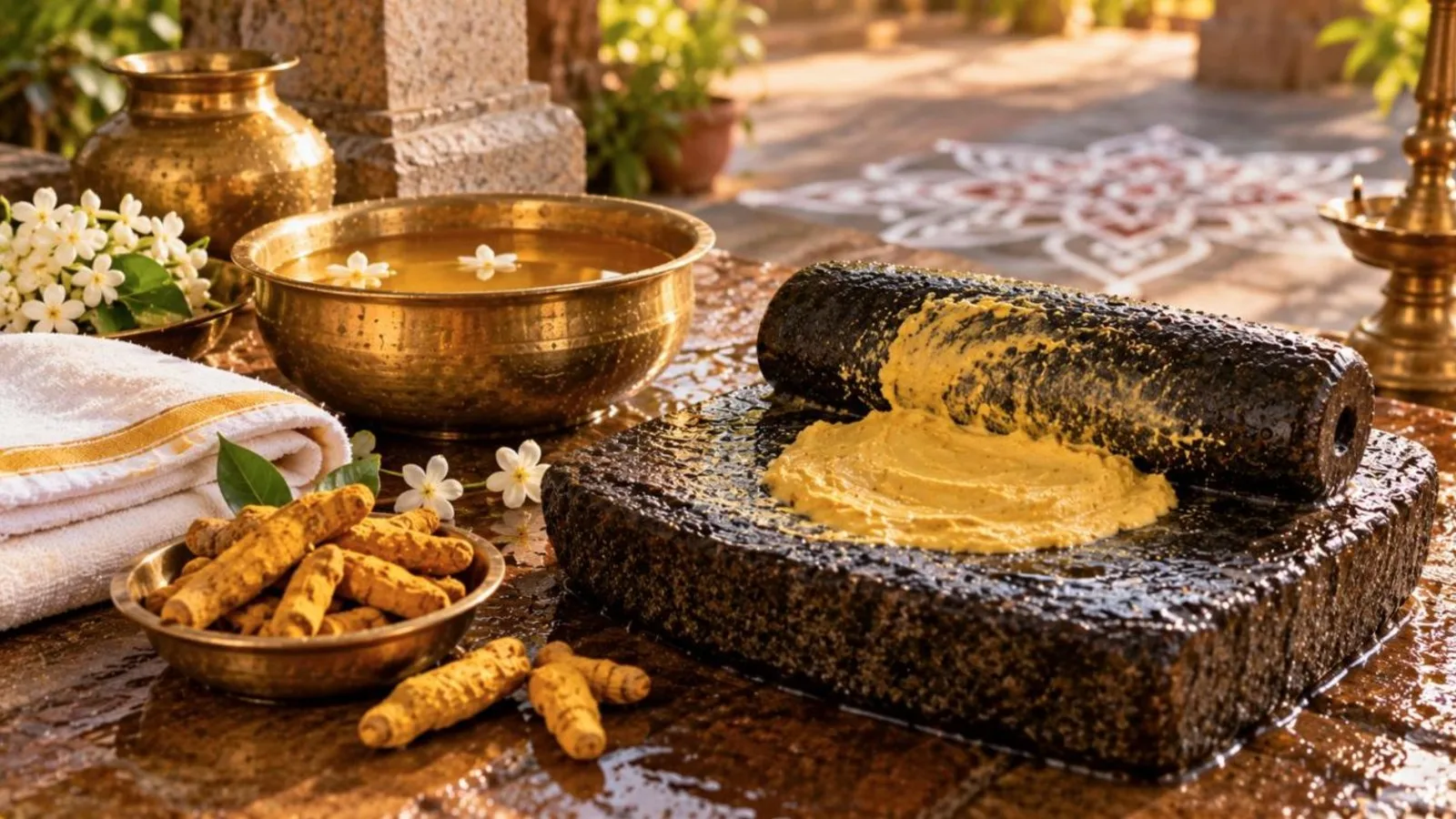
In many Tamil homes, the morning bath once began with a small piece of turmeric rubbed on a wet grinding stone. The golden paste was spread over the face, arms and feet before bathing. This simple habit, manjal kuliyal (turmeric bath), is still part of daily life for many women, and the turmeric used is often not the kind in your spice box.
Kasthuri manjal vs kitchen turmeric
- Kitchen turmeric (Curcuma longa) is the deep yellow spice used in cooking. It stains skin, nails and towels.
- Kasthuri manjal (Curcuma aromatica), or wild turmeric, has a creamy colour inside, a pleasant camphor-like smell and leaves very little yellow tint. It is the traditional choice for face and body and is not used for cooking.
Check the label when buying powder. Some shops sell blended or coloured "bath turmeric", so look for pure kasthuri manjal from a trusted source.
Why it became a daily ritual
- Turmeric is seen as auspicious and is used in temples, weddings and festivals such as Pongal, where fresh turmeric plants are tied around the pongal pot.
- Traditional beauty lore credits regular manjal baths with softer skin and slower regrowth of fine facial hair. These are traditional beliefs rather than proven effects.
- The ritual was also a quiet moment of self-care in a busy household morning.
A simple weekly routine
- Mix half a teaspoon of kasthuri manjal powder with a teaspoon of besan or rice flour.
- Add rose water, milk or plain water to make a smooth paste.
- Apply to damp skin on the face, neck and arms and leave for five to ten minutes.
- Rinse with lukewarm water while gently rubbing in circles.
- Use two or three times a week and moisturise after.
Good to know
- Kasthuri manjal is for external use only. Do not cook with it.
- If you only have kitchen turmeric, use a tiny pinch and rinse well.
- Rinse turmeric off the bathroom tiles soon, before it dries and stains.
Read more about the state in our Tamil Nadu travel guide, and see how turmeric shines at weddings in Part 2: Haldi and Ubtan.
Patch test first: dab a little of any DIY mix on your inner forearm and wait 24 hours before using it on your face or scalp. These rituals are shared as cultural and personal-care traditions, not medical treatment. For persistent skin or hair problems, see a dermatologist.
Next in the series: Part 6: Kashmiri Saffron.