This is Part 1 of Beauty Secrets of India, our 20-part series on traditional beauty rituals from across the country.
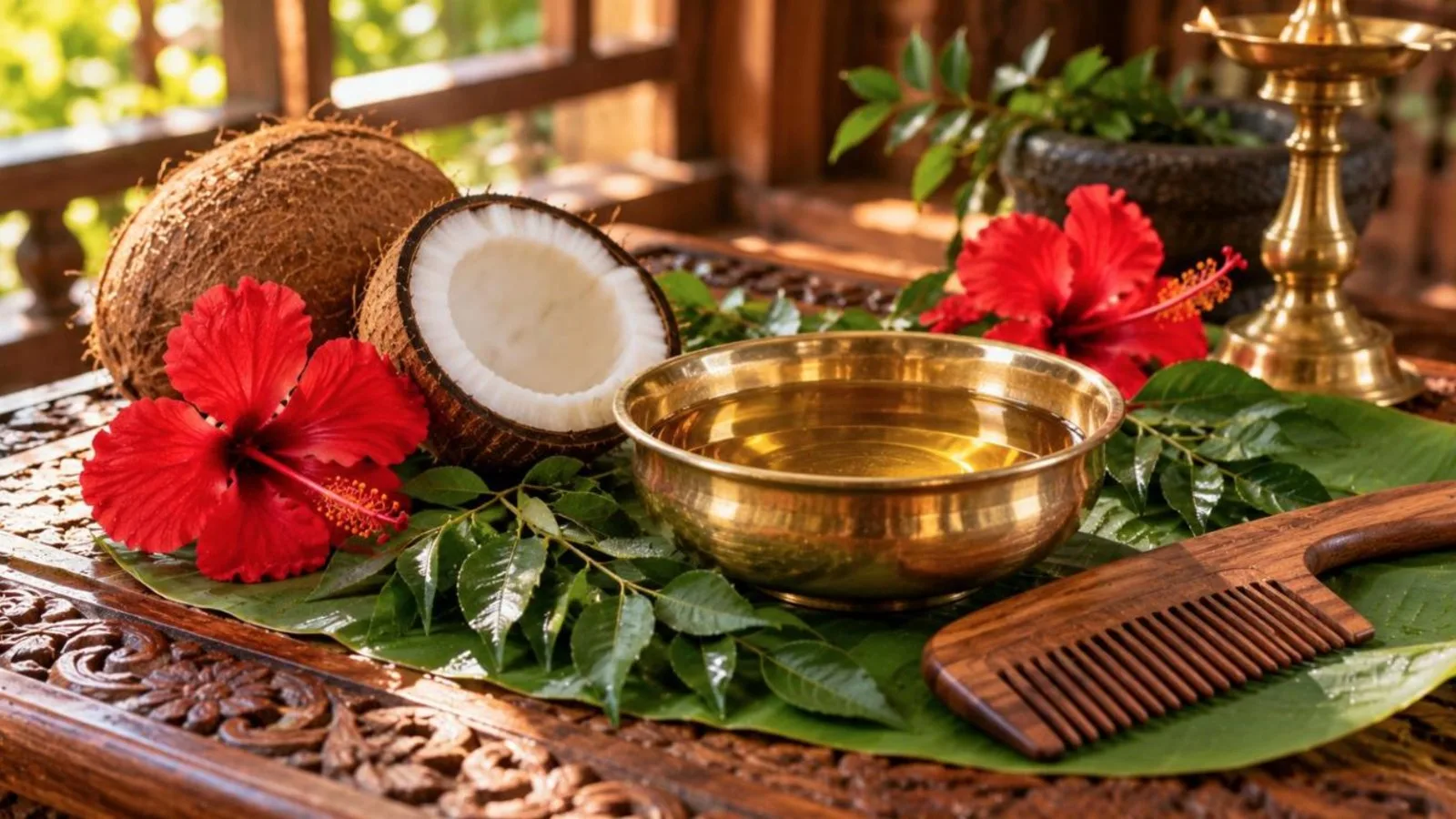
Ask anyone who grew up in Kerala about hair care and the answer usually starts with one word: velichenna, coconut oil. In a state where coconut palms line every backwater and courtyard, the oil has been the base of hair care for generations, and long, thick plaits were once a point of family pride.
The ingredients of the ritual
- Coconut oil: Cold-pressed or traditionally expelled oil is warmed gently and massaged into the scalp and lengths. Coconut oil is one of the few oils studied for its ability to penetrate the hair shaft and reduce protein loss during washing, which is why it suits long hair.
- Kachiya enna: A "boiled oil" made at home by simmering coconut oil with hibiscus flowers and leaves, curry leaves, small onions, fenugreek and sometimes aloe vera until the herbs turn crisp. Every family has its own recipe.
- Thaali: Instead of shampoo, crushed hibiscus (chembarathi) leaves are rubbed with water into a slippery green lather that cleans gently without stripping oil completely.
- Sambrani: After washing, hair was traditionally dried over the fragrant smoke of sambrani (frankincense) in a small clay burner.
How to try it at home
- Warm two to three tablespoons of coconut oil until just comfortable to touch.
- Part your hair and massage the oil into the scalp with your fingertips for five to ten minutes, then work the rest through the lengths.
- Leave it on for 30 minutes to two hours. Overnight oiling is common, but it is not necessary.
- Wash with a hibiscus-leaf thaali or a mild shampoo, lathering twice if the oil is heavy.
- Repeat once or twice a week.
Good to know
- Coconut oil solidifies below about 24°C. Warm the bottle in a bowl of hot water in winter rather than heating it directly.
- If you have a very oily scalp or dandruff, keep the oil mostly to the lengths and wash it out sooner.
- Sambrani smoke should only be used in a ventilated room, and is best skipped if you have asthma.
For a step-by-step guide to oiling any hair type, read our practical guide to hair oiling.
Patch test first: dab a little of any DIY mix on your inner forearm and wait 24 hours before using it on your face or scalp. These rituals are shared as cultural and personal-care traditions, not medical treatment. For persistent skin or hair problems, see a dermatologist.
Next in the series: Part 2: Haldi and Ubtan.