This is Part 6 of Beauty Secrets of India, our 20-part series on traditional beauty rituals from across the country. New here? Start with Part 1: Kerala Coconut Oil Hair Ritual, or read the previous instalment, Part 5: Manjal Bath.
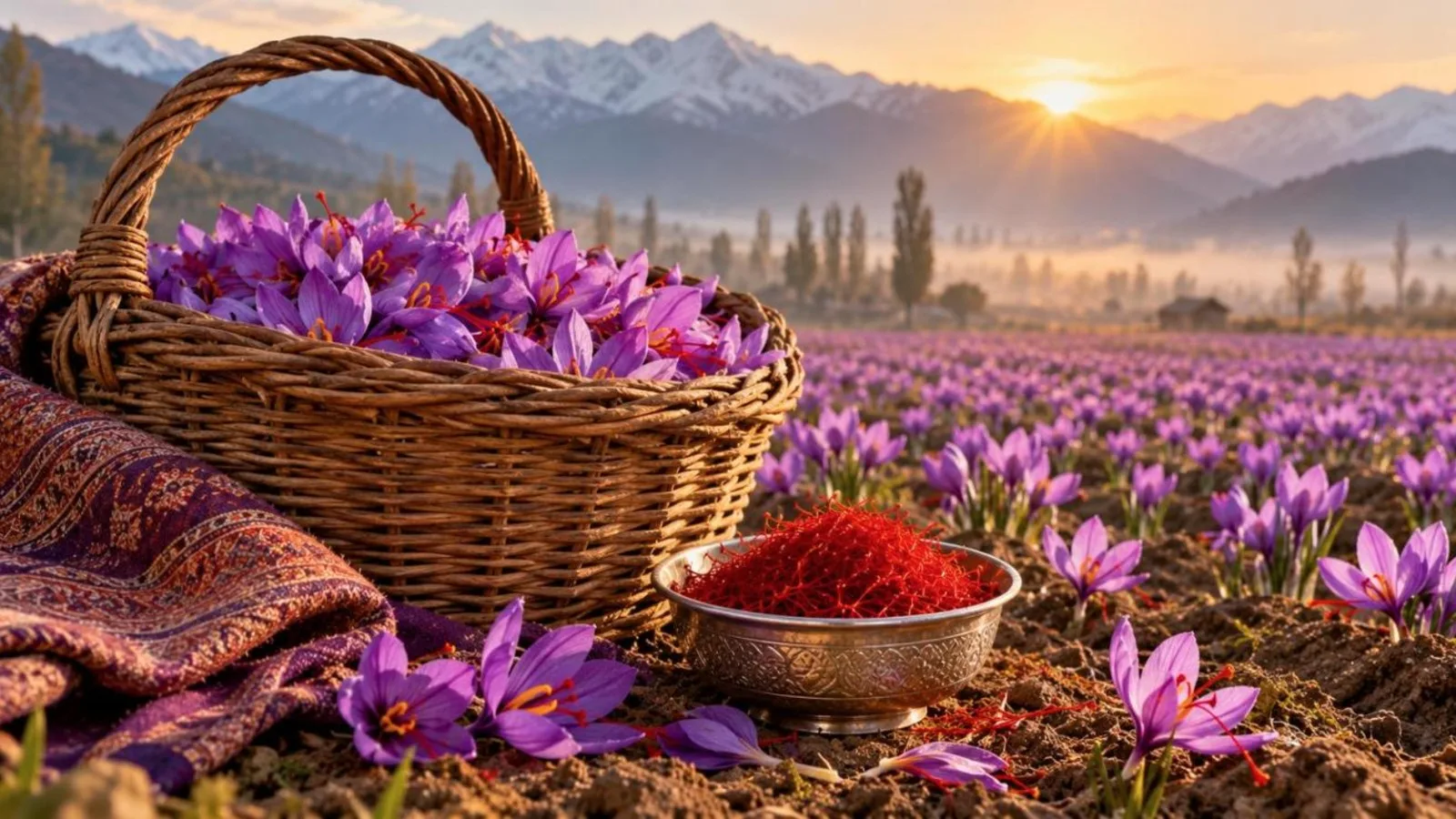
Every year around late October and November, the karewa plateaus of Pampore, near Srinagar, turn purple with saffron crocus flowers. Families pick the blooms at dawn and pluck out the three crimson stigmas by hand. It takes well over a hundred thousand flowers to make a single kilogram of saffron, which is why kesar is among the most expensive spices in the world.
Saffron in Indian beauty
- Kesar milk is traditionally given to brides and expectant mothers in many families, linked in folklore with a glowing complexion.
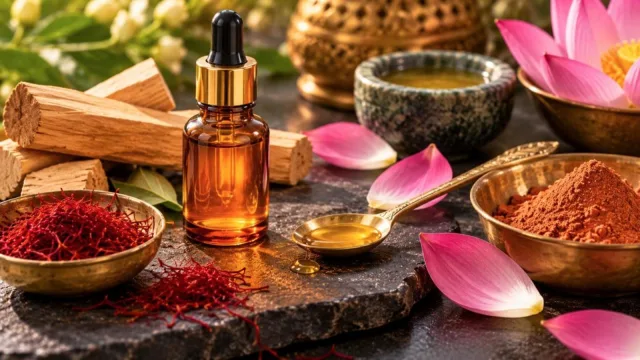
- Saffron soaked in milk or rose water is a common addition to face packs and ubtan.
- It is a key ingredient in Ayurvedic preparations such as kumkumadi tailam, which we cover in Part 19: Kumkumadi Tailam.
Saffron contains pigments and antioxidants such as crocin, but most of the evidence for skin benefits comes from small studies, so think of it as a luxurious traditional ingredient rather than a miracle cure.
Real Kashmiri saffron vs fake
Kashmir saffron received a Geographical Indication (GI) tag in 2020, and Kashmiri threads are known for their deep crimson colour and strong aroma. Adulteration is common, so try these simple checks:
- Drop a thread into warm water. Real saffron releases a slow golden-yellow stream over several minutes, and the thread stays red. Fake saffron colours the water red almost instantly or loses its colour.
- Real threads have a trumpet-shaped end and feel dry and brittle, not oily.
- The aroma should be honey-like and slightly bitter, never sweet like a candy.
- Prices that seem too good to be true usually are.
A gentle kesar face pack
- Soak four or five saffron threads in a tablespoon of warm milk for 20 minutes.
- Mix in a teaspoon of honey or a little besan to thicken.
- Apply to clean skin for 10 to 15 minutes.
- Rinse with lukewarm water and moisturise.
Good to know
- A few threads are enough. Store saffron in an airtight tin away from light.
- Milk-based packs may not suit very oily or acne-prone skin. Use rose water instead.
Planning a trip to see the bloom? Read our Jammu and Kashmir travel guide.
Patch test first: dab a little of any DIY mix on your inner forearm and wait 24 hours before using it on your face or scalp. These rituals are shared as cultural and personal-care traditions, not medical treatment. For persistent skin or hair problems, see a dermatologist.
Next in the series: Part 7: Besan and Malai Packs.