This is Part 18 of Beauty Secrets of India, our 20-part series on traditional beauty rituals from across the country. New here? Start with Part 1: Kerala Coconut Oil Hair Ritual, or read the previous instalment, Part 17: Ghee for Lips and Skin.
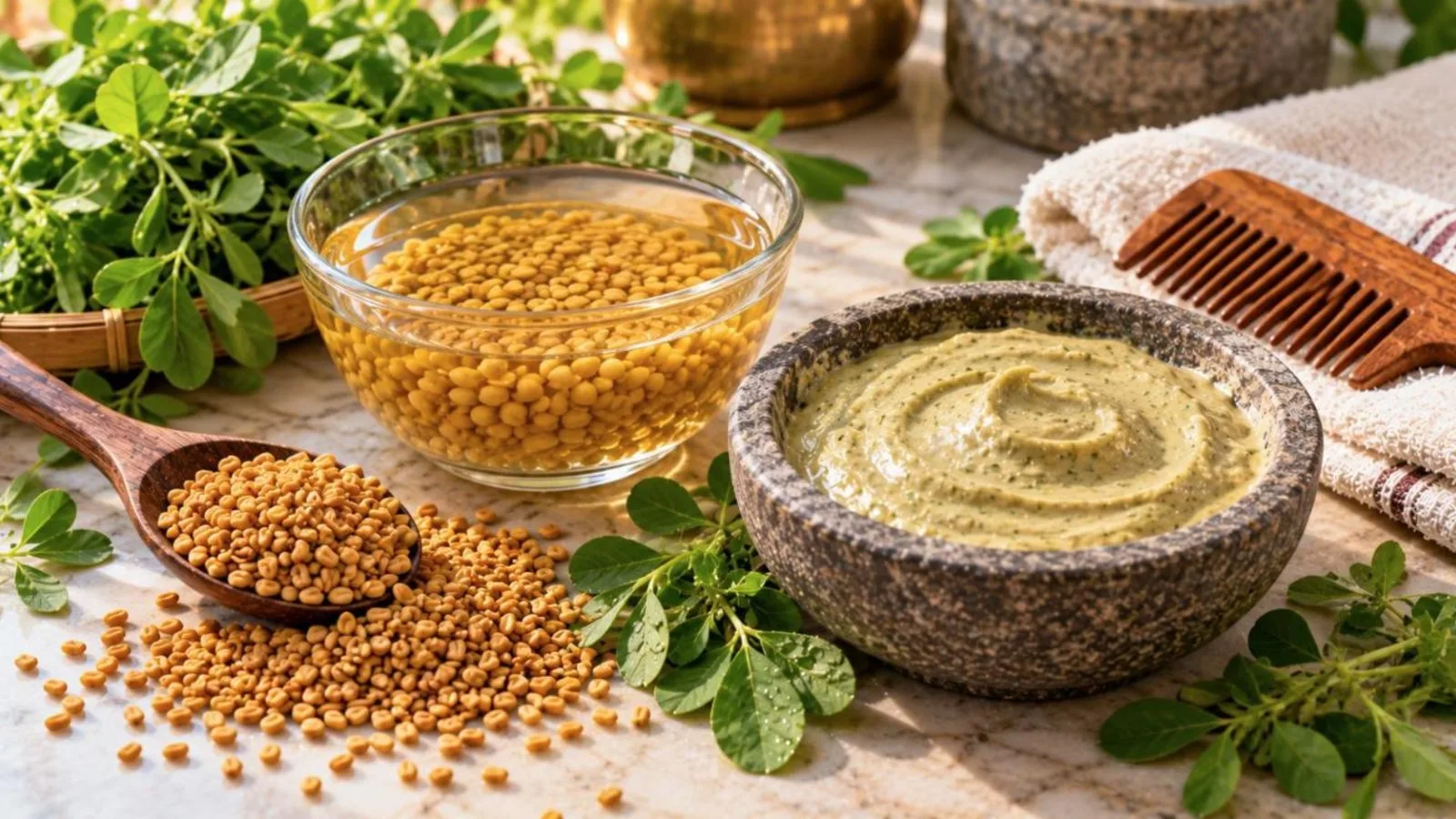
Every Indian kitchen has a jar of methi (fenugreek) seeds for tempering dal and making pickles. Soak them overnight, though, and they turn into a slippery, gel-like paste that generations of women have used as a hair mask.
Why methi feels so conditioning
When fenugreek seeds are soaked, they swell and release mucilage, a natural gel that coats the hair and makes it feel smooth and soft. The seeds also contain proteins and other plant compounds, which is why methi is popular in traditional remedies for hair fall and dandruff. The scientific evidence for those claims is limited, so think of methi mainly as a conditioning mask.
The classic methi and curd mask
- Soak two tablespoons of methi seeds in water overnight.
- In the morning, drain and grind the seeds with a little of the soaking water into a smooth paste.
- Mix with three tablespoons of plain curd. For dry hair, add a teaspoon of coconut oil.
- Apply to the scalp and lengths, section by section.
- Leave on for 30 to 45 minutes.
- Rinse thoroughly with water, then wash with a mild shampoo or a herbal wash like the one in Part 14: Reetha and Shikakai.
Variations
- Methi water rinse: Strain the soaking water and use it as a final rinse after shampooing.
- Methi with hibiscus: Grind with a few hibiscus flowers or leaves, a combination from South India.
- Methi in oil: Heat a spoon of seeds in coconut oil until they darken, cool, and strain. This is often part of the Kerala kachiya enna in Part 1: Kerala Coconut Oil Hair Ritual.
Tips
- Grind the paste very finely. Coarse bits stick in the hair and are hard to rinse.
- The smell is strong and can linger. A final rinse with rose water or diluted lemon water helps.
- Fenugreek can trigger allergies in people sensitive to legumes such as peanuts or chickpeas, so patch test.
- If you are losing a lot of hair suddenly, see a doctor to check for causes such as thyroid problems or low iron.
Get the basics right with our hair oiling guide and try the Part 13: Amla oil too.
Patch test first: dab a little of any DIY mix on your inner forearm and wait 24 hours before using it on your face or scalp. These rituals are shared as cultural and personal-care traditions, not medical treatment. For persistent skin or hair problems, see a dermatologist.
Next in the series: Part 19: Kumkumadi Tailam.