This is Part 7 of Beauty Secrets of India, our 20-part series on traditional beauty rituals from across the country. New here? Start with Part 1: Kerala Coconut Oil Hair Ritual, or read the previous instalment, Part 6: Kashmiri Saffron.
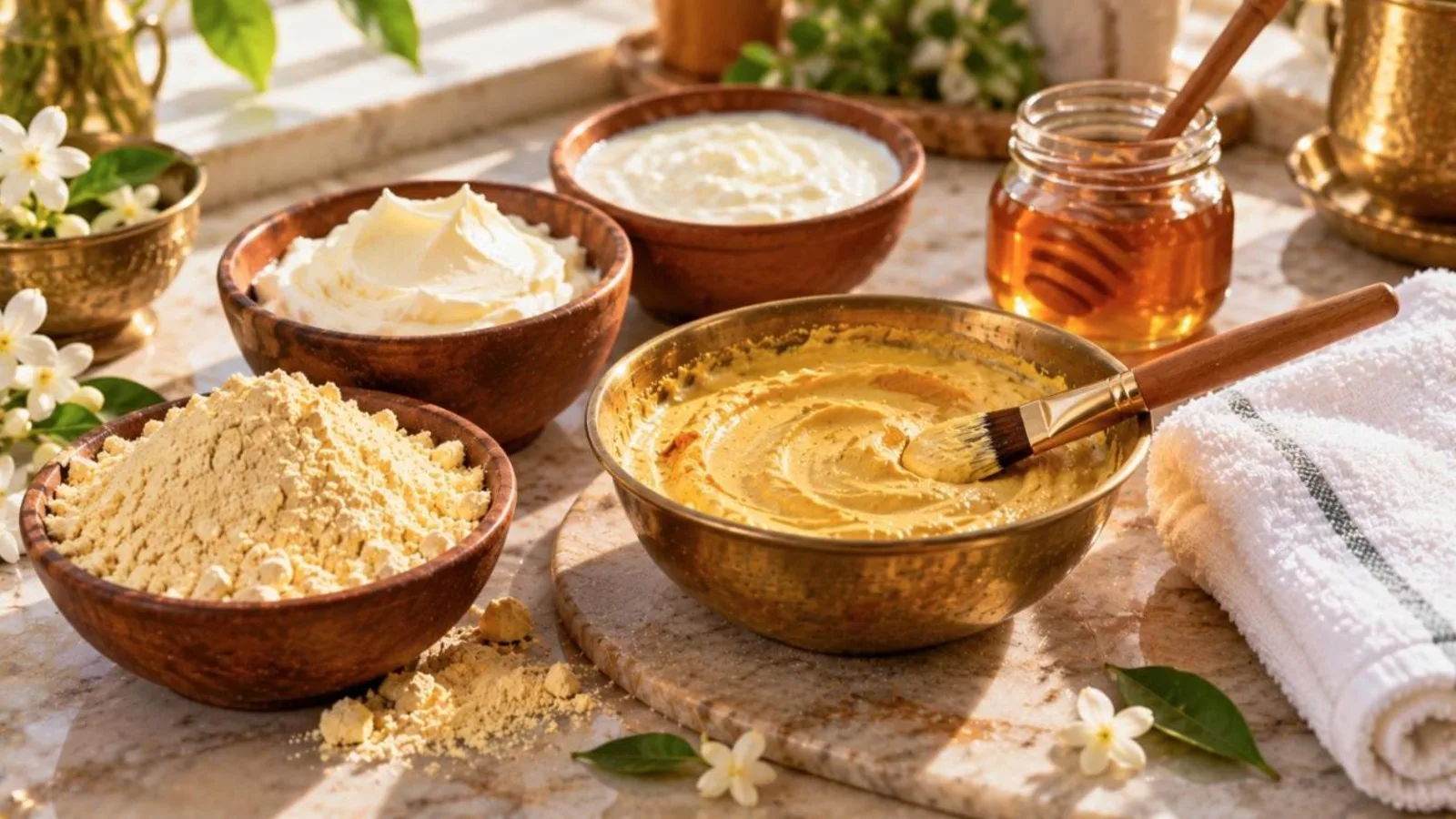
Before cleansers came in tubes, Indian grandmothers reached for the kitchen shelf. A spoonful of besan (gram flour) mixed with water, curd or a dab of malai (the thick cream skimmed off boiled milk) was the everyday face wash in homes across Punjab, Uttar Pradesh, Rajasthan and beyond. Many people still swear by it.
Why besan works as a cleanser
Besan is a finely milled flour with a slightly gritty texture. Rubbed gently on wet skin, it lifts away oil and dirt like a mild scrub, and rinses off cleanly. It does not foam, so it feels less stripping than some soaps.
Match the pack to your skin
- Oily skin: Besan with rose water or plain curd. Leave for 10 minutes and rinse.
- Dry skin: Besan with malai or a few drops of almond oil and milk.
- Normal skin: Besan with curd and a teaspoon of honey.
- Dull or tanned skin: Besan, curd and a small pinch of turmeric. See our guide to managing a tan for more.
Malai on its own
In winter, many families simply massage a little fresh malai into dry cheeks and hands for a few minutes before bathing. It is rich and soothing, though not for everyone: on oily or acne-prone skin, dairy fats can feel heavy and may clog pores.
How to use a besan pack
- Mix one to two tablespoons of besan with your chosen liquid into a smooth paste.
- Apply to damp skin, avoiding the eye area.
- Leave for 10 to 15 minutes, but do not let it crack completely.
- Wet your fingers and rub gently in circles as you rinse.
- Use two or three times a week, and moisturise after.
What to avoid
- Skip raw lemon juice on the face. It is very acidic and can sting or irritate skin, especially in the sun.
- Do not scrub hard. Besan works with gentle pressure.
- If you have active acne, see our guide to living with acne-prone skin before adding new packs.
Patch test first: dab a little of any DIY mix on your inner forearm and wait 24 hours before using it on your face or scalp. These rituals are shared as cultural and personal-care traditions, not medical treatment. For persistent skin or hair problems, see a dermatologist.
Next in the series: Part 8: Mehndi.