This is Part 4 of Beauty Secrets of India, our 20-part series on traditional beauty rituals from across the country. New here? Start with Part 1: Kerala Coconut Oil Hair Ritual, or read the previous instalment, Part 3: Kajal.
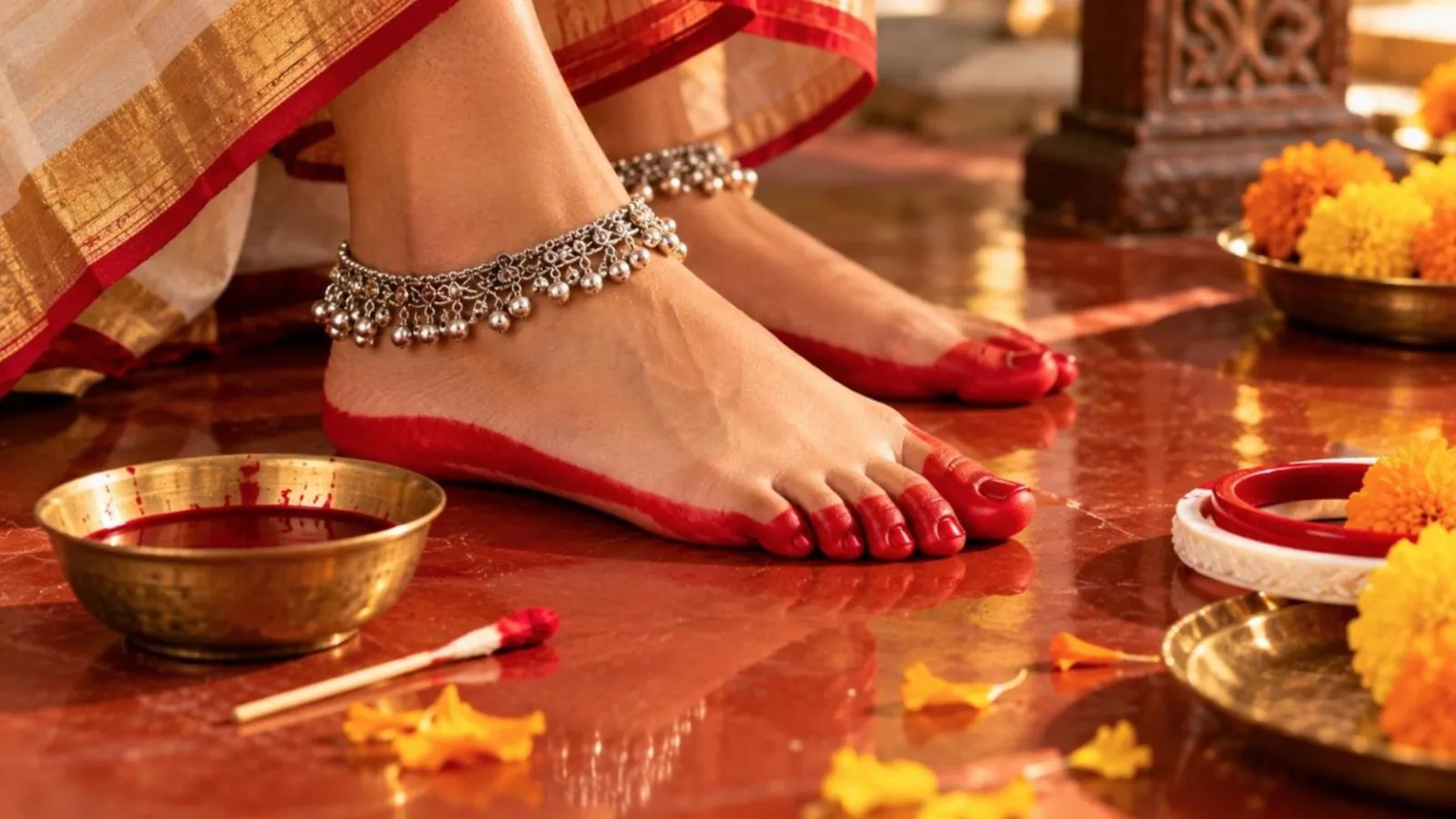
In Bengal, a pair of feet outlined in vivid red says "celebration". Alta (aalta in Bengali, mahavar in parts of north India and alata in Odisha) is a red liquid painted around the edges and soles of the feet, and sometimes the palms. It is one of the most recognisable marks of a Bengali bride, and appears at Durga Puja, Bihu dances, classical dance performances and festivals across eastern India.
What alta was made from
Traditionally, alta was made from lac, a natural red resin produced by tiny insects on trees such as palash and kusum. The lac was boiled and processed into a red dye. Some recipes used betel leaf or plant dyes. Today most alta sold in markets uses synthetic colour in a water base, which gives a brighter, more even red.
The meaning behind it
- Red is considered auspicious and is linked with marriage and the goddess Durga.
- Married women in many Bengali families wear alta on festive days, alongside sindoor and shankha-pola bangles.
- Odissi and Bharatanatyam dancers paint alta on their feet and hands so the footwork and mudras stand out on stage.
- The first footprints of a new bride entering her home, stepped in alta and milk, are a cherished keepsake in many families.
How to apply alta neatly
- Wash and dry your feet completely. Oil or lotion makes the colour patchy.
- Shake the bottle and dip a cotton bud or thin brush.
- Outline the sides of the foot first, about a finger-width up from the sole.
- Fill in a circle on the top of each toe, or paint the toes fully.
- Add a dot or simple motif on top of the foot if you like.
- Let it dry for 10 to 15 minutes before walking.
Good to know
- Alta usually fades in two to five days. Lemon juice or a scrub speeds removal.
- Synthetic dyes can irritate cracked skin, so avoid broken skin and patch test first.
- Keep it away from your eyes and wash your hands right after.
Visiting Kolkata during the pujas? Read our West Bengal travel guide.
Patch test first: dab a little of any DIY mix on your inner forearm and wait 24 hours before using it on your face or scalp. These rituals are shared as cultural and personal-care traditions, not medical treatment. For persistent skin or hair problems, see a dermatologist.
Next in the series: Part 5: Manjal Bath.