This is Part 11 of Beauty Secrets of India, our 20-part series on traditional beauty rituals from across the country. New here? Start with Part 1: Kerala Coconut Oil Hair Ritual, or read the previous instalment, Part 10: Mysore Sandalwood.
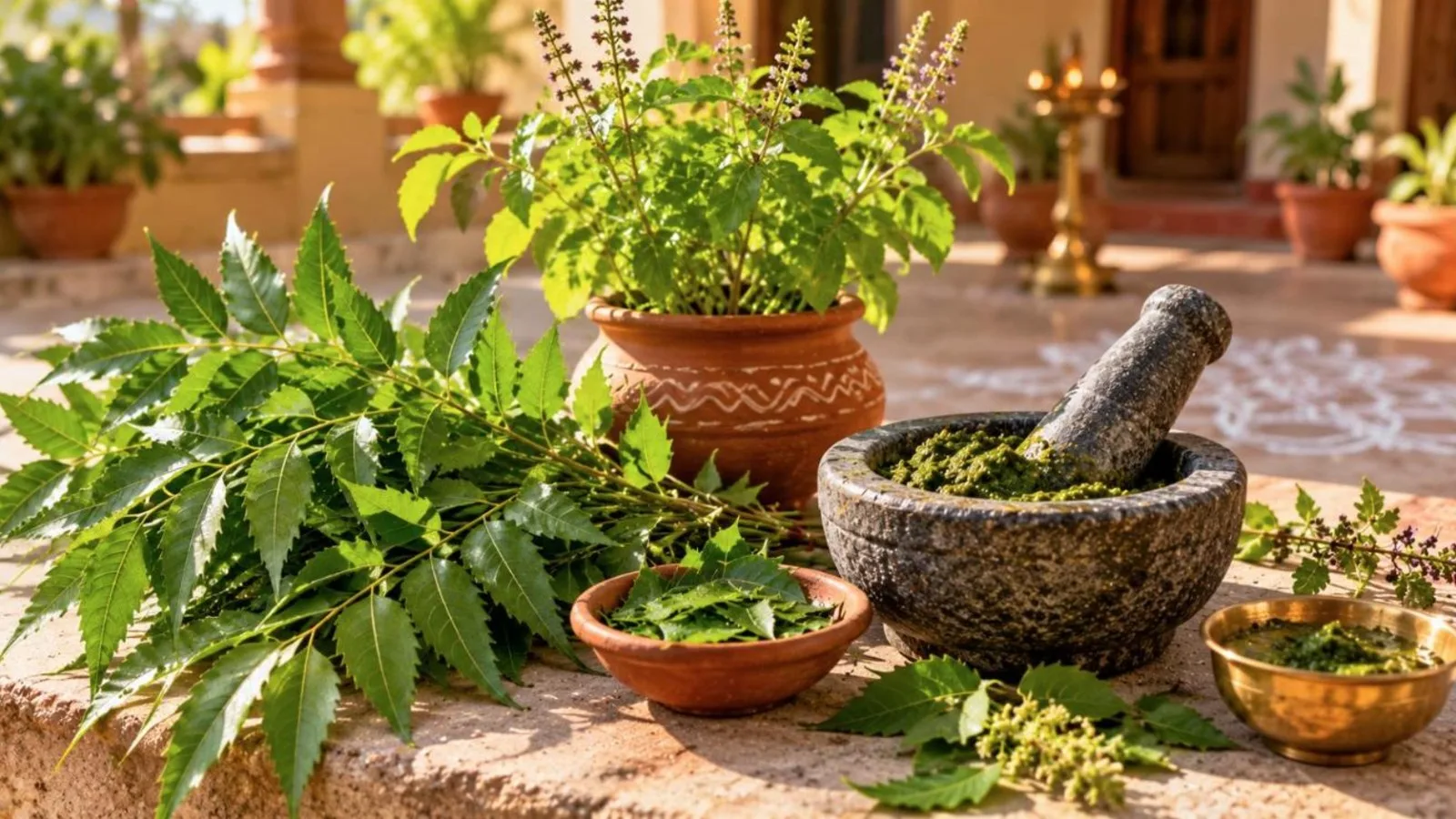
Walk into an old Indian courtyard and you will often find two plants: a shady neem tree (Azadirachta indica) near the gate and a tulsi (holy basil) plant in a raised pot at the centre. Both are revered, and both have long been part of everyday personal care.
Neem: the bitter village pharmacy
- Datun: Neem twigs were chewed into a brush and used to clean teeth, a practice still seen in villages.
- Neem bath: A handful of leaves boiled in water and added to bath water was a common way to freshen skin, especially in summer and after illnesses like chickenpox.
- Neem paste: Ground fresh leaves were dabbed on spots and bumps.
- Neem oil: Pressed from the seeds, it was used on the scalp and in soaps, but it has a strong smell.
Neem contains compounds that have shown antibacterial and anti-inflammatory activity in lab studies, which is why it appears in so many modern face washes and soaps. The evidence in people is still limited, so treat it as a supportive tradition.
Tulsi: the sacred basil
- Tulsi is worshipped in many Hindu homes, and its leaves are offered in daily prayers.
- Tulsi leaves are added to herbal teas and steam inhalations.
- Ground with neem, tulsi makes a fresh-smelling face pack for oily skin.
A simple neem and tulsi face pack
- Wash a small handful of neem leaves and tulsi leaves.
- Grind them with a little water or rose water into a paste. Add a spoon of besan or multani mitti to thicken it.
- Apply to the face for 10 minutes, avoiding the eyes.
- Rinse with lukewarm water and moisturise.
- Use once or twice a week.
Safety notes
- Never swallow neem oil. It can be toxic, especially for children.
- Neem oil should be diluted in a carrier oil before going on the scalp or skin.
- Fresh herbal pastes can irritate sensitive skin, so patch test.
For a broader plan for spot-prone skin, read our guide on acne-prone skin. For oily skin, pair this pack with Part 9: Multani Mitti.
Patch test first: dab a little of any DIY mix on your inner forearm and wait 24 hours before using it on your face or scalp. These rituals are shared as cultural and personal-care traditions, not medical treatment. For persistent skin or hair problems, see a dermatologist.
Next in the series: Part 12: Kannauj Rose Water.