This is Part 19 of Beauty Secrets of India, our 20-part series on traditional beauty rituals from across the country. New here? Start with Part 1: Kerala Coconut Oil Hair Ritual, or read the previous instalment, Part 18: Methi Hair Mask.
Among the dozens of Ayurvedic oils sold in India, one has become a cult favourite with skin care fans: kumkumadi tailam. Its name comes from kumkuma, the Sanskrit word for saffron, and it is described in classical Ayurvedic texts as an oil for the face.
What is in it
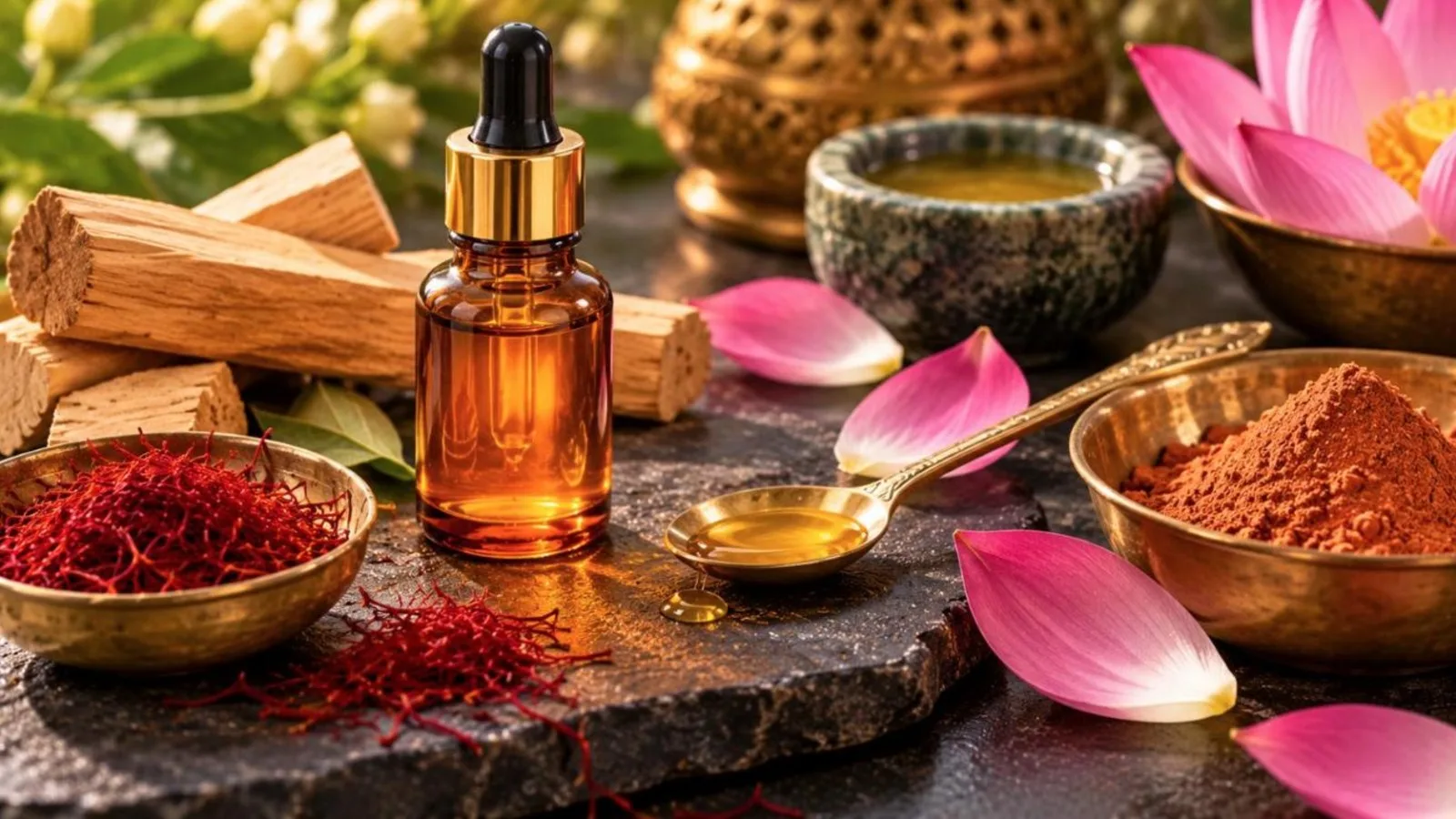
Recipes vary between makers, but classical formulas cook saffron with a long list of herbs in an oil base, often sesame oil, sometimes with goat's milk. Common ingredients include:
- Saffron (kumkuma): The star of the formula. Read about Kashmiri saffron in Part 6: Kashmiri Saffron.
- Red sandalwood and sandalwood: Fragrant woods long used in face packs. See Part 10: Mysore Sandalwood.
- Manjistha, licorice (yashtimadhu), vetiver and lotus: Herbs traditionally used in Ayurvedic skin recipes.
- Turmeric and other roots, depending on the recipe.
Many brands sell it, from traditional Kerala pharmacies to modern beauty labels. Classical versions are made by slowly boiling the herbs in oil over many hours.
How to use it
- Cleanse your face at night and pat it dry, or leave it slightly damp.
- Warm two or three drops between your fingertips. A little goes a long way.
- Press it onto the face and massage gently upwards for a minute or two.
- Leave it on overnight, or wash off after an hour if your skin feels oily.
- Start with two or three nights a week.
What to expect
Users love it for the way skin looks soft and glowing the next morning. Claims that it lightens pigmentation or dark spots come from tradition and marketing more than strong clinical evidence. For tanning and uneven tone, sunscreen remains the most important step. See our guide to managing a tan and uneven skin tone.
Who should be careful
- Oily and acne-prone skin may break out, as sesame oil can be heavy. Try it on one area first.
- Real saffron is expensive, so very cheap bottles may contain little of it. Buy from trusted Ayurvedic brands.
- Stop using it if you notice redness, itching or new bumps.
Patch test first: dab a little of any DIY mix on your inner forearm and wait 24 hours before using it on your face or scalp. These rituals are shared as cultural and personal-care traditions, not medical treatment. For persistent skin or hair problems, see a dermatologist.
Next in the series: Part 20: Solah Shringar.