This is Part 3 of Beauty Secrets of India, our 20-part series on traditional beauty rituals from across the country. New here? Start with Part 1: Kerala Coconut Oil Hair Ritual, or read the previous instalment, Part 2: Haldi and Ubtan.
Look closely at the dancers carved on Indian temple walls, or the women in Mughal and Rajput miniature paintings, and you will see long, dark-lined eyes. Kajal (also called kohl, kanmai in Tamil and kattigai in Kannada) is probably the most enduring beauty product in Indian history.
How kajal was made at home
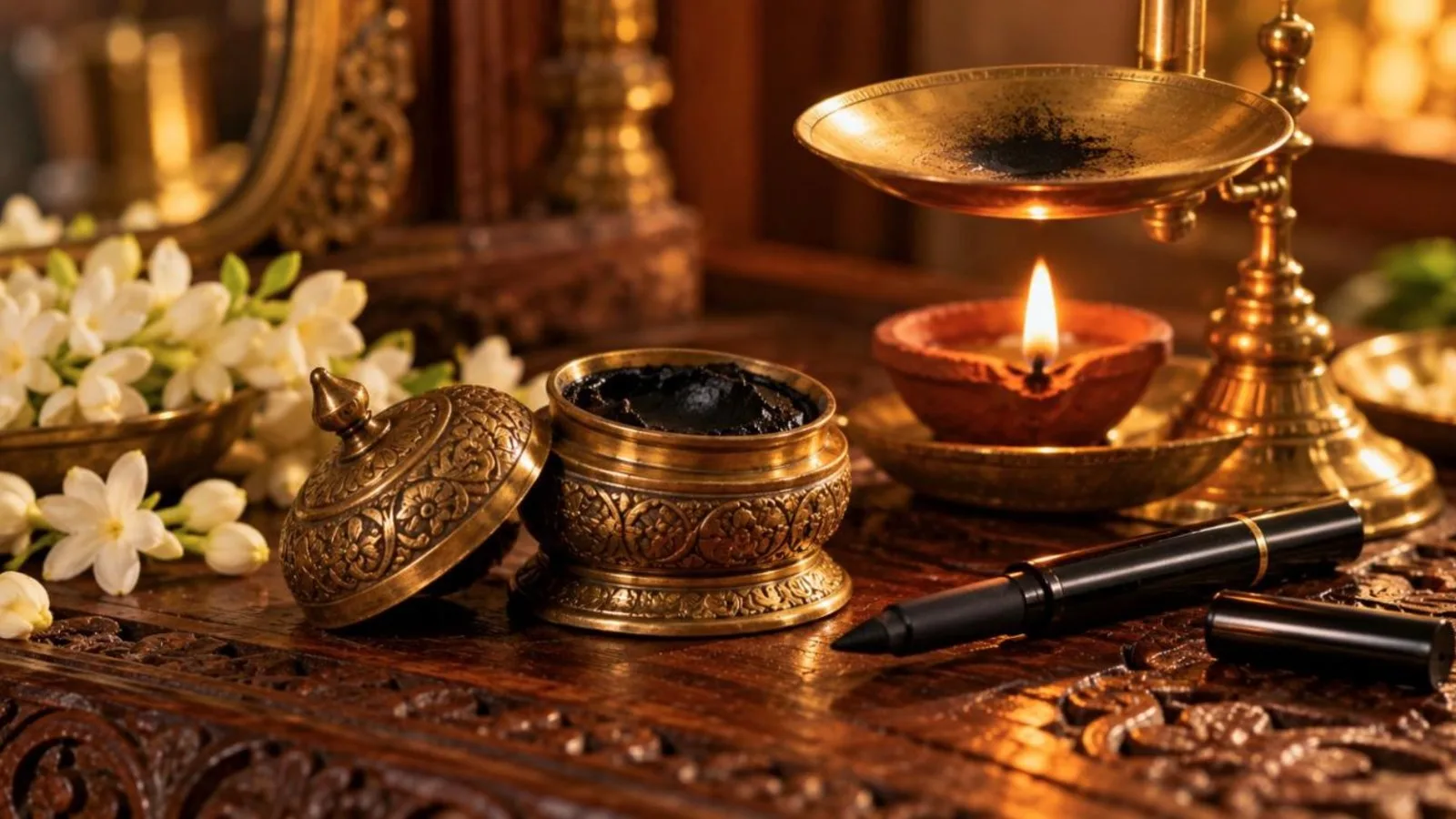
The traditional method was simple. A cotton wick dipped in castor oil or ghee was lit in a small lamp, and a brass or clay plate was held over the flame to collect soot. The black soot was scraped off and mixed with a few drops of ghee or castor oil to make a soft paste, stored in an ornate container called a kajal-dani. Many homes made a fresh batch on Diwali night.
More than make-up
- A dot of kajal behind the ear or on the cheek is still used in many families to ward off the "evil eye".
- Classical dancers in Bharatanatyam and Kathakali rely on heavy kohl so their eye expressions read from the back of a hall.
- Kajal-lined eyes appear in Sanskrit and Tamil poetry as a symbol of beauty.
Safety first: surma and lead
Not every product sold as kohl or surma is safe. Health authorities, including the US Food and Drug Administration, have warned that some traditional surma and kohl powders contain high levels of lead. To be safe:
- Buy kajal from established cosmetic brands that list ingredients on the pack.
- Avoid unlabelled powders, especially ones that are grey and metallic.
- Do not apply kajal to babies' eyes, a practice paediatric bodies specifically advise against.
- Never share kajal, and sharpen pencils before each use to keep them hygienic.
- Replace kajal every few months and stop if your eyes itch or turn red.
Wearing it today
- For a soft look, smudge kajal along the upper lash line only.
- For a classic look, line the lower waterline and smudge slightly with a cotton bud.
- Remove it every night with an oil-based cleanser or a little coconut oil on cotton.
Tired eyes? Our guide to dark circles and puffy eyes has practical help.
Patch test first: dab a little of any DIY mix on your inner forearm and wait 24 hours before using it on your face or scalp. These rituals are shared as cultural and personal-care traditions, not medical treatment. For persistent skin or hair problems, see a dermatologist.
Next in the series: Part 4: Alta.