This is Part 20 of Wonders of India, our series on India's UNESCO World Heritage Sites. Start from Part 1: Taj Mahal or read the previous part, Part 19: Kaziranga.
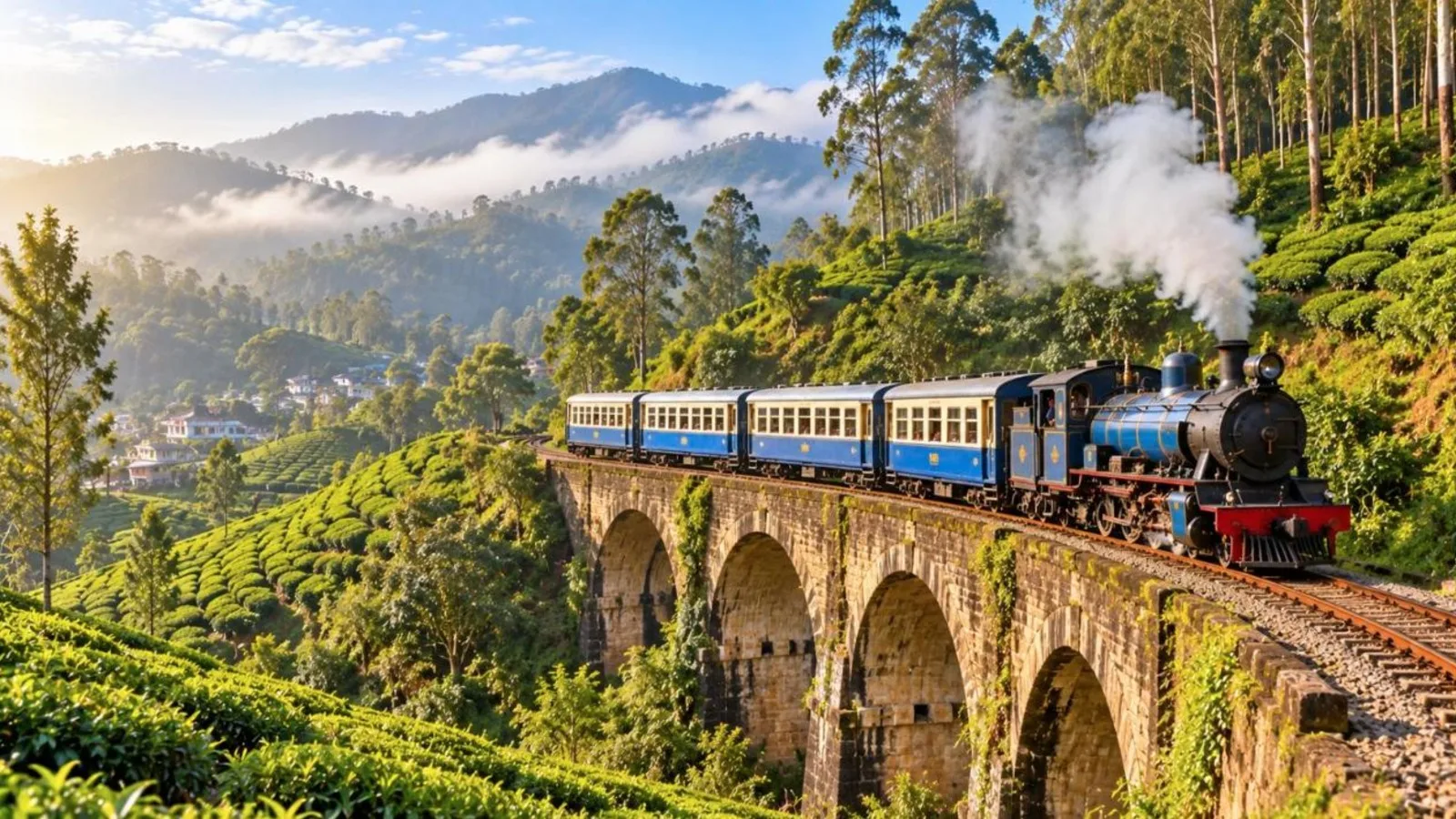
We end our series with a World Heritage Site you can actually ride. The Mountain Railways of India are three narrow-gauge "toy train" lines built in the late 19th and early 20th centuries to reach hill stations. They are celebrated by UNESCO as outstanding examples of engineering that brought railways into rugged mountain terrain.
At a glance
- Darjeeling Himalayan Railway: opened 1881, UNESCO listed in 1999
- Nilgiri Mountain Railway: completed 1908, added in 2005
- Kalka-Shimla Railway: opened 1903, added in 2008
Darjeeling Himalayan Railway (West Bengal)
Running about 88 km from New Jalpaiguri to Darjeeling on a 2-foot gauge, the "DHR" climbs to Ghum, one of India's highest railway stations at about 2,258 metres. It uses ingenious loops and zig-zag reverses to gain height, including the famous Batasia Loop with views of Kanchenjunga. Short steam and diesel joy rides between Darjeeling and Ghum are the most popular way to experience it.
Nilgiri Mountain Railway (Tamil Nadu)
The only rack railway in India, the NMR uses a toothed rack between the rails to climb the steep section between Mettupalayam and Coonoor, pushed by vintage steam locomotives. The full 46 km journey to Ooty (Udhagamandalam) passes through tunnels, over bridges and past tea gardens and waterfalls, taking around 5 hours uphill.
Kalka-Shimla Railway (Himachal Pradesh)
Built to serve Shimla, the summer capital of British India, this 96 km line climbs from Kalka to Shimla through more than 100 tunnels and over 800 bridges. The longest tunnel, at Barog, is named after the engineer associated with its construction. Trains such as the Shivalik Deluxe Express and Himalayan Queen run on the route.
Riding the toy trains
- Booking: through IRCTC; seats, especially on the Nilgiri and Darjeeling joy rides, sell out early in peak season.
- Best time: March-June and September-November for clear views; winter in Shimla brings occasional snow.
- Monsoon: landslides can suspend services; check status before you travel.
- Seats: on the NMR, sit on the right side going up for valley views.
Plan your trip
See our guides to West Bengal, Tamil Nadu and Himachal Pradesh.
The complete Wonders of India series
- Part 1: Taj Mahal
- Part 2: Agra Fort
- Part 3: Fatehpur Sikri
- Part 4: Red Fort
- Part 5: Qutub Minar
- Part 6: Humayun’s Tomb
- Part 7: Konark Sun Temple
- Part 8: Great Living Chola Temples
- Part 9: Mahabalipuram
- Part 10: Sanchi Stupa
- Part 11: Elephanta Caves
- Part 12: Rani ki Vav
- Part 13: Pattadakal
- Part 14: Hoysala Temples
- Part 15: Mahabodhi Temple
- Part 16: Nalanda
- Part 17: Ramappa Temple
- Part 18: Dholavira
- Part 19: Kaziranga
- Part 20: Mountain Railways of India (this article)
Also on HorizonDesk: our guides to Ajanta and Ellora, Khajuraho and Hampi, all UNESCO World Heritage Sites.
Thank you for exploring India's World Heritage with us. India has more UNESCO sites waiting to be explored; tell us in the comments which one we should cover next.