This is Part 10 of Wonders of India, our series on India's UNESCO World Heritage Sites. Start from Part 1: Taj Mahal or read the previous part, Part 9: Mahabalipuram.
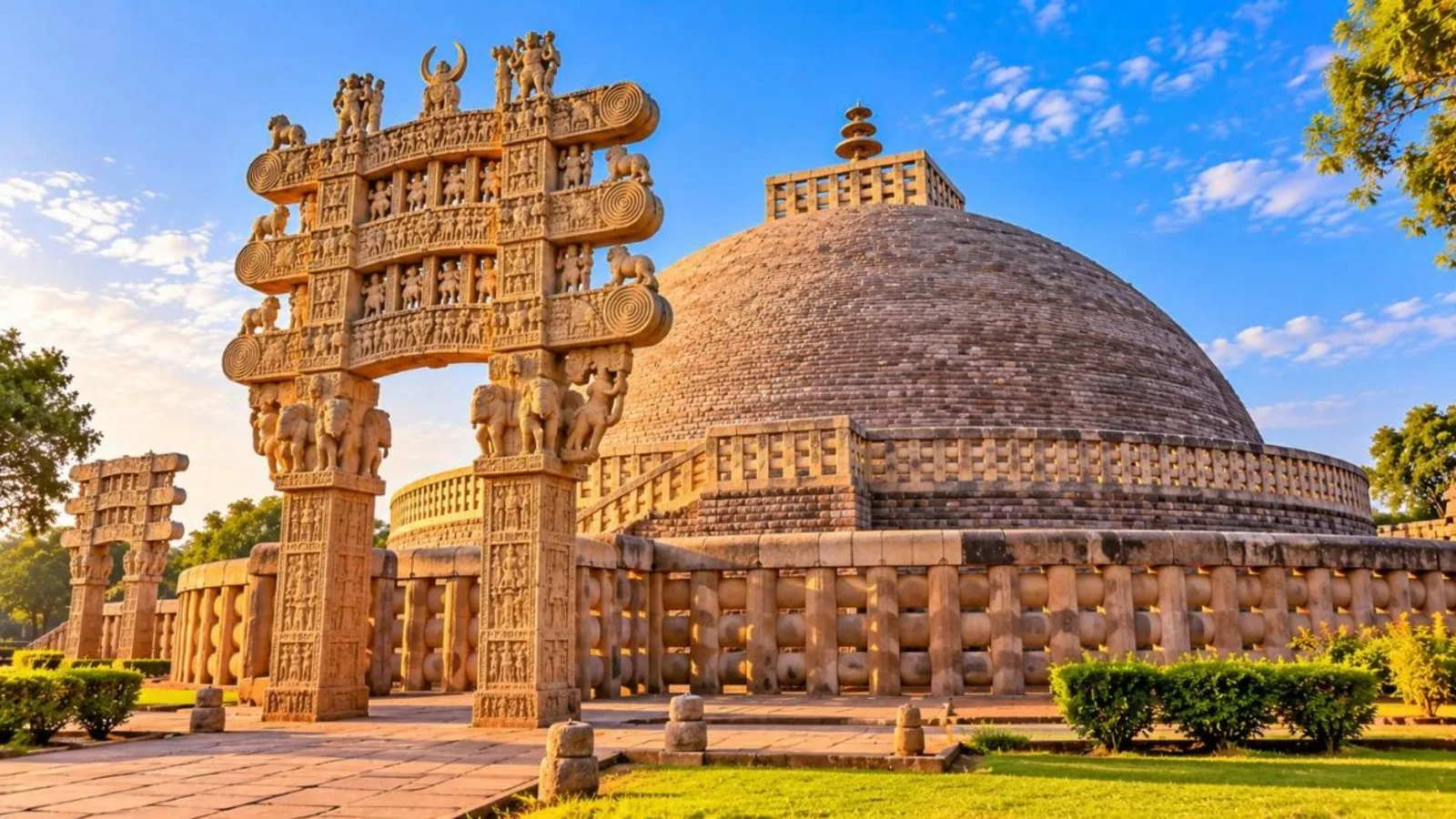
On a quiet hilltop in Madhya Pradesh stands one of the oldest stone structures in India and a cornerstone of Buddhist art. The Great Stupa at Sanchi was founded more than 2,200 years ago and is surrounded by monasteries, temples and gateways covered in some of the finest early Indian carvings.
At a glance
- Location: Sanchi, about 46 km from Bhopal, Madhya Pradesh
- Founded: 3rd century BCE, by Mauryan emperor Ashoka
- Gateways added: 1st century BCE
- UNESCO World Heritage Site: since 1989 (Buddhist Monuments at Sanchi)
History
After the bloody Kalinga war, Ashoka embraced Buddhism and built stupas across his empire to hold relics of the Buddha. His wife Devi is said to have come from nearby Vidisha. The original brick stupa was later enlarged and encased in stone, probably under the Shunga dynasty, and the four magnificent gateways (toranas) were added around the 1st century BCE. Sanchi remained an important Buddhist centre for over a thousand years before being abandoned. It was rediscovered by a British officer in 1818, and major restoration was carried out under Sir John Marshall in the early 20th century.
What to see
- The Great Stupa (Stupa 1): a hemispherical dome about 36 metres across, topped by a triple umbrella.
- The four toranas: carved with Jataka tales (stories of the Buddha's past lives), scenes from his life and lively images of yakshis, elephants and peacocks. In this early art, the Buddha is shown only through symbols such as footprints, the Bodhi tree, an empty throne or a wheel.
- Stupa 2 and Stupa 3: Stupa 3 once held relics of the Buddha's disciples Sariputta and Mahamoggallana.
- Ashokan pillar: the broken shaft of a pillar whose lion capital is in the site museum.
- Temple 17: a small Gupta-era temple, one of the earliest stone temples in India.
- ASI Museum: sculptures and finds from the site.
Visiting Sanchi
- Timings: sunrise to sunset; the museum is closed on Fridays.
- Tickets: around ₹40 for Indian citizens and ₹600 for foreign nationals.
- Getting there: about 1-1.5 hours by road from Bhopal; Sanchi and Vidisha also have railway stations.
Tips
- Spend time at each gateway; the carvings reward slow viewing.
- Combine with the Udayagiri caves near Vidisha and the Bhimbetka rock shelters near Bhopal.
Did you know?
The Sanchi Stupa appears on the back of India's ₹200 banknote. Plan your trip with our Madhya Pradesh travel guide.
Ticket prices and timings are set by the Archaeological Survey of India (ASI) and can change; online tickets are usually slightly cheaper. Check the ASI website before you visit.
Next in Wonders of India: the Elephanta Caves.