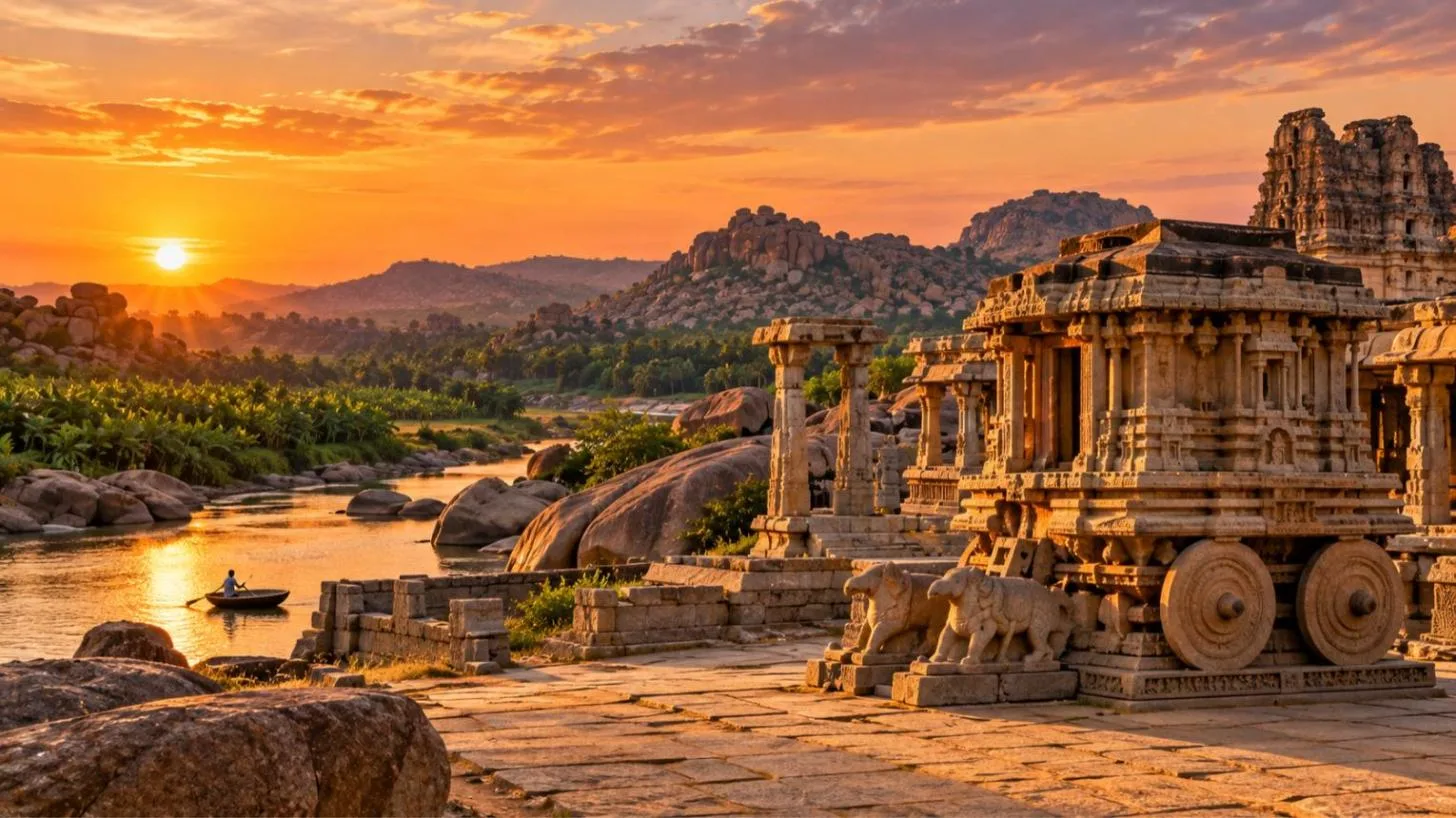
Few places in India feel as otherworldly as Hampi. Spread across a landscape of giant granite boulders, banana groves and the Tungabhadra River in Karnataka are the ruins of Vijayanagara, once one of the richest cities in the world. Today it is a UNESCO World Heritage Site and a favourite for history lovers, photographers and backpackers alike.
Why go
- A lost imperial capital: Vijayanagara flourished from the 14th to 16th centuries before it was sacked after the Battle of Talikota in 1565.
- Remarkable architecture: intricately carved temples, royal enclosures, aqueducts and bazaars spread over a huge area.
- Unique scenery: sunrise and sunset views over a boulder landscape unlike anywhere else in India.
Best time to visit
October to February is the best time. Days are pleasant for walking and cycling between ruins, and evenings are cool. March to May is very hot, with afternoon temperatures that make sightseeing hard. The monsoon (June to September) brings green landscapes and fewer visitors, but rain can make rocks slippery.
The state's Hampi Utsav cultural festival, with music, dance and light shows among the ruins, is usually held in winter; check Karnataka Tourism for this season's dates.
Top things to see
Vittala Temple and the Stone Chariot
Hampi's most famous sight. The stone chariot in the courtyard, which appears on India's ₹50 note, and the temple's "musical pillars" draw the biggest crowds. Battery-operated vehicles run from the parking area to the temple. Go early in the morning for softer light and fewer people.
Virupaksha Temple
A living temple that has been in worship for centuries, with a towering gateway at the end of Hampi Bazaar. Don't miss the temple elephant in the morning and the inverted shadow of the gopuram inside.
Royal Centre
See the Lotus Mahal in the Zenana Enclosure, the domed Elephant Stables, the Hazara Rama Temple with its carved panels, the great platform of Mahanavami Dibba, the geometric stepped tank and the Queen's Bath.
Hills and viewpoints
Hemakuta Hill is the classic sunset spot, an easy climb from the bazaar. Matanga Hill offers the best sunrise view over the whole site, but the climb is steeper; go with company.
Across the river
Take a coracle or ferry across the Tungabhadra to the Virupapur Gaddi area and Anegundi, a quiet village with older temples, rice fields and the hilltop Anjanadri temple, traditionally linked to Hanuman's birthplace.
Tickets
Most of Hampi's ruins are free to explore. The main ticketed site is the Vittala Temple, run by the Archaeological Survey of India. One ticket also covers the Lotus Mahal, Zenana Enclosure and Elephant Stables on the same day, so keep it with you. ASI's standard fees for such sites are about ₹40 for Indian citizens and ₹600 for foreign nationals, with slightly lower prices online; children under 15 enter free. Ticketed sites are generally open from about 6 am to 6 pm. Check the ASI website for current fees before you go.
Getting there and around
The nearest railhead is Hosapete (Hospet) Junction, about 13 km from Hampi, with trains from Bengaluru, Hubballi and Hyderabad. The closest airport is the small Jindal Vijaynagar Airport near Toranagallu, with limited flights; larger airports at Hubballi and Bengaluru are farther away. Bengaluru is around a 6 to 7 hour drive.
Hampi is spread out, so plan your transport. Hire a bicycle or scooter, take an autorickshaw for the day, or join a guided tour. A good local guide adds a great deal to the stories behind the stones.
Where to stay
- Hampi village area: simple guesthouses close to Virupaksha and the bazaar.
- Kamalapura: state tourism and mid-range hotels near the Royal Centre.
- Hosapete: more hotels and better transport links, 20-30 minutes away.
- Across the river and Anegundi: rustic stays, homestays and boutique heritage cottages.
A 2-day itinerary
- Day 1: Virupaksha Temple and Hampi Bazaar in the morning, Achyutaraya Temple and the riverside walk, then sunset from Hemakuta Hill.
- Day 2: Vittala Temple at opening time, then the Royal Centre (Lotus Mahal, Elephant Stables, Hazara Rama, stepped tank, Queen's Bath). End with a coracle ride or Anegundi.
Practical tips
- Start early; by noon the rocks reflect a lot of heat. Carry water, a hat and sunscreen.
- Wear comfortable shoes for uneven stone paths, and dress modestly for working temples.
- Don't climb on protected monuments or carvings.
- Cash is useful in small shops and for coracle rides, though UPI is widely accepted.
FAQ
How many days do I need in Hampi?
Two full days covers the highlights. Add a third day for Anegundi, the Tungabhadra Dam or the Daroji bear sanctuary.
Is Hampi good for families?
Yes, especially for children who enjoy history and exploring. Use autos or guided tours to avoid too much walking in the heat.
Sources
UNESCO World Heritage Centre; Archaeological Survey of India; Hampi.in monument timings. Fees and timings may change; check official sources before visiting.