This is Part 19 of Wonders of India, our series on India's UNESCO World Heritage Sites. Start from Part 1: Taj Mahal or read the previous part, Part 18: Dholavira.
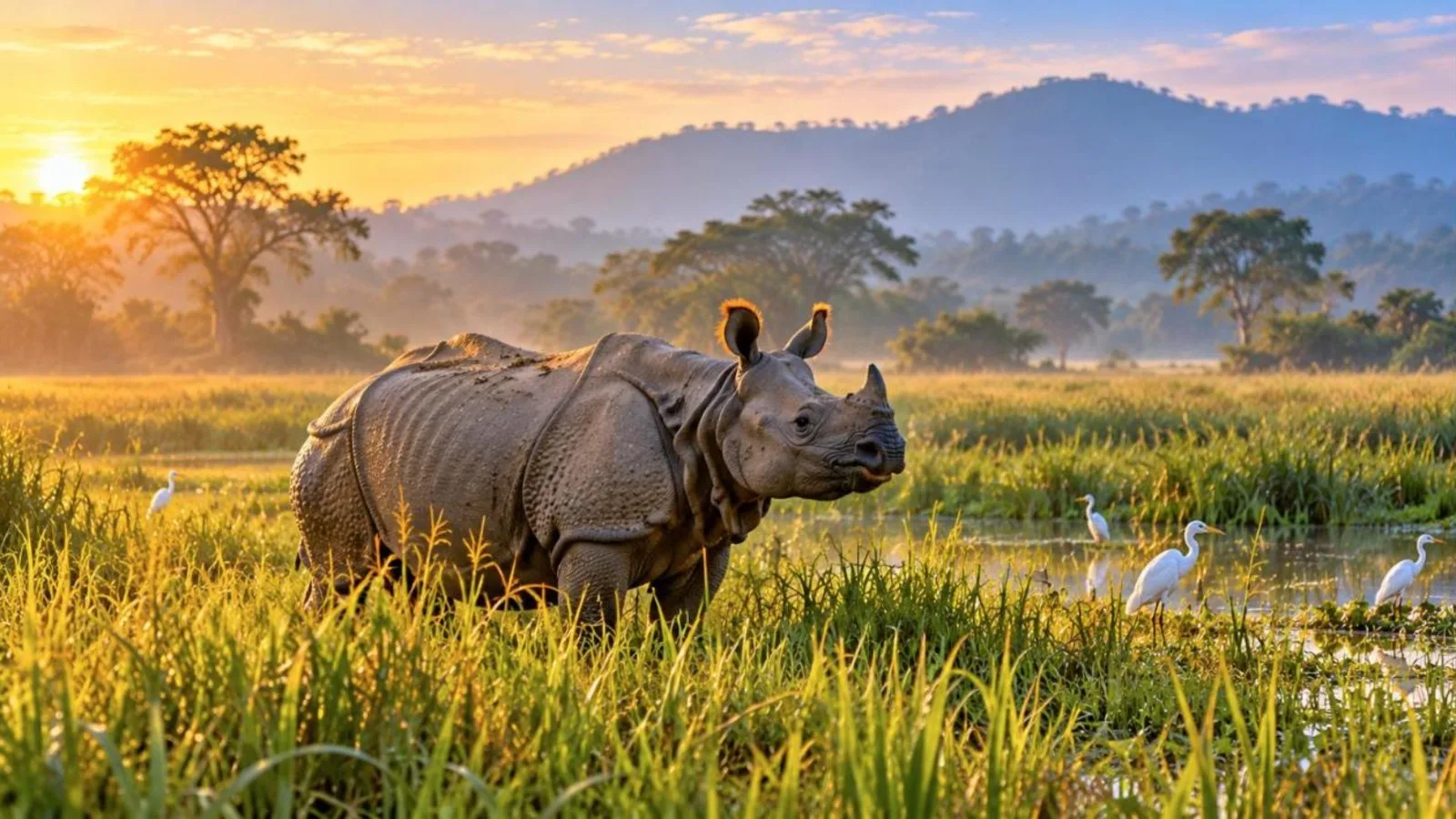
Not all of India's World Heritage Sites are made of stone. On the floodplains of the Brahmaputra in Assam, Kaziranga National Park protects vast grasslands, wetlands and forests, and the world's largest population of the greater one-horned rhinoceros.
At a glance
- Location: Golaghat and Nagaon districts, Assam
- Area: about 430 sq km (core), with extensions
- Protected since: 1905 (reserve forest), national park since 1974, tiger reserve since 2006
- UNESCO World Heritage Site: since 1985 (natural)
A conservation success story
By the early 1900s, hunting had reduced the rhino in Kaziranga to a few dozen animals. Protection began in 1905, reportedly after Lady Curzon, wife of the Viceroy, visited and failed to see a single rhino. Today, thanks to strict anti-poaching efforts, Kaziranga is home to over 2,600 rhinos according to recent census estimates, roughly two-thirds of the world's population of the species.
Wildlife
- Big Five of Kaziranga: one-horned rhino, Asian elephant, wild water buffalo, eastern swamp deer and Bengal tiger. The park has one of the highest tiger densities in the world.
- Birds: pelicans, storks, fishing eagles and the Bengal florican, especially in winter.
- Others: hoolock gibbons, Gangetic river dolphins in the Brahmaputra, otters and wild boar.
Safari ranges
- Central Range (Kohora): the most popular, with excellent rhino sightings.
- Western Range (Bagori): open grasslands and dense rhino populations.
- Eastern Range (Agaratoli): best for birdwatching around wetlands.
- Burapahar Range: quieter, with hills and forests.
Visiting Kaziranga
- Season: usually open from around October/November to April/May; closed during the monsoon floods.
- Safaris: jeep safaris in morning and afternoon slots; elephant safaris at dawn in some ranges.
- Getting there: about 4-5 hours by road from Guwahati; Jorhat airport is about 2 hours away.
- Stay: lodges and resorts around Kohora and Bagori.
Tips
- Book safaris in advance during peak season (December-March).
- Carry binoculars, a zoom lens and warm layers for winter mornings.
- Combine with tea estates and Majuli; see our Assam travel guide.
Did you know?
During the annual floods, animals move to higher ground in the Karbi Anglong hills across the national highway, and authorities regulate traffic to protect animal corridors.
Next in Wonders of India: the final part, the Mountain Railways of India.