This is Part 2 of Wonders of India, our series on India's UNESCO World Heritage Sites. Start from Part 1: Taj Mahal or read the previous part, Part 1: Taj Mahal.
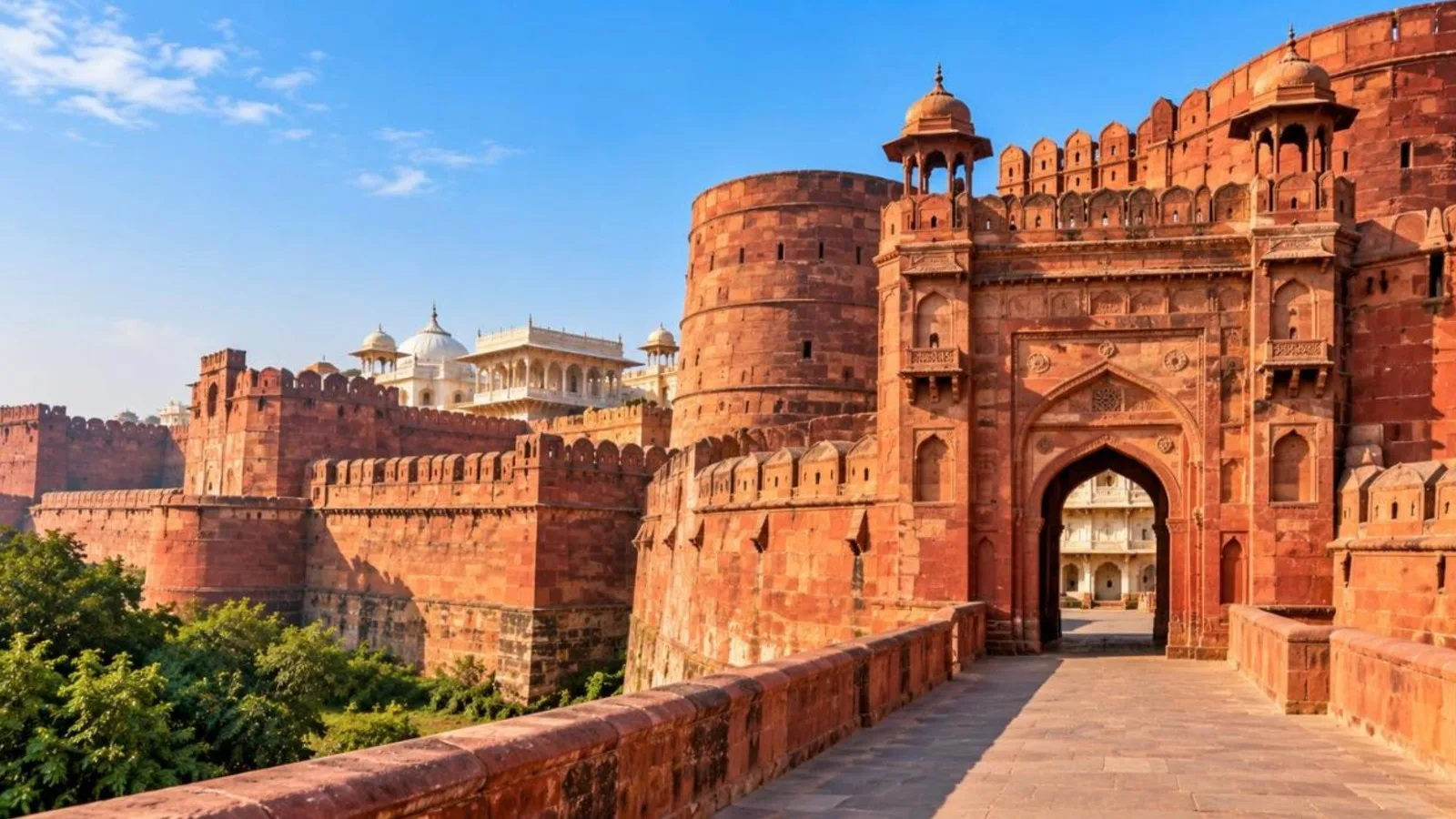
Just 2.5 km from the Taj Mahal stands Agra Fort, the seat of Mughal power for generations. Its massive red-sandstone walls enclose palaces, halls and mosques that trace the empire's story from Akbar to Aurangzeb.
At a glance
- Location: Agra, Uttar Pradesh
- Built: rebuilt by Akbar from 1565, expanded by Jahangir and Shah Jahan
- UNESCO World Heritage Site: since 1983
History
An older brick fort stood here before the Mughals. In 1565, Akbar rebuilt it in red sandstone, creating a crescent-shaped fortress about 2.5 km around along the Yamuna. His grandson Shah Jahan replaced several buildings with elegant white-marble palaces. In 1658, Shah Jahan was overthrown by his son Aurangzeb and held at the fort until his death in 1666, reportedly gazing at the Taj Mahal from the Musamman Burj. Later, the fort passed to the Marathas and then the British.
What to see
- Amar Singh Gate: the visitor entrance, with a zig-zag approach designed to slow attackers.
- Jahangiri Mahal: a red-sandstone palace blending Hindu and Central Asian styles, built by Akbar.
- Diwan-i-Aam: the hall of public audience with its rows of arches.
- Diwan-i-Khas: the hall of private audience, where the emperor met nobles and ambassadors.
- Khas Mahal and Anguri Bagh: Shah Jahan's marble palace and grape garden.
- Musamman Burj: the octagonal marble tower with views of the Taj Mahal.
- Sheesh Mahal: a mirror-inlaid bath chamber (often viewed only from outside).
Visiting Agra Fort
- Timings: sunrise to sunset, open daily.
- Tickets: around ₹50 for Indian citizens and ₹650 for foreign nationals.
- Light and sound show: held in the evenings on most days.
- Best time: October to March; late afternoon for the best views of the Taj.
Tips
- Allow 1.5-2 hours, and hire a licensed guide for the stories behind each palace.
- Large parts of the fort are still used by the Indian Army and are closed to visitors.
Did you know?
The Peacock Throne once stood in the fort's Diwan-i-Khas before it was moved to Delhi and later taken to Persia by Nadir Shah in 1739.
Ticket prices and timings are set by the Archaeological Survey of India (ASI) and can change; online tickets are usually slightly cheaper. Check the ASI website before you visit.
Next in Wonders of India: Fatehpur Sikri.