This is Part 1 of Wonders of India, our series on India's UNESCO World Heritage Sites.
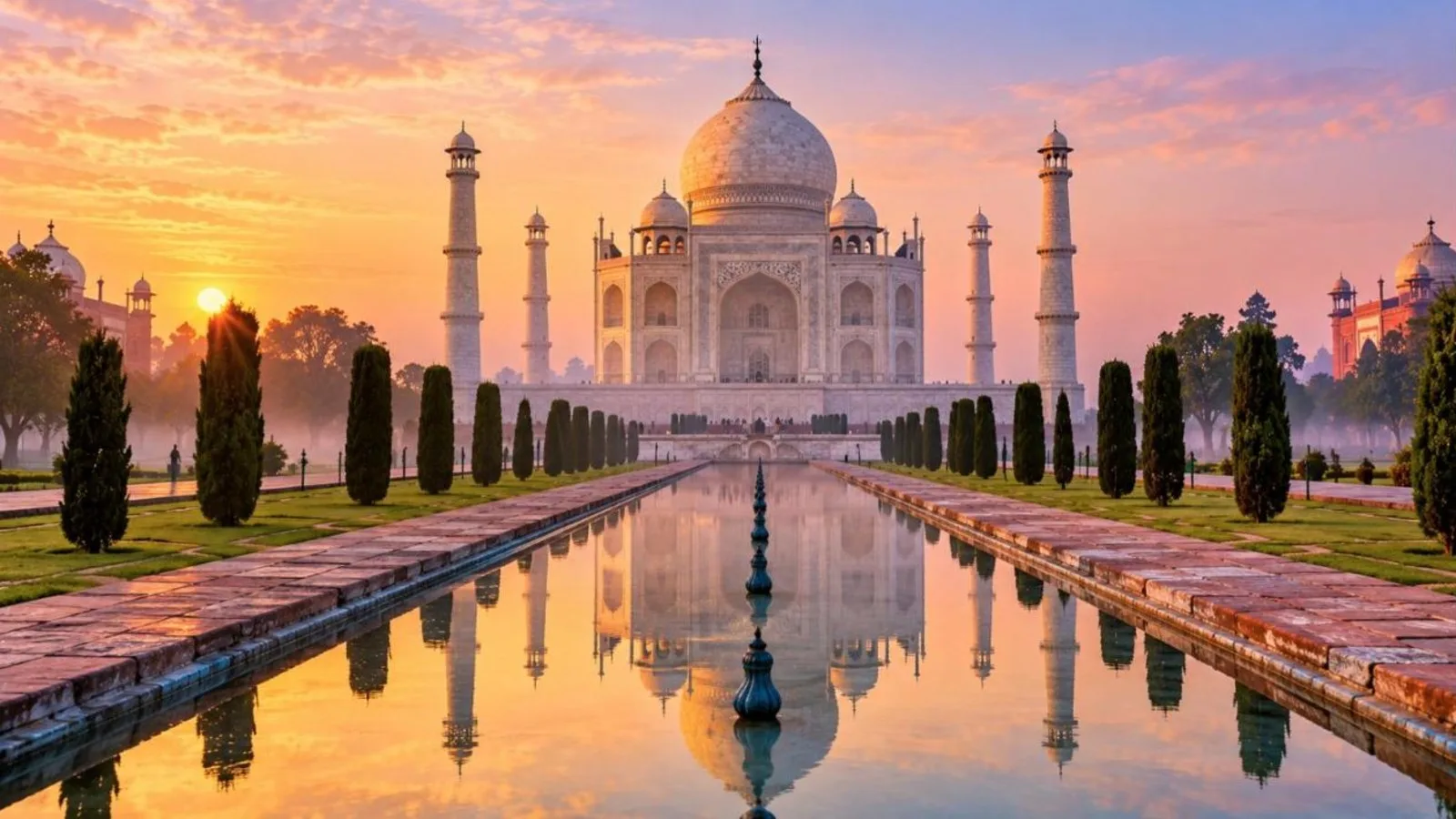
Welcome to Wonders of India, our new series on the country's UNESCO World Heritage Sites. There is no better place to begin than the Taj Mahal, perhaps the most famous building in the world and a symbol of India itself.
At a glance
- Location: Agra, Uttar Pradesh, on the bank of the Yamuna
- Built: about 1632-1653
- Commissioned by: Mughal emperor Shah Jahan
- UNESCO World Heritage Site: since 1983
History
In 1631, Shah Jahan's beloved wife Mumtaz Mahal died in Burhanpur while giving birth to their fourteenth child. The grief-stricken emperor ordered a mausoleum unlike any other. Work began around 1632 under the chief architect usually credited as Ustad Ahmad Lahauri, and some 20,000 artisans from across India, Persia and Central Asia are said to have worked on it. The main mausoleum was finished in about 1643, and the complex was completed around 1653.
Shah Jahan was later deposed by his son Aurangzeb and spent his last years confined in Agra Fort, from where he could see the Taj. After his death in 1666, he was buried beside Mumtaz Mahal, the only asymmetrical element in the otherwise perfectly symmetrical design.
Architecture highlights
- White Makrana marble that changes colour with the light, from pink at dawn to gold at sunset.
- Pietra dura: semi-precious stones such as jade, carnelian and lapis lazuli inlaid into the marble in floral patterns.
- Calligraphy from the Quran around the arches, cleverly enlarged higher up so it appears uniform from below.
- Minarets that lean slightly outward, so they would fall away from the tomb in an earthquake.
- The charbagh garden, a Persian four-part garden representing paradise.
What to see
- The great gate (Darwaza-i-Rauza) framing your first view of the Taj.
- The main mausoleum and the cenotaphs of Mumtaz Mahal and Shah Jahan.
- The red-sandstone mosque and its mirror-image guest house (jawab).
- Mehtab Bagh across the river, for sunset views.
Visiting the Taj Mahal
- Timings: sunrise to sunset; closed on Fridays.
- Tickets: around ₹50 for Indian citizens and ₹1,100 for foreign nationals, with an additional ticket (around ₹200) to enter the main mausoleum.
- Night viewing: held on full-moon nights and two nights either side (except Fridays and during Ramzan), with limited tickets sold a day in advance.
- Best time: October to March, and arrive at sunrise for the best light and smallest crowds.
Tips
- Food, tobacco, tripods and large bags are not allowed; small bags and a water bottle are fine.
- Use the East or West Gate; electric vehicles take you from the parking area.
- Combine with Agra Fort and Fatehpur Sikri for a full Mughal day.
Did you know?
The Taj Mahal was voted one of the New Seven Wonders of the World in 2007, and its marble is periodically treated with a clay pack (multani mitti) to restore its whiteness.
Ticket prices and timings are set by the Archaeological Survey of India (ASI) and can change; online tickets are usually slightly cheaper. Check the ASI website before you visit.
Next in Wonders of India: Agra Fort.