This is Part 12 of Wonders of India, our series on India's UNESCO World Heritage Sites. Start from Part 1: Taj Mahal or read the previous part, Part 11: Elephanta Caves.
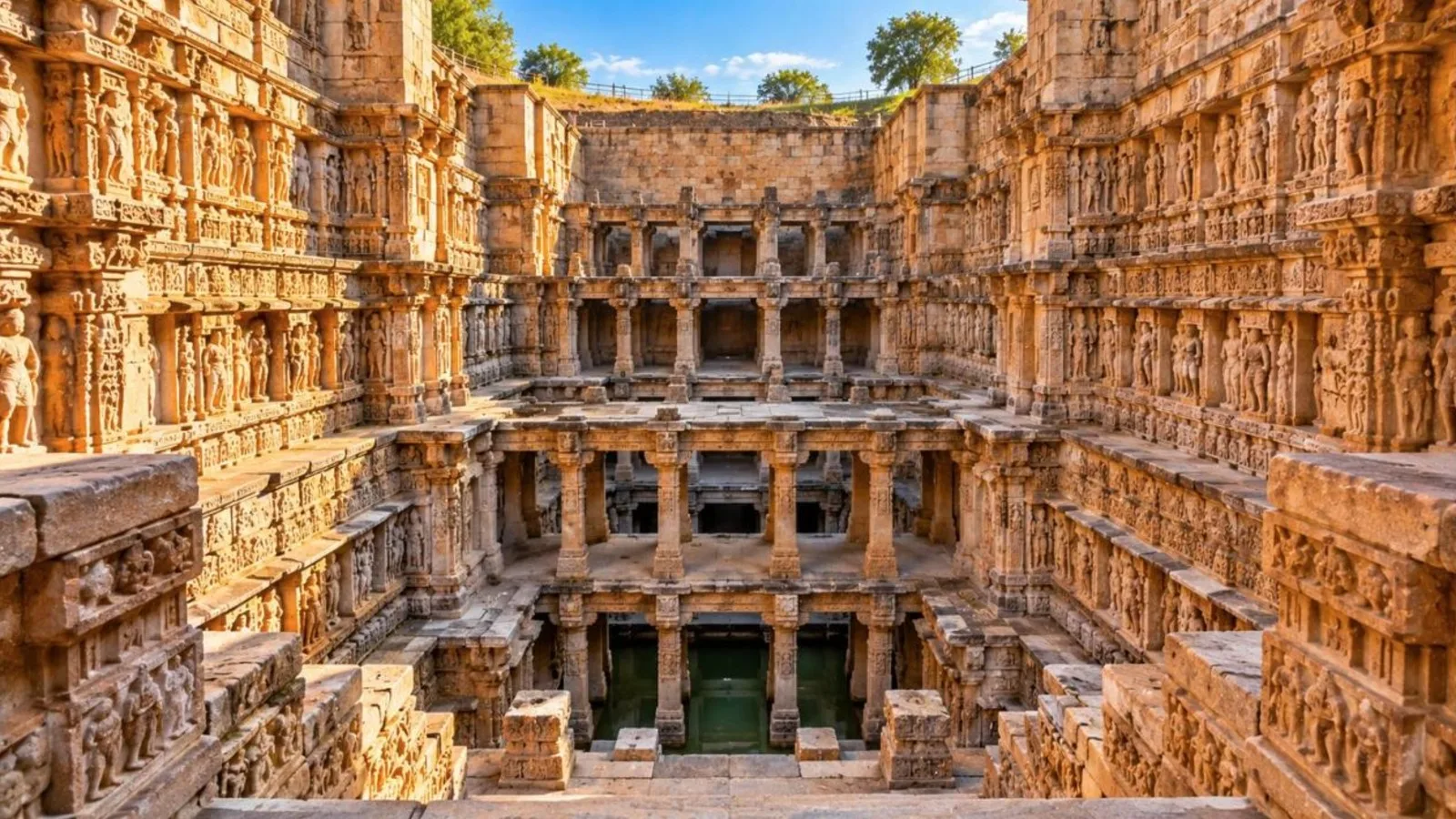
In dry western India, stepwells were vital sources of water as well as places of worship and rest. The grandest of them all is Rani ki Vav, the "Queen's Stepwell", in Patan, Gujarat: a monumental, sculpture-filled structure designed as an upside-down temple honouring the sanctity of water.
At a glance
- Location: Patan, Gujarat, about 125 km from Ahmedabad
- Built: around 1063 CE
- Built by: Queen Udayamati, in memory of her husband, King Bhimdev I of the Solanki (Chaulukya) dynasty
- UNESCO World Heritage Site: since 2014
History
Patan was the capital of the Solankis, one of western India's great medieval dynasties. Rani ki Vav was built at the height of their power. Over the centuries, floods from the nearby Saraswati river buried it under silt, which helped preserve its carvings. The Archaeological Survey of India excavated and restored it from the 1960s through the 1980s, revealing sculptures in remarkable condition.
What to see
- Seven levels of stairs and pavilions descending about 27 metres to the water.
- More than 500 principal sculptures and over a thousand smaller ones.
- The Dashavatara: the ten avatars of Vishnu, including Kalki, Rama and Varaha.
- Apsaras and nagakanyas: celestial maidens shown applying make-up, adorning themselves and dancing.
- Sheshashayi Vishnu: Vishnu reclining on the serpent Shesha, deep in the well shaft.
- Geometric patterns echoing Patan's famous patola textiles.
Visiting Rani ki Vav
- Timings: sunrise to sunset, open daily.
- Tickets: around ₹40 for Indian citizens and ₹600 for foreign nationals.
- Getting there: about 2.5-3 hours by road from Ahmedabad; often combined with the Modhera Sun Temple (about 35 km away).
Tips
- Visit in the morning when sunlight reaches deeper into the well.
- Visit a patola weaving workshop in Patan; the double-ikat silk saris can take months to make.
Did you know?
Rani ki Vav appears on the back of India's ₹100 banknote, and it has been called the "queen of stepwells". Plan your trip with our Gujarat travel guide.
Ticket prices and timings are set by the Archaeological Survey of India (ASI) and can change; online tickets are usually slightly cheaper. Check the ASI website before you visit.
Next in Wonders of India: the temples of Pattadakal.