This is Part 3 of Wonders of India, our series on India's UNESCO World Heritage Sites. Start from Part 1: Taj Mahal or read the previous part, Part 2: Agra Fort.
About 40 km from Agra lies one of the most fascinating ghost cities in the world. Fatehpur Sikri was built by the Mughal emperor Akbar as his new capital, and it remains almost perfectly preserved more than four centuries after it was largely abandoned.
At a glance
- Location: near Agra, Uttar Pradesh
- Built: from about 1571 to 1585
- Built by: Akbar
- UNESCO World Heritage Site: since 1986
History
Akbar had long hoped for an heir. He visited the Sufi saint Shaikh Salim Chishti at Sikri, who foretold the birth of a son. When Prince Salim (later Emperor Jahangir) was born in 1569, Akbar decided to build a grand new capital at the village. After his victory in Gujarat in 1573, it became known as Fatehpur, the "city of victory". The court moved here, but by around 1585 Akbar had shifted his capital to Lahore, possibly because of water shortages and political needs, and the city was gradually deserted.
What to see
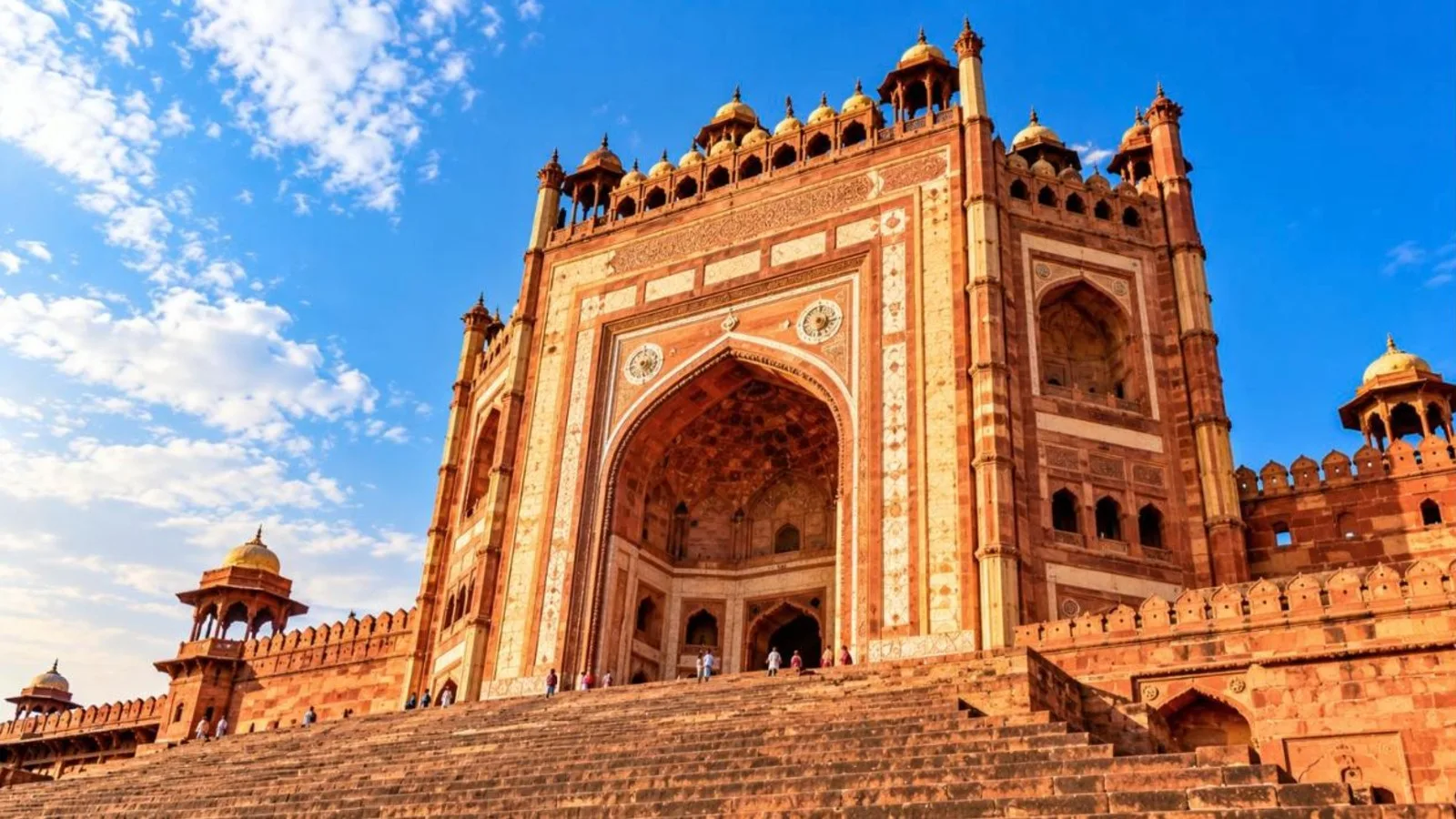
- Buland Darwaza: the 54-metre "Gate of Magnificence", one of the tallest gateways in the world.
- Jama Masjid: one of the largest mosques of its time.
- Tomb of Salim Chishti: a white-marble shrine with delicate lattice screens, where visitors tie threads while making a wish.
- Diwan-i-Khas: famous for its carved central pillar supporting a platform where Akbar is said to have held discussions with scholars of different faiths.
- Panch Mahal: a five-storey open pavilion for catching cool breezes.
- Jodha Bai's Palace and Birbal's House: royal residences blending Hindu and Islamic styles.
- Anup Talao: an ornamental pool linked to the legendary musician Tansen.
Visiting Fatehpur Sikri
- Timings: sunrise to sunset.
- Tickets: the mosque and Salim Chishti's tomb are free (but are active places of worship); the royal palace complex is ticketed, around ₹50 for Indians and ₹610 for foreigners.
- Getting there: about an hour by road from Agra; often combined with a trip to Agra or on the drive to Jaipur.
Tips
- Dress modestly and remove shoes in the mosque complex; the stone floor gets very hot in summer.
- Avoid unofficial guides and touts near the entrance; hire a licensed guide.
Did you know?
Akbar's experiments in religious dialogue at Fatehpur Sikri led to the Din-i-Ilahi, his attempt to draw ideas from several faiths.
Ticket prices and timings are set by the Archaeological Survey of India (ASI) and can change; online tickets are usually slightly cheaper. Check the ASI website before you visit.
Next in Wonders of India: the Red Fort, Delhi.