This is Part 6 of Wonders of India, our series on India's UNESCO World Heritage Sites. Start from Part 1: Taj Mahal or read the previous part, Part 5: Qutub Minar.
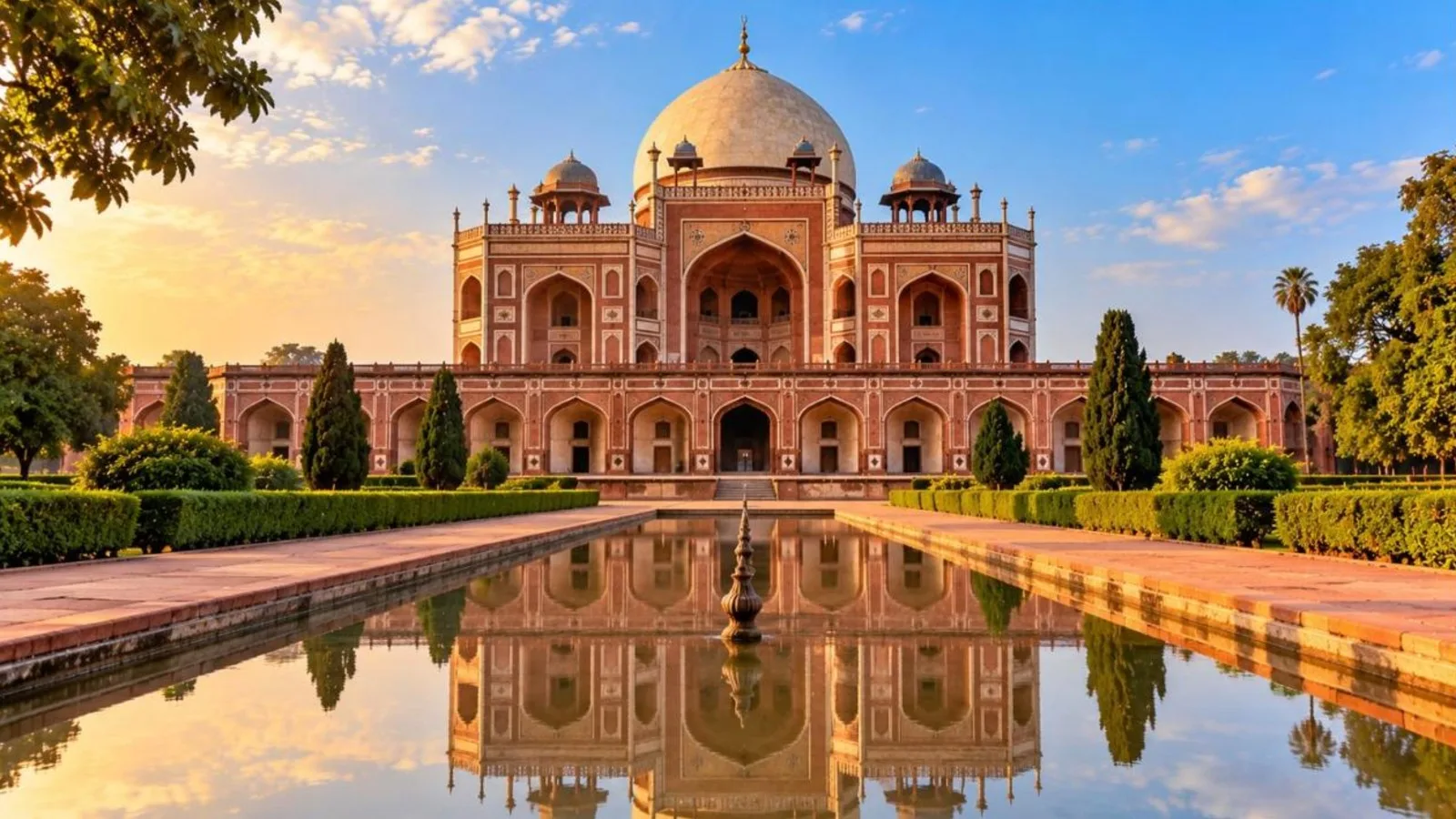
Decades before the Taj Mahal, the Mughals built a magnificent garden tomb in Delhi for the second emperor, Humayun. With its red sandstone, white marble and perfect symmetry, it set the template for Mughal architecture.
At a glance
- Location: Nizamuddin, Delhi
- Built: about 1565-1572
- Commissioned by: Humayun's widow, Bega Begum (Haji Begum)
- Architect: Mirak Mirza Ghiyas, a Persian architect
- UNESCO World Heritage Site: since 1993
History
Humayun died in 1556 after falling down the stairs of his library at Purana Qila. His widow commissioned this grand mausoleum during the reign of their son, Akbar. It was the first garden tomb on the Indian subcontinent and is so filled with burials of Mughal royals, more than 150 in all, that it is often called the "dormitory of the Mughals".
In 1857, the last Mughal emperor, Bahadur Shah Zafar, took refuge here before surrendering to the British, ending the Mughal dynasty. A major restoration by the Aga Khan Trust for Culture and the ASI in the 2000s revived its gardens and water channels.
Architecture highlights
- Charbagh garden: a Persian-style garden divided into four by water channels.
- Double dome: an outer dome for grandeur and a lower inner ceiling for proportion, later used at the Taj Mahal.
- Red sandstone with white marble inlay, combining Persian and Indian elements such as chhatris (kiosks).
- Raised platform with dozens of chambers holding royal graves.
What to see in the complex
- Isa Khan's Tomb: an octagonal tomb of a Sur-dynasty noble, older than Humayun's.
- Arab ki Sarai and Afsarwala Tomb
- Barber's Tomb (Nai ka Gumbad)
- Sunder Nursery: a beautifully restored heritage park next door.
Visiting Humayun's Tomb
- Timings: sunrise to sunset, open daily.
- Tickets: around ₹35-40 for Indian citizens and ₹500-550 for foreign nationals.
- Getting there: JLN Stadium or Jangpura metro stations, or Hazrat Nizamuddin railway station nearby.
- Best time: late afternoon, when the sandstone glows.
Tips
- Visit the nearby Nizamuddin Dargah on a Thursday evening to hear qawwali.
- Allow 2 hours to explore the full complex and Sunder Nursery.
Did you know?
Humayun's Tomb was one of the first places in India to use white marble on such a large scale, a material that would reach its peak at the Taj Mahal.
Ticket prices and timings are set by the Archaeological Survey of India (ASI) and can change; online tickets are usually slightly cheaper. Check the ASI website before you visit.
Next in Wonders of India: the Konark Sun Temple.