This is Part 5 of Wonders of India, our series on India's UNESCO World Heritage Sites. Start from Part 1: Taj Mahal or read the previous part, Part 4: Red Fort.
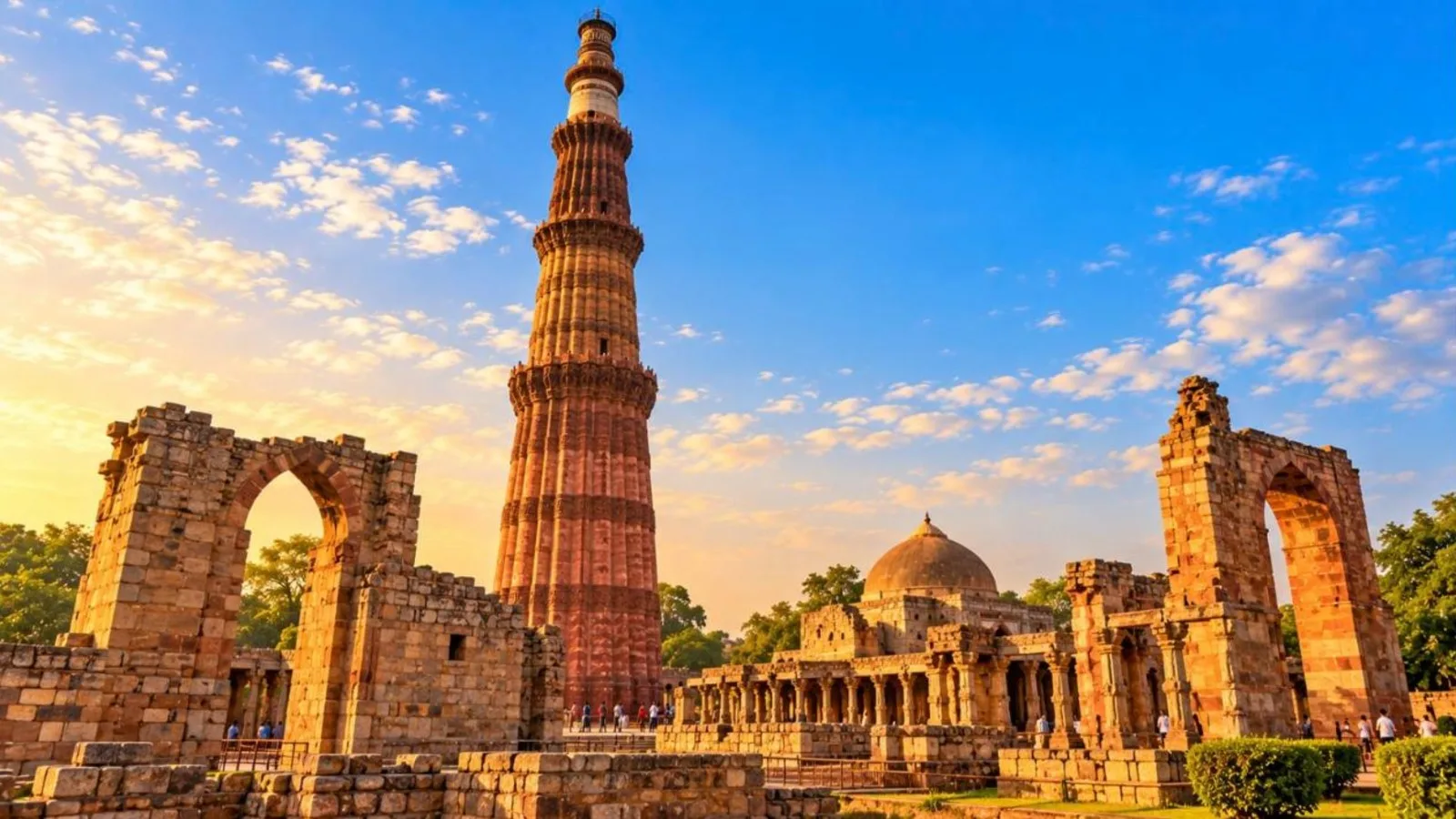
In south Delhi's Mehrauli stands the Qutub Minar, a soaring fluted tower that marks the beginning of Muslim rule in Delhi more than 800 years ago. Around it lies a complex of ruins that includes one of the world's most famous metallurgical mysteries.
At a glance
- Location: Mehrauli, south Delhi
- Built: begun around 1199, completed in the early 13th century
- Height: about 72.5 metres, with five storeys and 379 steps
- UNESCO World Heritage Site: since 1993 (Qutb Minar and its Monuments)
History
The minar was begun by Qutb-ud-din Aibak, founder of the Mamluk (Slave) dynasty of the Delhi Sultanate, who completed the first storey. His successor Iltutmish added three more. After lightning damaged the top in the 14th century, Firoz Shah Tughlaq rebuilt it, adding a fifth storey faced with white marble. The tower's purpose is debated: a victory tower, a minaret for the call to prayer, or both.
What to see
- The minar: red and buff sandstone with bands of Arabic calligraphy and projecting balconies.
- Quwwat-ul-Islam Mosque: one of the earliest mosques in India, built using columns from earlier temples.
- The Iron Pillar: over 7 metres tall and around 1,600 years old, it dates from the Gupta period and has barely rusted, thanks to its high phosphorus content and a protective oxide layer.
- Alai Darwaza: an elegant gateway built by Alauddin Khalji in 1311, one of the first buildings in India with true arches and a dome.
- Alai Minar: Alauddin's unfinished attempt to build a tower twice as tall.
- Tomb of Iltutmish: richly carved inside.
Visiting Qutub Minar
- Timings: sunrise to sunset, open daily; the tower is often lit in the evenings.
- Tickets: around ₹35-40 for Indian citizens and ₹500-550 for foreign nationals.
- Getting there: Qutub Minar metro station on the Yellow Line, then a short auto ride.
- Note: climbing the tower has been banned since 1981.
Tips
- Visit early morning or late afternoon for softer light and fewer crowds.
- Explore the nearby Mehrauli Archaeological Park, with over 100 historic structures.
Did you know?
There was once a tradition of visitors trying to wrap their arms around the Iron Pillar with their backs to it for good luck; a fence now protects it.
Ticket prices and timings are set by the Archaeological Survey of India (ASI) and can change; online tickets are usually slightly cheaper. Check the ASI website before you visit.
Next in Wonders of India: Humayun's Tomb.