This is Part 15 of Wonders of India, our series on India's UNESCO World Heritage Sites. Start from Part 1: Taj Mahal or read the previous part, Part 14: Hoysala Temples.
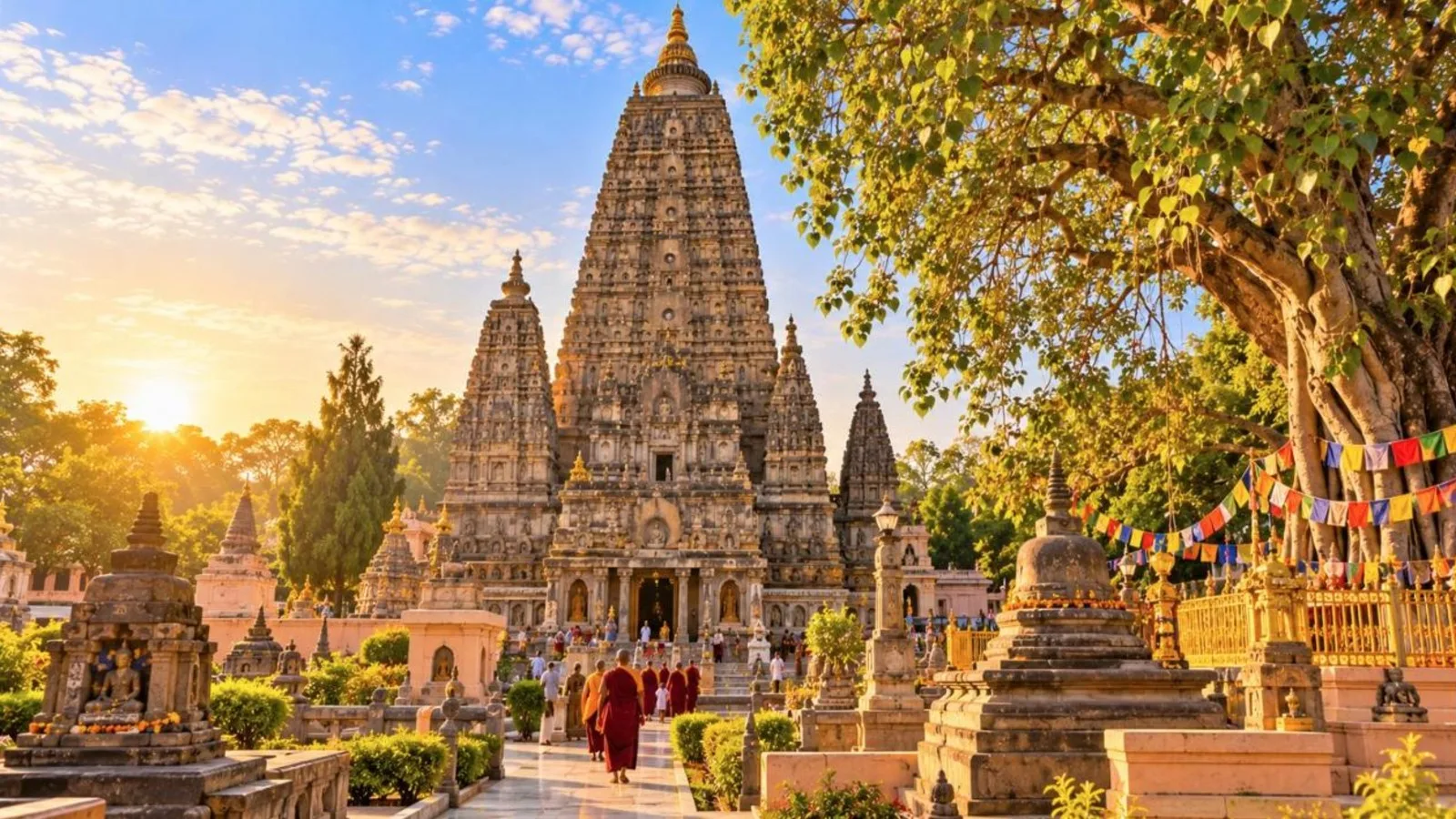
For Buddhists around the world, there is no holier place than Bodh Gaya in Bihar. It was here, more than 2,500 years ago, that Prince Siddhartha Gautama meditated beneath a pipal tree and attained enlightenment, becoming the Buddha.
At a glance
- Location: Bodh Gaya, Gaya district, Bihar
- First shrine: built by Emperor Ashoka in the 3rd century BCE
- Present temple: largely 5th-6th centuries CE (Gupta period), later restored
- UNESCO World Heritage Site: since 2002
History
Emperor Ashoka visited the site and built the first shrine here. The present brick temple, about 55 metres tall, dates mainly from the Gupta period and is one of the earliest surviving brick temples in India. After Buddhism declined in India, the temple fell into neglect. It was restored in the 19th century with help from Burmese Buddhists and the British archaeologist Alexander Cunningham. Today, it is managed by the Bodhgaya Temple Management Committee and attracts pilgrims from across Asia and beyond.
What to see
- The Bodhi tree: believed to be a descendant of the original tree under which the Buddha meditated, through a sapling from the sacred tree in Anuradhapura, Sri Lanka.
- Vajrasana (Diamond Throne): a stone platform marking the spot of enlightenment.
- Main shrine: a gilded image of the Buddha in the earth-touching gesture.
- The seven sacred spots: where the Buddha is said to have spent the seven weeks after enlightenment, including the Animesh Lochan Chaitya and the Ratnachankrama (jewelled walkway).
- Lotus pond and meditation park.
- International monasteries built by Thailand, Japan, Bhutan, Tibet and other countries, and the 80-foot Great Buddha Statue nearby.
Visiting Bodh Gaya
- Timings: roughly 5 am to 9 pm.
- Entry: free; mobile phones are usually not allowed inside the complex and must be deposited at the entrance; a fee applies for cameras.
- Getting there: Gaya International Airport is about 12 km away; Gaya Junction railway station is about 15 km away.
- Best time: October to March. December-January is the main pilgrimage season, often with large teachings and ceremonies.
Tips
- Visit early morning or evening to see monks chanting and lighting butter lamps.
- Dress modestly, remove shoes and walk clockwise around the temple.
- Combine with Nalanda and Rajgir, about 2-3 hours away.
Did you know?
Pilgrims often collect fallen leaves from the Bodhi tree as blessings, but picking leaves from the tree is not allowed.
Next in Wonders of India: the ancient university of Nalanda.