This is Part 11 of Wonders of India, our series on India's UNESCO World Heritage Sites. Start from Part 1: Taj Mahal or read the previous part, Part 10: Sanchi Stupa.
An hour by boat from the bustle of south Mumbai lies Gharapuri, better known as Elephanta Island. Carved into its basalt hill are cave temples dedicated to Shiva, containing some of the most powerful sculptures in Indian art.
At a glance
- Location: Elephanta (Gharapuri) Island, Mumbai harbour, Maharashtra
- Carved: mostly in the 5th-6th centuries CE
- UNESCO World Heritage Site: since 1987
History
The caves were excavated from solid rock, probably under rulers of the Kalachuri dynasty, though their exact patrons are debated. When the Portuguese arrived in the 16th century, they found a huge stone elephant near the landing point and named the island "Elephanta". That elephant now stands in the Jijamata Udyan (Byculla Zoo) grounds in Mumbai. Some sculptures were damaged during the colonial period.
What to see
- Cave 1 (the Great Cave): a pillared hall about 40 metres deep.
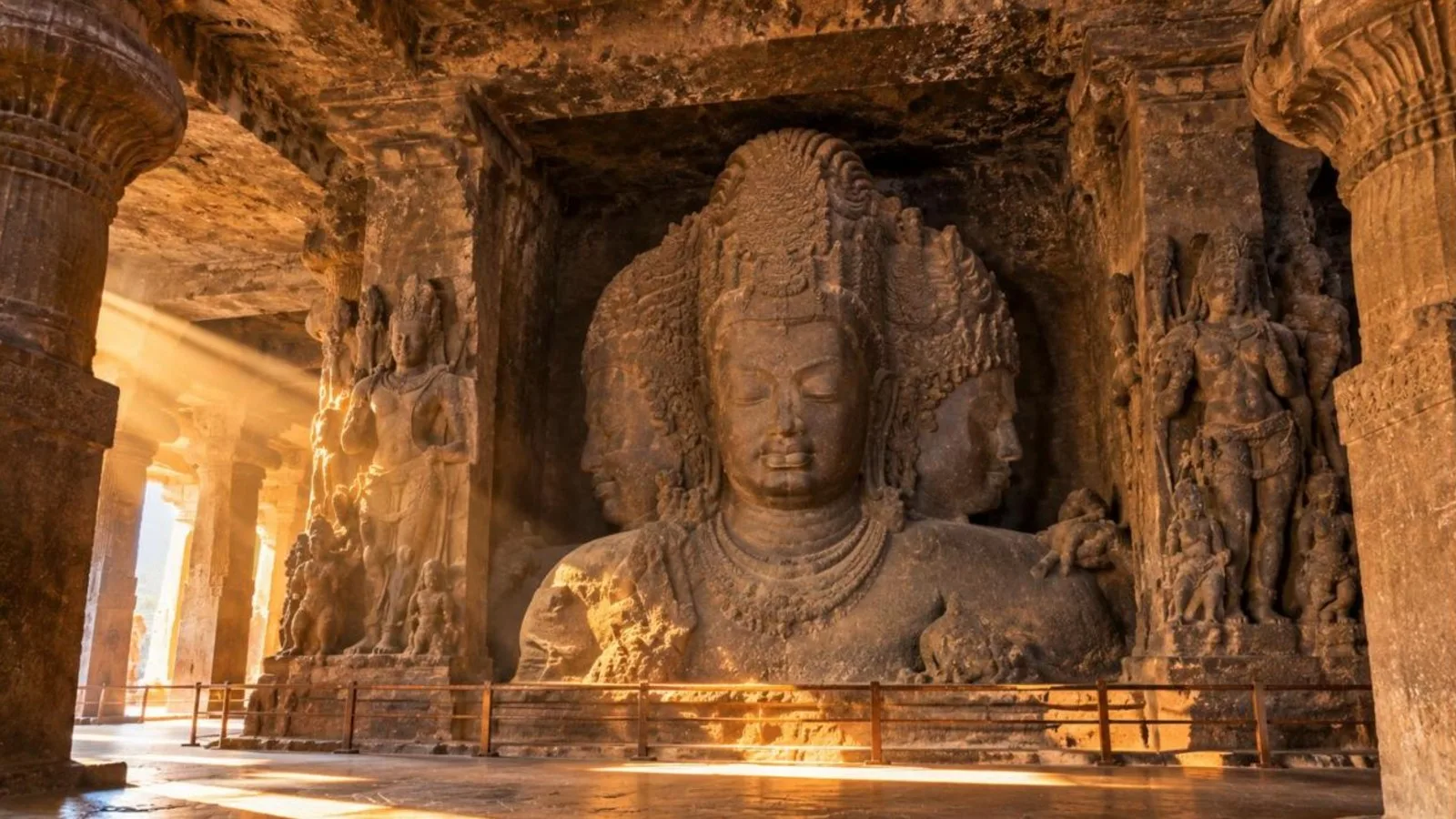
- Trimurti (Sadashiva): a colossal, roughly 6-metre-tall three-headed bust of Shiva, showing him as creator, protector and destroyer. It is one of the masterpieces of Indian sculpture.
- Ardhanarishvara: Shiva as half-male, half-female.
- Gangadhara: Shiva receiving the river Ganga in his hair.
- Kalyanasundara and Ravananugraha panels: Shiva's marriage to Parvati, and Ravana shaking Mount Kailash.
- Smaller caves and Cannon Hill: with British-era cannons and views of the harbour.
Visiting Elephanta
- Ferries: from the Gateway of India, roughly every 30 minutes from morning to early afternoon; the crossing takes about an hour each way.
- Timings: the caves are open from about 9 am to 5:30 pm and are closed on Mondays.
- Tickets: around ₹40 for Indian citizens and ₹600 for foreign nationals, plus the ferry fare and a small island fee.
- The climb: about 120 steps from the jetty, lined with stalls; a small toy train covers the jetty walk.
Tips
- Take an early ferry to avoid crowds and heat.
- Ferries may be suspended in rough monsoon weather.
- Watch your belongings around the island's monkeys.
Did you know?
Despite being just 10 km from Mumbai, the island received a permanent mainland electricity connection only in 2018, via an undersea cable. Plan your trip with our Maharashtra travel guide.
Ticket prices and timings are set by the Archaeological Survey of India (ASI) and can change; online tickets are usually slightly cheaper. Check the ASI website before you visit.
Next in Wonders of India: Rani ki Vav, the Queen's Stepwell.