This is Part 4 of Wonders of India, our series on India's UNESCO World Heritage Sites. Start from Part 1: Taj Mahal or read the previous part, Part 3: Fatehpur Sikri.
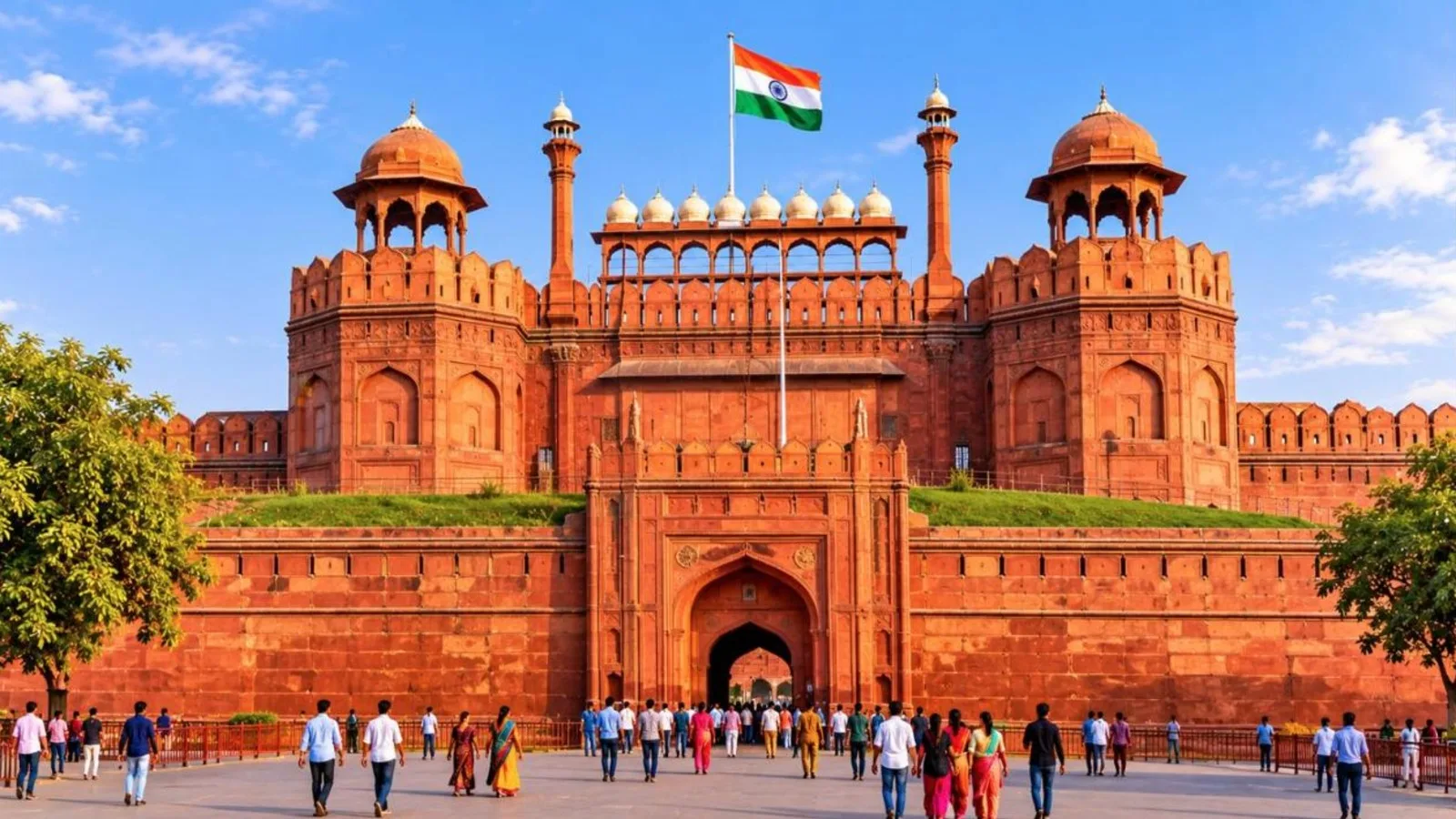
The Red Fort (Lal Qila) in Old Delhi is more than a Mughal palace. It has witnessed the height of the empire, its fall in 1857 and the birth of independent India, and it remains one of the country's most powerful national symbols.
At a glance
- Location: Old Delhi, beside Chandni Chowk
- Built: 1639-1648
- Built by: Mughal emperor Shah Jahan
- UNESCO World Heritage Site: since 2007
History
When Shah Jahan moved his capital from Agra to Delhi, he founded a new city, Shahjahanabad, with the Red Fort as its royal palace. Its red-sandstone walls stretch about 2.5 km, enclosing marble pavilions once linked by a water channel called the Nahr-i-Bihisht (Stream of Paradise).
In 1739, the Persian ruler Nadir Shah plundered the fort and carried away the Peacock Throne. After the revolt of 1857, the British exiled the last Mughal emperor, Bahadur Shah Zafar, demolished many buildings and turned the fort into a garrison. The trials of Indian National Army officers held here in 1945-46 became a rallying point for the freedom movement. On 15 August 1947, Jawaharlal Nehru raised the national flag here, and every Prime Minister has addressed the nation from its ramparts on Independence Day since.
What to see
- Lahori Gate: the main entrance, facing towards Lahore.
- Chhatta Chowk: a covered bazaar, still lined with shops.
- Diwan-i-Aam: the hall of public audience with the emperor's marble throne canopy.
- Diwan-i-Khas: the hall of private audience, inscribed with the famous Persian verse "If there is paradise on earth, it is this, it is this, it is this."
- Rang Mahal and Khas Mahal: the palace of colours and the emperor's private apartments.
- Moti Masjid: a small "pearl mosque" added by Aurangzeb.
- Museums: including displays on the freedom struggle.
Visiting the Red Fort
- Timings: roughly 9:30 am to 4:30 pm; closed on Mondays.
- Tickets: sold online and at the gate; foreign nationals pay a higher fee. Check current rates on the ASI website.
- Getting there: Lal Qila or Chandni Chowk metro stations.
- Sound and light show: held in the evenings, narrating the fort's history.
Tips
- Combine with Jama Masjid and a food walk through Chandni Chowk.
- The fort is closed to the public for some days before Independence Day for preparations.
Did you know?
The Mughals called it Qila-i-Mubarak, the "Blessed Fort". The name Lal Qila, or Red Fort, comes from its red sandstone walls.
Ticket prices and timings are set by the Archaeological Survey of India (ASI) and can change; online tickets are usually slightly cheaper. Check the ASI website before you visit.
Next in Wonders of India: Qutub Minar.