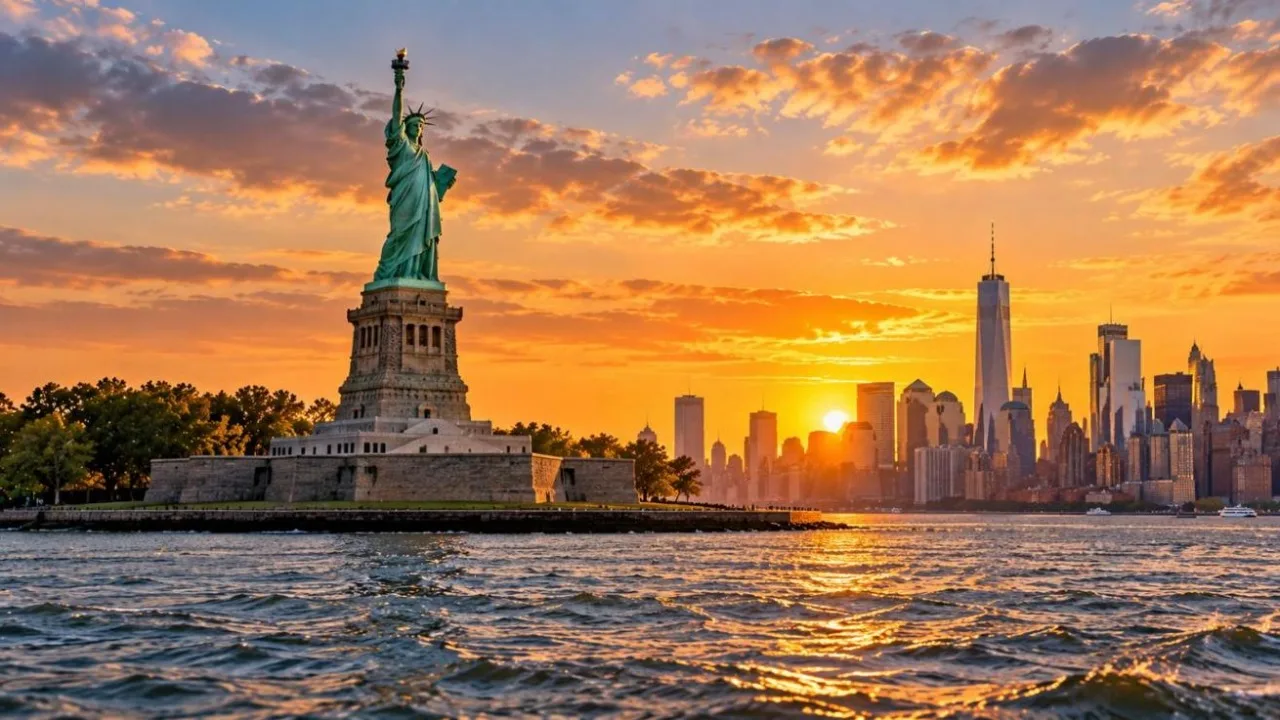
For generations of immigrants arriving by sea, the first sight of America was a copper woman holding a torch above New York Harbor. The Statue of Liberty, dedicated on 28 October 1886, celebrates its 140th anniversary this month. In Part 9 of World Landmarks, we look at how a French gift became a global symbol of freedom, and explain how to visit both Liberty Island and nearby Ellis Island without falling for ticket scams.
Statue of Liberty at a glance
| Fact | Detail |
|---|---|
| Location | Liberty Island, New York Harbor |
| Dedicated | 28 October 1886 |
| Sculptor | Frédéric-Auguste Bartholdi |
| Internal framework | Gustave Eiffel’s company |
| Height (ground to torch) | 305 ft 1 in (92.99 m) |
| UNESCO | World Heritage Site since 1984 |
| Adult ticket (2026) | $26, including ferry and both islands |
A short history
The statue, officially "Liberty Enlightening the World", was a gift from the people of France to mark the centenary of American independence and the friendship between the two nations. French sculptor Frédéric-Auguste Bartholdi designed it, and the engineering firm of Gustave Eiffel, a few years before his famous tower, created the iron framework that supports the thin copper skin. The pedestal was designed by American architect Richard Morris Hunt and paid for by public fundraising in the US.
The statue was built in France between 1875 and 1884, taken apart, shipped to New York in 1885 and reassembled on its pedestal. It was dedicated on 28 October 1886. The copper skin is only about 2.4 mm thick, "the thickness of two pennies", according to the National Park Service. It was originally a shiny brown, and natural oxidation turned it green over about 30 years.
Look closely and you will see symbolism everywhere: broken chains at her feet, a tablet inscribed with the date of the Declaration of Independence (JULY IV MDCCLXXVI), and a crown with seven rays.
Ellis Island: the gateway to America
Just north of Liberty Island, Ellis Island was the busiest immigration station in the United States from 1892 until it closed in 1954. More than 12 million immigrants were processed there. The peak year was 1907, when about 1.2 million people were examined. The restored main building reopened in 1990 as the National Museum of Immigration, where visitors can search passenger records.
What to see
- Liberty Island grounds: walk around the statue for harbour and skyline views.
- Statue of Liberty Museum: opened in 2019, home to the original torch.
- Pedestal: 215 steps (an elevator is available) to an observation level.
- Crown: 162 narrow spiral steps from the pedestal; visits are limited to about 10 minutes, and there is no elevator.
- Ellis Island: the Great Hall and immigration museum.
The torch has been closed to the public since 1916.
Ticket prices 2026
Statue City Cruises is the only ferry operator authorised by the National Park Service and the only official ticket seller. Every ticket includes the round-trip ferry, access to both islands and museums, and an audio tour.
| Ticket | Adult (13+) | Senior (62+) | Child (4–12) |
|---|---|---|---|
| General admission | $26.00 | $23.00 | $17.00 |
| Pedestal reserve | About $26.30 | About $23.30 | About $17.30 |
| Crown reserve | About $26.30 | About $23.30 | About $17.30 |
The National Park Service lists the pedestal and crown add-ons at just $0.30 on top of the general price; confirm the final amount at checkout. Under-4s go free. The Ellis Island "Hard Hat Tour" of the abandoned hospital costs an extra $55 (ages 13+).
Getting crown tickets
- Crown tickets usually sell out three to four months ahead.
- Maximum four tickets per order, and one crown reservation per person every six months.
- Names cannot be changed; bring photo ID.
- Minimum height 42 inches (107 cm).
Avoid ticket scams
The National Park Service warns about aggressive unauthorised sellers around Battery Park who overcharge or sell fake tickets. Buy only from Statue City Cruises, online or at its ticket office in Castle Clinton.
Ferries and timing
- Battery Park, Manhattan (Castle Clinton): ferries go to Liberty Island first, then Ellis Island.
- Liberty State Park, New Jersey: ferries go to Ellis Island first.
Ferries run every day except Thanksgiving and Christmas Day. Seeing both islands "can take most of a day", says the National Park Service; if you start after 2 pm, you will not have time for both. The time on your ticket is when you join the security line, which can take an hour or more in summer and on weekends.
Security rules
- Airport-style screening before boarding; no suitcases, large bags or drones.
- Pedestal visitors cannot bring food, backpacks, strollers or tripods inside; small lockers are available.
- Crown visitors may bring only a camera, phone, water and medicine.
- The crown climb is not recommended for anyone with heart or breathing problems, claustrophobia or a fear of heights.
Entering the United States
Visitors from Visa Waiver Program countries need an approved ESTA (reported at $40 since September 2025), applied for on the official CBP website. Other nationalities, including Indian citizens, need a B-2 visitor visa. Check travel.state.gov for current rules.
Frequently asked questions
Can you go inside the Statue of Liberty?
Yes, with a pedestal or crown ticket. General admission tickets give access to the island grounds and museum, but not the inside of the statue.
How many steps to the crown?
162 steps from the top of the pedestal, about 377 from the ground, with no elevator for the final climb.
Is the free Staten Island Ferry a good alternative?
It passes the statue and gives good views from the water, but it does not stop at Liberty or Ellis Island.
Why is the Statue of Liberty green?
Its copper skin oxidised naturally over about 30 years, forming a protective green patina.
Sources
- National Park Service – Statue of Liberty fees and passes
- National Park Service – Visit the Crown
- National Park Service – Statue of Liberty facts
- National Park Service – Ellis Island chronology
- UNESCO World Heritage Centre – Statue of Liberty
- Statue City Cruises – Plan your visit
World Landmarks: the full series
- Part 1: Eiffel Tower
- Part 2: Acropolis of Athens
- Part 3: Angkor Wat
- Part 4: Great Wall of China
- Part 5: Chichén Itzá
- Part 6: Stonehenge
- Part 7: Alhambra
- Part 8: Sagrada Família
- Part 9: Statue of Liberty (you are here)
- Part 10: Christ the Redeemer
- Part 11: Neuschwanstein Castle
- Part 12: Tower of London
- Part 13: Forbidden City
- Part 14: Terracotta Army
- Part 15: Sydney Opera House
- Part 16: Pompeii
- Part 17: Palace of Versailles
- Part 18: Vatican and Sistine Chapel
- Part 19: Hagia Sophia
- Part 20: Louvre Museum
Prices, opening hours and entry rules in this guide were checked against official sources in October 2026. They change often, so always confirm on the official website before you travel.