This is Part 20 of the Car & Bike Owner's Guide, our 20-part series on owning, running and staying legal with a vehicle in India. New here? Start with Part 1: Choosing Your First Car, or read the previous part, Part 19: Legal vs Illegal Modifications.
Nobody plans for an accident, which is why knowing what to do in advance makes such a difference. Quick, calm action in the first hour, often called the golden hour, can save lives.
Step by step at the scene
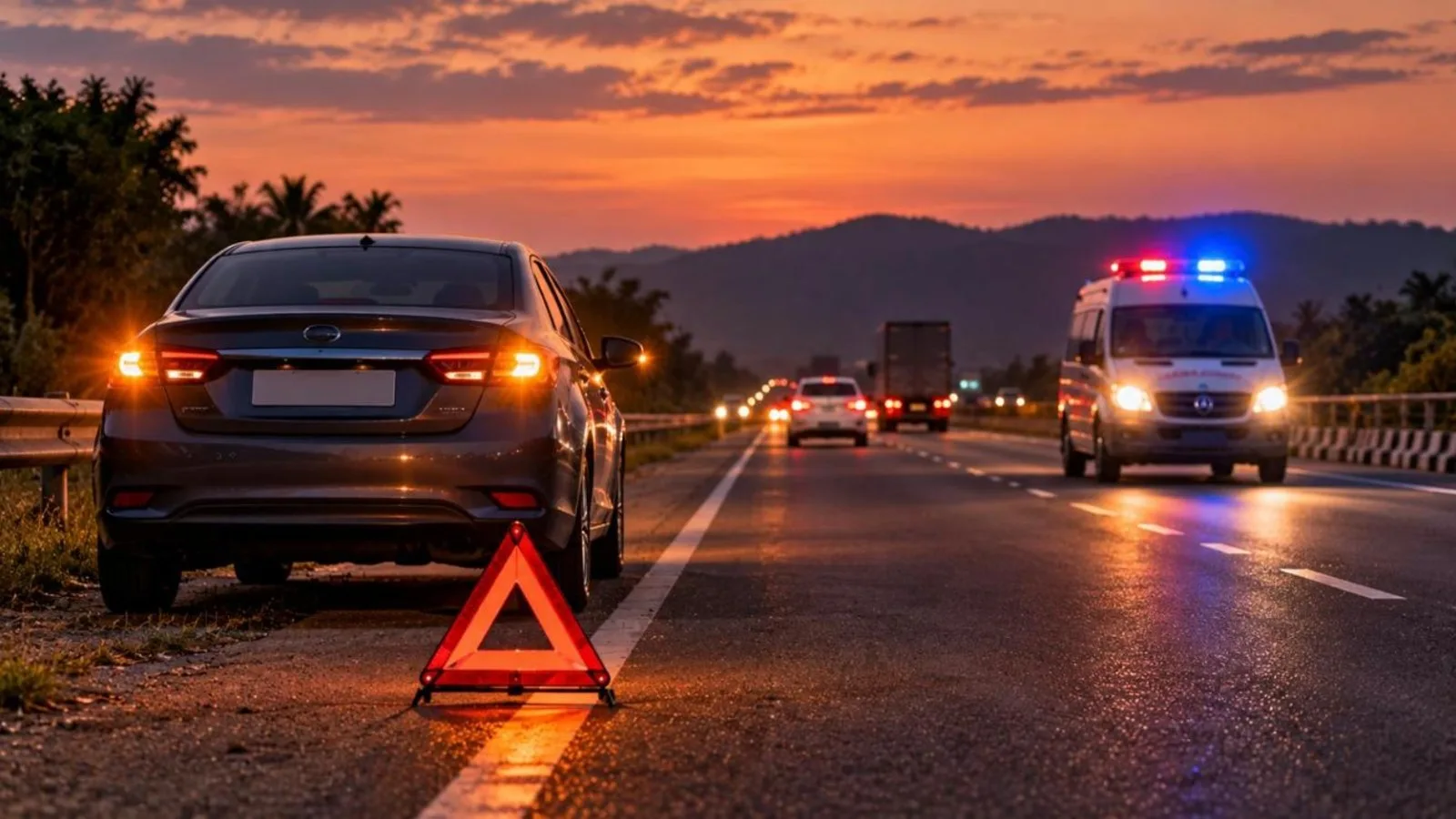
- Stop. Leaving the scene of an accident is an offence. Switch on hazard lights and place a warning triangle well behind your vehicle if you have one.
- Check for injuries. Call 112, India's national emergency number, or 108 for an ambulance in most states.
- Do not move seriously injured people unless they are in immediate danger, such as fire or oncoming traffic. Support the head and neck if you must.
- Stay safe yourself. Stand away from moving traffic.
- Record evidence. Photos of vehicles, number plates, road and damage, and contact details of the other party and witnesses.
- Inform the police if anyone is injured or killed, or if there is a dispute.
- Inform your insurer as soon as possible. See Part 12: Making an Insurance Claim.
Protection for people who help
Under the Good Samaritan provisions of the Motor Vehicles Act, a person who helps an accident victim in good faith is not liable for any injury or death that follows. Helpers cannot be forced to give their identity or be a witness, and should not be detained at the hospital.
The central Rahveer scheme also offers a reward of ₹25,000 to people who take a seriously injured victim to hospital within the golden hour.
Cashless treatment for victims
The Cashless Treatment of Road Accident Victims Scheme, 2025 provides cashless treatment of up to ₹1.5 lakh per victim for up to seven days after the accident, at designated hospitals. It covers victims of any accident involving a motor vehicle, on any road in India. Non-designated hospitals provide stabilisation before transfer.
Compensation
- Third-party claims for injury or death are filed before the Motor Accident Claims Tribunal (MACT).
- Hit-and-run cases: A government scheme pays ₹2 lakh for death and ₹50,000 for grievous injury when the vehicle cannot be traced.
- Your own vehicle damage is claimed from your insurer.
Keep an emergency kit in your vehicle
- First-aid kit, warning triangle, torch and reflective jacket.
- Emergency contacts and your insurer's helpline, saved in your phone and on paper.
- Digital copies of your documents. See Part 4: Vehicle Documents.
Thank you for reading
That brings our Car & Bike Owner's Guide to a close. Drive and ride safely, and keep your papers, insurance and vehicle in good shape.
The complete Car & Bike Owner's Guide
- Choosing Your First Car
- Scooter or Motorcycle?
- Getting Your Driving Licence
- Vehicle Documents
- HSRP Plates and Your RC
- BH Series and Moving States
- PUC Certificate
- FASTag and the Annual Pass
- Traffic Fines and E-Challans
- Car Insurance Add-ons and NCB
- Two-Wheeler Insurance
- Making an Insurance Claim
- Bharat NCAP Ratings
- Child Safety in Cars and on Bikes
- Owning a CNG Car
- Owning an Electric Scooter
- Motorcycle Chain and Basic Care
- Authorised Service vs Local Garage
- Legal vs Illegal Modifications
- After a Road Accident
Rules, fees and fines here reflect central rules as of October 2026. States can set their own procedures and compounding amounts, and rules change, so check the Parivahan portal, your state transport department or your RTO before acting.