This is Part 14 of the Car & Bike Owner's Guide, our 20-part series on owning, running and staying legal with a vehicle in India. New here? Start with Part 1: Choosing Your First Car, or read the previous part, Part 13: Bharat NCAP Ratings.
Holding a child on your lap feels safe, but in a crash at just 40 km/h, the force can tear the child out of your arms. The right seat or restraint is the single most important thing you can do for a child passenger.
What the law says
- Under the Motor Vehicles Act, children under 14 in a car must be secured with a seat belt or a child restraint system. The fine for not doing so is ₹1,000.
- Rear seat belts are compulsory for all passengers.
- For two-wheelers, children between nine months and four years must wear a crash helmet that fits and be secured to the rider with a safety harness, and the vehicle must not go faster than 40 km/h. These rules came into force in 2023.
- Children above four years must wear a helmet like any other pillion rider.
Choosing a child car seat
- Rear-facing infant seats: For babies. Keep children rear-facing as long as the seat allows, as it protects the neck and spine best.
- Forward-facing seats with harness: For toddlers who have outgrown the rear-facing seat.
- Booster seats: For older children, until the car's seat belt fits properly across the shoulder and hips.
- Check the seat's height and weight limits, and buy a seat that meets a recognised safety standard.
Fitting it right
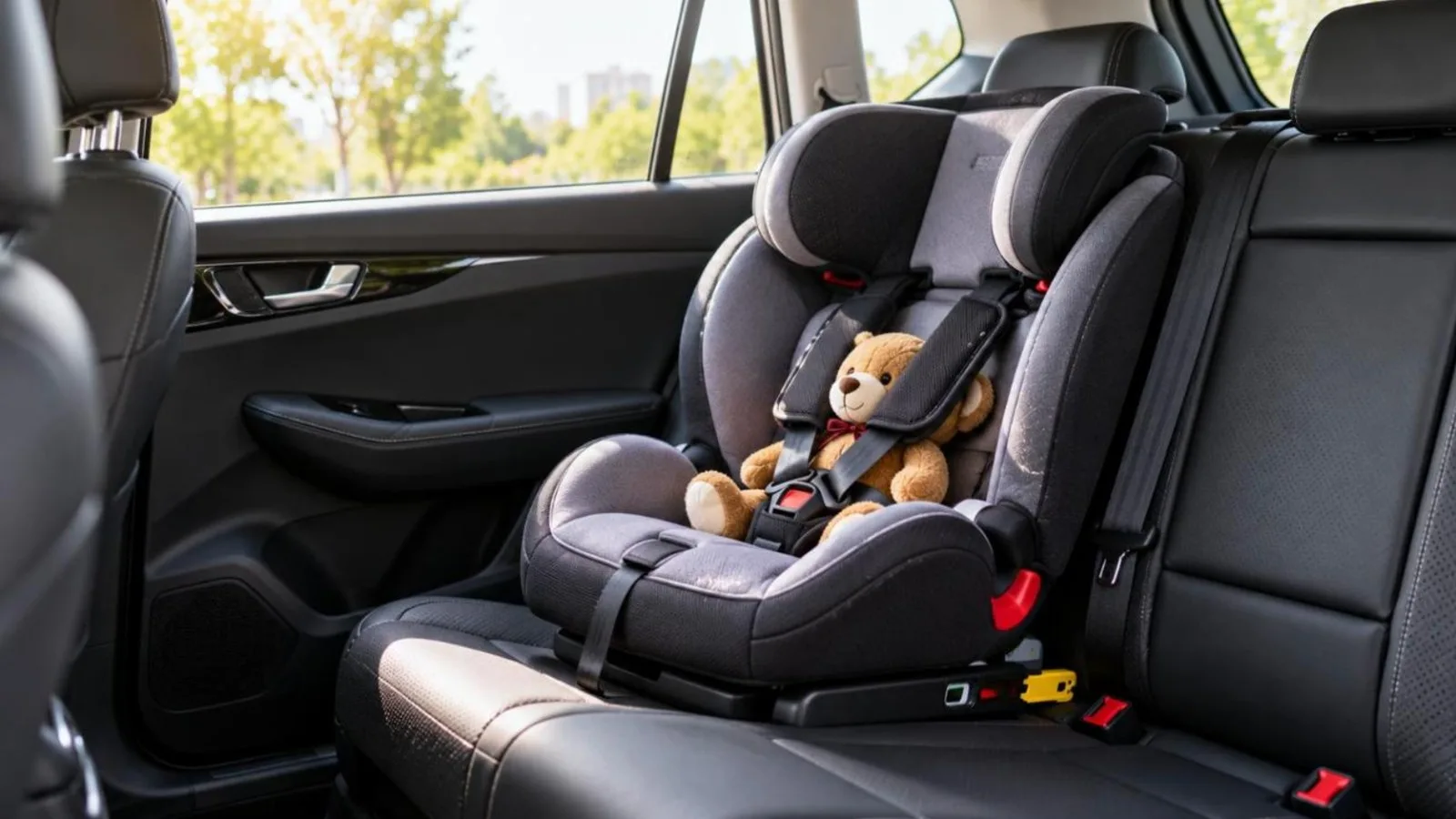
- Use ISOFIX mounts if your car has them. They lock the seat directly to the car's frame and reduce fitting mistakes.
- If using the seat belt, follow the belt path in the seat's manual and pull it tight.
- The seat should not move more than an inch side to side.
- Never place a rear-facing seat in a front seat with an active airbag.
- The safest place for children under 13 is the back seat.
Everyday habits
- Use the child lock on rear doors and the window lock.
- Never leave a child alone in a parked car, even for a minute. Cars heat up dangerously fast in Indian summers.
- Teach children to get out on the pavement side.
Check how cars protect children in crash tests in Part 13: Bharat NCAP Ratings.
Rules, fees and fines here reflect central rules as of October 2026. States can set their own procedures and compounding amounts, and rules change, so check the Parivahan portal, your state transport department or your RTO before acting.
Next in the series: Part 15: Owning a CNG Car.