This is Part 13 of the Car & Bike Owner's Guide, our 20-part series on owning, running and staying legal with a vehicle in India. New here? Start with Part 1: Choosing Your First Car, or read the previous part, Part 12: Making an Insurance Claim.
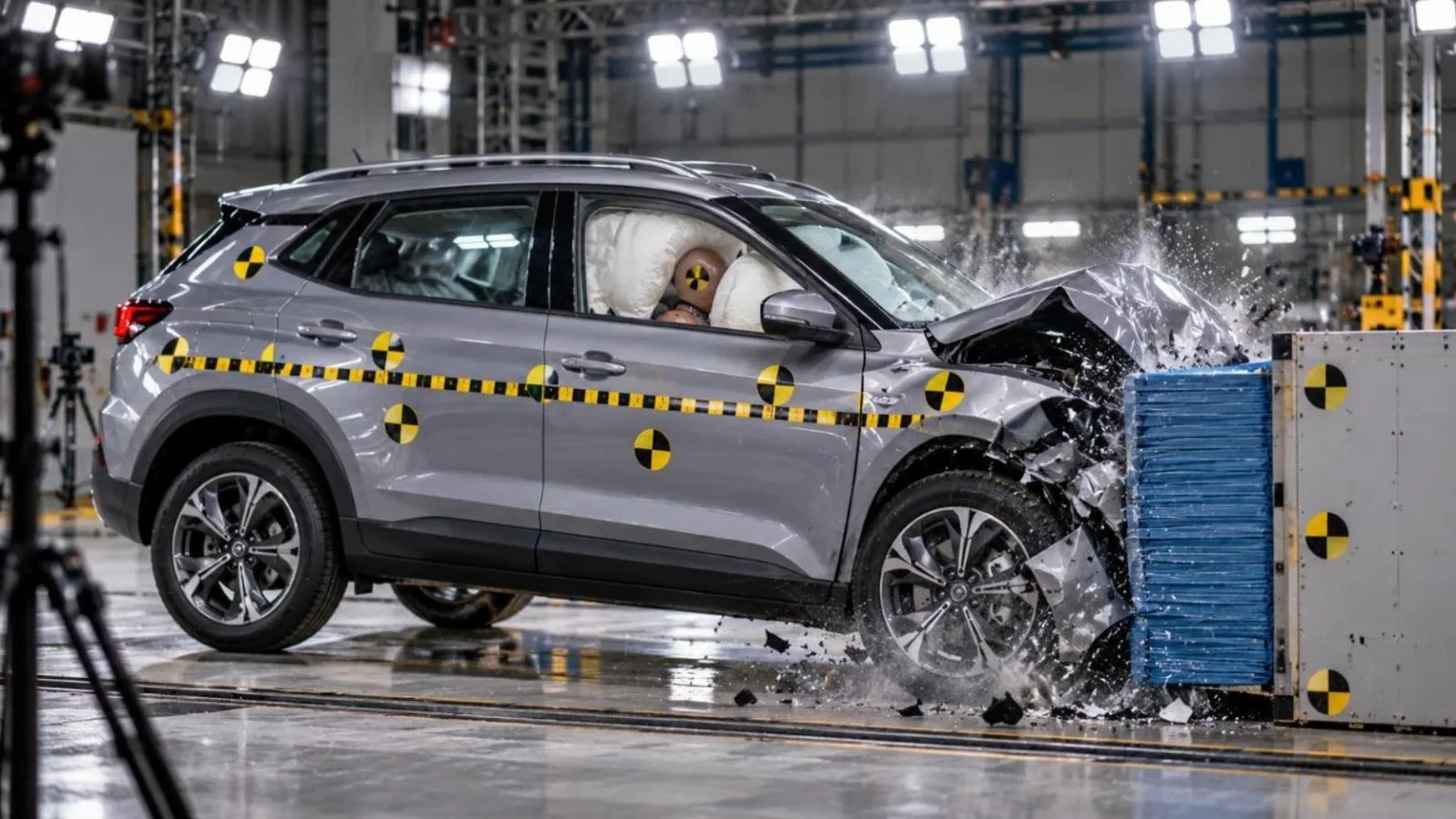
For years, Indian car buyers relied on foreign crash test bodies to know how safe a car was. In 2023, India launched Bharat NCAP (New Car Assessment Programme), its own crash test programme, and star ratings are now a major selling point in showrooms.
How it works
- Bharat NCAP was launched in August 2023 and covers passenger cars weighing up to 3.5 tonnes.
- Testing is voluntary. Car makers nominate models, or the agency can pick cars from showrooms.
- Tests are carried out at Indian facilities, with protocols aligned with global standards.
The tests
- Frontal offset test: The car hits a deformable barrier at 64 km/h with part of its front.
- Side impact test: A moving barrier strikes the side of the car at 50 km/h.
- Side pole test: The car is pushed sideways into a pole at 29 km/h, simulating a hit against a tree or post.
- Child dummies representing an 18-month-old and a three-year-old ride in child seats.
- Safety features such as electronic stability control and seat belt reminders also earn points.
Reading the ratings
Each car gets two separate star ratings, from zero to five:
- Adult Occupant Protection (AOP): Scored out of 32 points.
- Child Occupant Protection (COP): Scored out of 49 points.
Look at both. A car can do well for adults and less well for children, or the other way round.
Using the ratings when you buy
- Check which variant was tested. Ratings usually apply to variants with the same safety equipment, and base models may have fewer airbags.
- Compare cars in the same size class. A rating is not a direct comparison between a small hatchback and a large SUV.
- Read the detailed report: it shows weak areas such as the driver's legs or chest.
- A five-star car still needs seat belts for everyone and correct child seats. See Part 14: Child Safety in Cars and on Bikes.
What is next
The government has proposed a tougher Bharat NCAP 2.0 framework, expected around 2027, with broader testing beyond crash safety. Driver assistance features are also becoming common. Read our guide to ADAS safety features.
Next in the series: Part 14: Child Safety in Cars and on Bikes.