This is Part 7 of the Car & Bike Owner's Guide, our 20-part series on owning, running and staying legal with a vehicle in India. New here? Start with Part 1: Choosing Your First Car, or read the previous part, Part 6: BH Series and Moving States.
The Pollution Under Control (PUC) certificate shows that your vehicle's exhaust emissions are within legal limits. It costs very little and takes a few minutes, but driving without a valid one can cost you a large fine.
How long a PUC lasts
- New vehicles: Come with a PUC valid for one year from registration.
- After that: Validity depends on the vehicle's emission standard and age. Newer BS-VI vehicles typically get 12 months if they pass, while older vehicles get shorter validity, often six months.
- The validity is printed on the certificate and stored in the national Vahan database.
In July 2026, the transport ministry proposed extending PUC validity to three years for BS-VI private vehicles up to six years old. Check whether the change has been notified before relying on it.
How the test works
- Visit an authorised PUC centre, usually found at fuel stations.
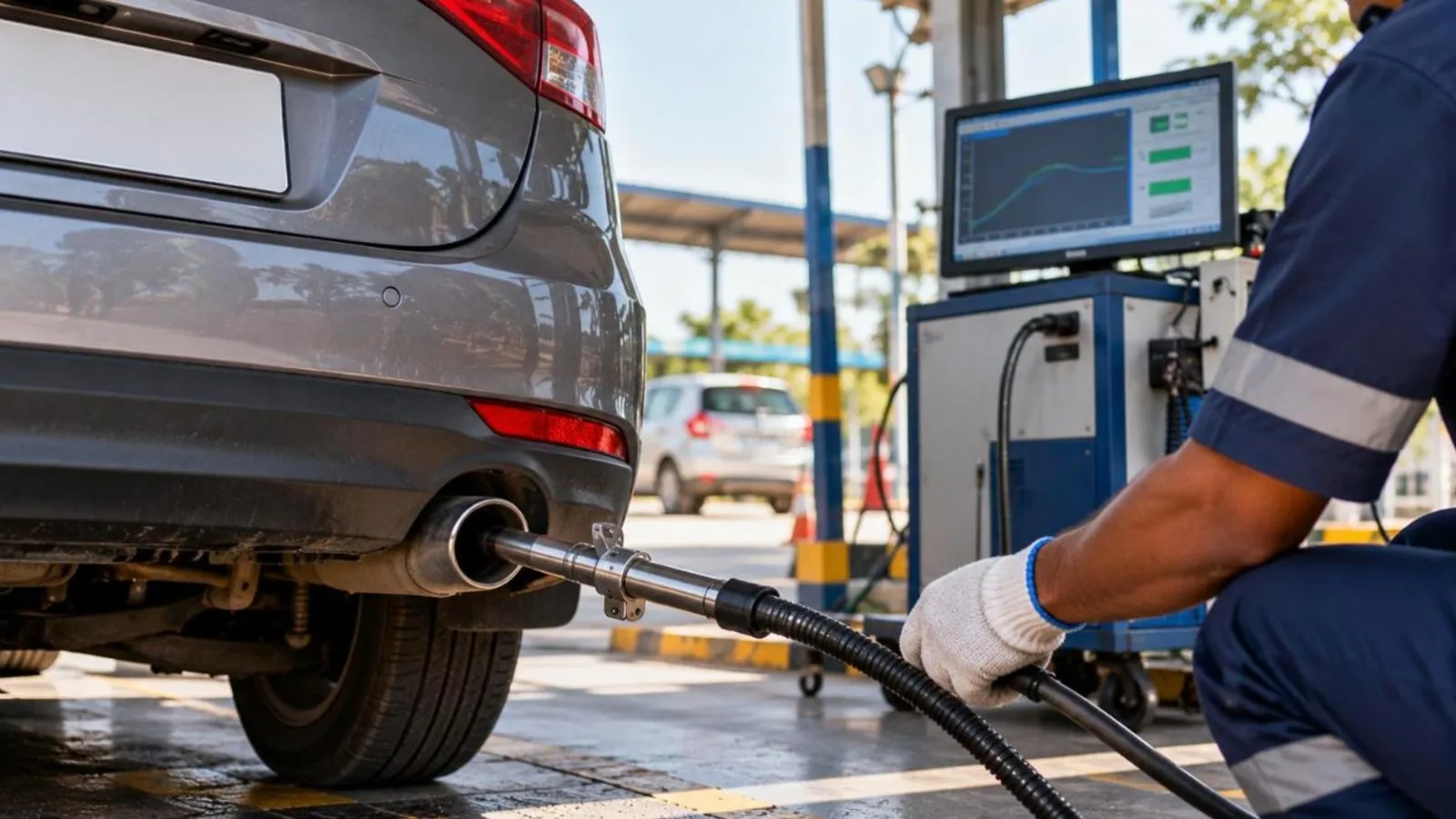
- The operator inserts a probe into the exhaust pipe with the engine running.
- For petrol and CNG vehicles, it measures gases such as carbon monoxide and hydrocarbons. For diesel vehicles, it measures smoke density.
- If the readings are within limits, the certificate is generated online with your vehicle photo and a QR code.
Tip: warm up the engine with a short drive before the test. A cold engine and a clogged air filter can push readings up.
The penalty
Driving without a valid PUC can attract a fine of up to ₹10,000 under the Motor Vehicles Act, though some states compound it at lower amounts. The Supreme Court has also directed that vehicle insurance should not be renewed without a valid PUC, although enforcement varies.
Check or download yours online
- Use the PUC section of the Parivahan portal and enter your registration number.
- Download a copy if you lose the paper slip.
- Set a reminder a week before it expires.
If your vehicle fails
- Get the vehicle serviced, with the air filter, spark plugs and fuel system checked.
- Persistent black or blue smoke can signal engine problems that need attention.
- Our guide to engine oil and service intervals helps prevent issues.
Keep your PUC with your other papers. See Part 4: Vehicle Documents.
Rules, fees and fines here reflect central rules as of October 2026. States can set their own procedures and compounding amounts, and rules change, so check the Parivahan portal, your state transport department or your RTO before acting.
Next in the series: Part 8: FASTag and the Annual Pass.