This is Part 2 of the Car & Bike Owner's Guide, our 20-part series on owning, running and staying legal with a vehicle in India. New here? Start with Part 1: Choosing Your First Car.
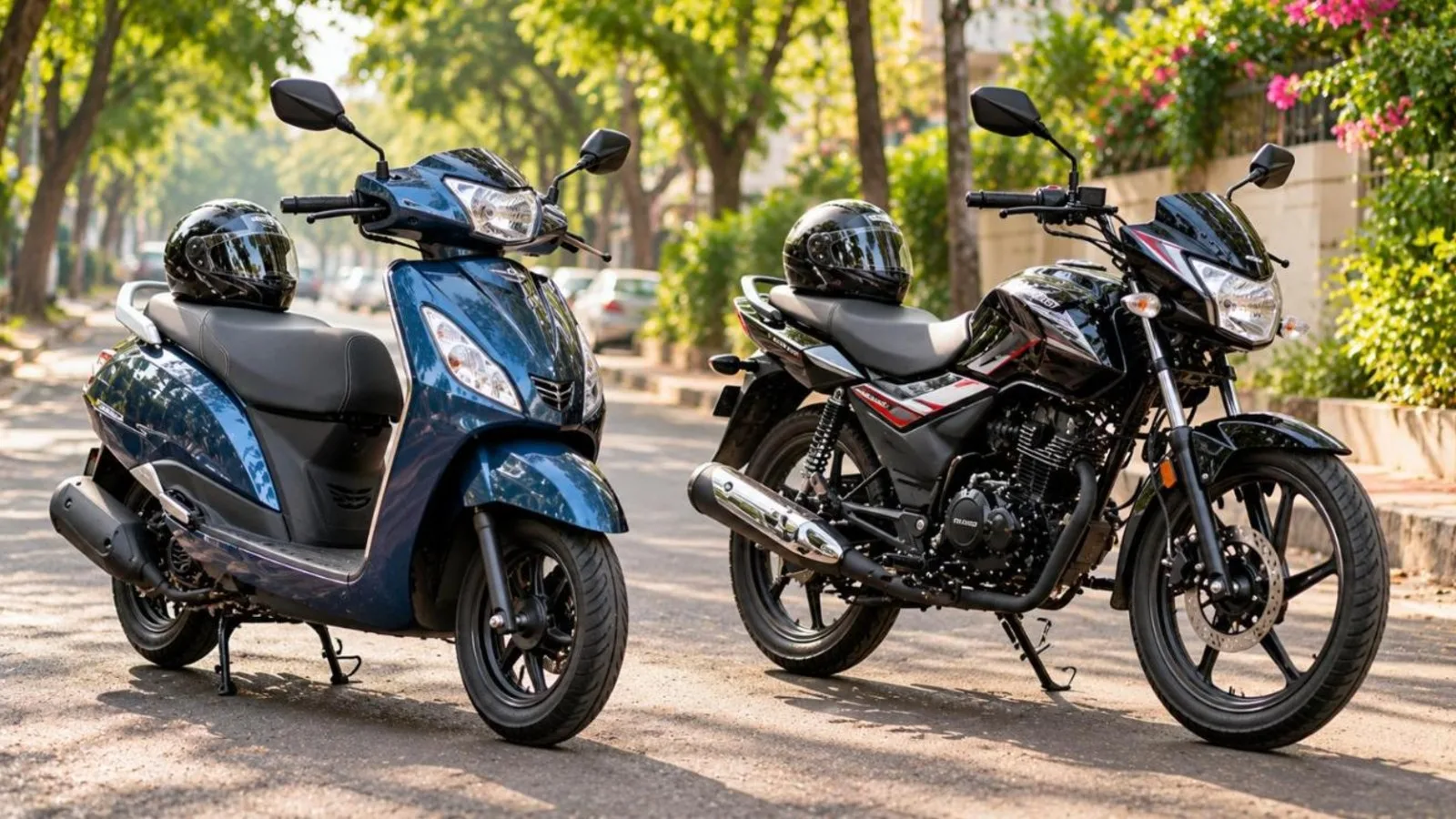
India rides on two wheels, and for most first-time buyers the first big decision is simple: scooter or motorcycle? Both will get you to work. The right one depends on your roads, your distance and who rides with you.
Why people choose scooters
- Gearless and easy: Automatic transmission means no clutch or gears, perfect for stop-and-go traffic and new riders.
- Practical: Under-seat storage, a flat floorboard for bags, and front hooks for shopping.
- Easy to step through: Comfortable for riders of all heights and for those wearing sarees or salwars.
- Family friendly: Often shared by everyone in the household.
Why people choose motorcycles
- Stability: Larger wheels, usually 17 or 18 inches against 10 to 12 inches on most scooters, handle potholes and broken roads better.
- Highway confidence: Better high-speed stability and braking for longer rides.
- Fuel economy: Many commuter motorcycles return excellent mileage.
- Ground clearance: Helpful on rural roads, speed breakers and waterlogged streets.
Quick comparison
- Short city commute, mixed family use: Scooter.
- Long daily distance or highways: Motorcycle.
- Poor rural roads: Motorcycle.
- Low running cost and home charging: Consider an electric scooter. See Part 16: Owning an Electric Scooter.
Safety features to look for
- Since 2019, new two-wheelers above 125cc must have ABS (anti-lock braking), and those up to 125cc must have at least CBS (combined braking).
- Prefer disc brakes up front, tubeless tyres and good headlights.
- Budget for two ISI-certified helmets, one for the rider and one for the pillion. Read our riding gear guide.
Before you buy
- Test ride both types on a road you use every day.
- Check seat height: both feet should reach the ground comfortably.
- Ask about service costs, spare parts and dealer network in your area.
- If you choose a motorcycle, read our first motorcycle guide too.
Still deciding whether you need a car at all? Compare the numbers in motorcycle vs car commuting costs.
Next in the series: Part 3: Getting Your Driving Licence.