This is Part 19 of the Car & Bike Owner's Guide, our 20-part series on owning, running and staying legal with a vehicle in India. New here? Start with Part 1: Choosing Your First Car, or read the previous part, Part 18: Authorised Service vs Local Garage.
Accessories can make a car or bike feel truly yours, but some popular modifications are illegal in India and can lead to fines, seizure or a rejected insurance claim. The basic rule under the Motor Vehicles Act is simple: you cannot alter a vehicle so that it no longer matches the details on its registration certificate, unless the change is approved and recorded by the RTO.
Not allowed
- Sun control films: The Supreme Court banned black films on car windows in 2012. Glass must let through at least 70 percent of light on the windscreen and rear window and 50 percent on the side windows. Factory-fitted tinted glass that meets these limits is fine. Films are not.
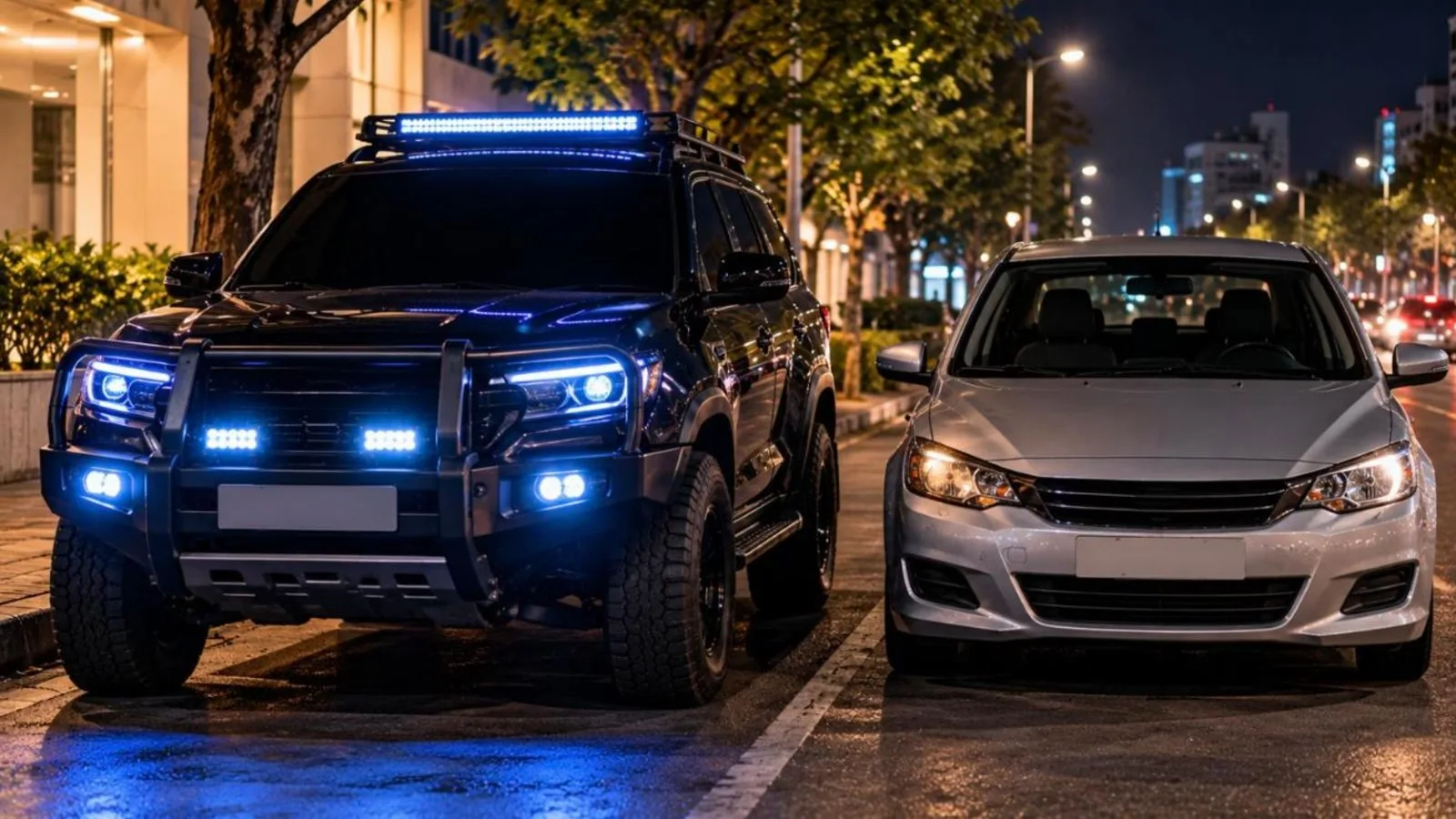
- Bull bars and crash guards on cars: Treated as illegal alterations because they can seriously injure pedestrians and interfere with crumple zones and airbag sensors.
- Pressure horns and multi-tone horns.
- Loud aftermarket exhausts that exceed noise limits, a common target of police drives on motorcycles.
- Red or blue beacons, flashing lights and dazzling aftermarket lamps.
- Fancy number plates with stylised fonts, names or logos instead of the standard HSRP. See Part 5: HSRP Plates and Your RC.
- Changing engine, chassis or body type without RTO approval.
Allowed with RTO approval
- Colour change: Apply to the RTO to update the RC. Full wraps may be treated the same way, so check locally.
- CNG or LPG kits: Only approved kits by authorised fitters, endorsed on the RC. See Part 15: Owning a CNG Car.
- Electric conversion: Only with approved kits and RTO endorsement.
Generally fine
- Seat covers, floor mats, infotainment units and phone mounts.
- Dashcams and parking sensors or cameras.
- Alloy wheels and tyres within the manufacturer's approved sizes.
- Roof carriers within legal height and load limits.
The insurance angle
Always tell your insurer about modifications. Undeclared changes, especially to the engine, fuel system or electricals, can be grounds to reject a claim. Poorly wired aftermarket lights and accessories are also a common cause of vehicle fires.
Fines for illegal modifications vary by state. More on penalties in Part 9: Traffic Fines and E-Challans.
Rules, fees and fines here reflect central rules as of October 2026. States can set their own procedures and compounding amounts, and rules change, so check the Parivahan portal, your state transport department or your RTO before acting.
Next in the series: Part 20: After a Road Accident.