This is Part 9 of the Car & Bike Owner's Guide, our 20-part series on owning, running and staying legal with a vehicle in India. New here? Start with Part 1: Choosing Your First Car, or read the previous part, Part 8: FASTag and the Annual Pass.
Since the 2019 amendments to the Motor Vehicles Act, penalties for traffic offences in India have been much steeper, and cameras now catch many violations automatically. Knowing the main fines, and how e-challans work, saves money and stress.
Common fines under central law
- Riding without a helmet: ₹1,000, and your licence can be suspended for three months.
- Not wearing a seat belt: ₹1,000, including rear-seat passengers.
- Driving without a licence: ₹5,000.
- Driving without insurance: ₹2,000 for a first offence, ₹4,000 for a repeat.
- No valid PUC: Up to ₹10,000. See Part 7: PUC Certificate.
- Overspeeding: ₹1,000 to ₹2,000 for cars and two-wheelers.
- Dangerous driving, including jumping signals and using a handheld phone: ₹1,000 to ₹5,000 for a first offence.
- Drunk driving: ₹10,000 and up to six months in jail for a first offence; ₹15,000 and up to two years for a repeat.
- Triple riding on a two-wheeler: ₹1,000 and licence disqualification.
- Driving by a minor: ₹25,000 for the guardian or owner, with possible jail, cancellation of the vehicle's registration for a year, and no licence for the minor until age 25.
States can set different compounding amounts, so actual fines vary.
How e-challans work
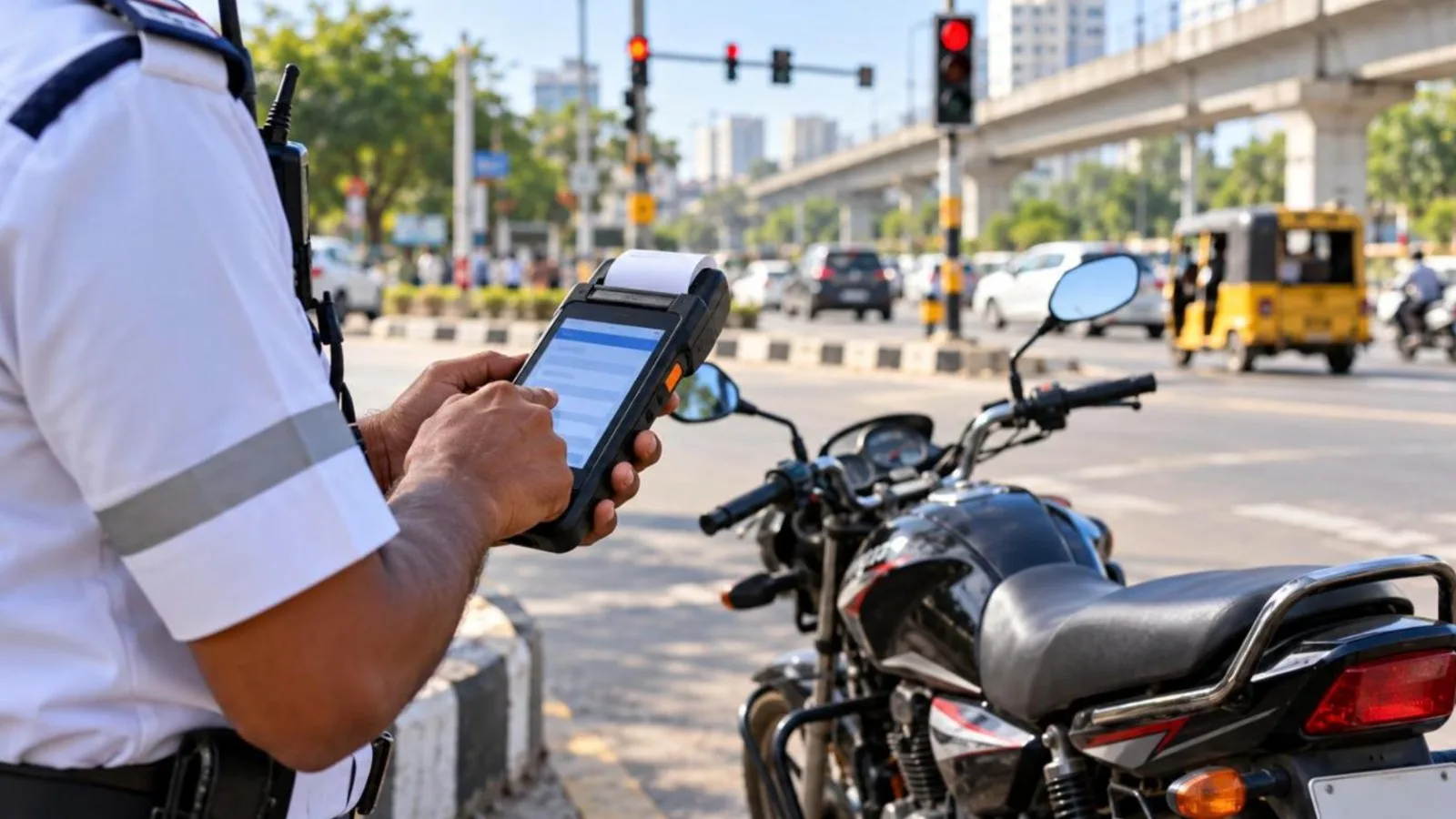
Many cities use cameras and handheld devices to issue e-challans, linked to the vehicle's registration number. You receive an SMS on the mobile number registered with your vehicle. See Part 4: Vehicle Documents.
- Check pending challans on the official e-challan section of the Parivahan portal, using your vehicle number, licence number or challan number.
- Review the photo or details of the offence.
- Pay online by card, UPI or net banking, and save the receipt.
If you disagree with a challan
- Raise a grievance through the portal or with the issuing traffic police.
- Some challans are sent to virtual courts, where you can contest or pay online.
- National and state Lok Adalats are held periodically to settle pending traffic challans.
Beware of fake challan messages
Scammers send SMS and WhatsApp messages with links to fake payment pages or harmful apps. Real challans can always be checked on the official government portal. Never install an app or pay through a link sent in a message.
Rules, fees and fines here reflect central rules as of October 2026. States can set their own procedures and compounding amounts, and rules change, so check the Parivahan portal, your state transport department or your RTO before acting.
Next in the series: Part 10: Car Insurance Add-ons and NCB.