This is Part 4 of the Car & Bike Owner's Guide, our 20-part series on owning, running and staying legal with a vehicle in India. New here? Start with Part 1: Choosing Your First Car, or read the previous part, Part 3: Getting Your Driving Licence.
A traffic stop is far less stressful when your papers are in order. Every private car and two-wheeler in India needs four core documents, and you no longer have to carry paper copies of all of them.
The four documents
- Driving licence (DL) for the person driving. See Part 3: Getting Your Driving Licence.
- Registration certificate (RC) for the vehicle. See Part 5: HSRP Plates and Your RC.
- Insurance certificate, at least third-party cover, which is compulsory by law. See Part 10: Car Insurance Add-ons and NCB.
- Pollution Under Control (PUC) certificate, valid for the date you are driving. See Part 7: PUC Certificate.
Commercial vehicles also need permits and fitness certificates.
Digital copies are legally valid
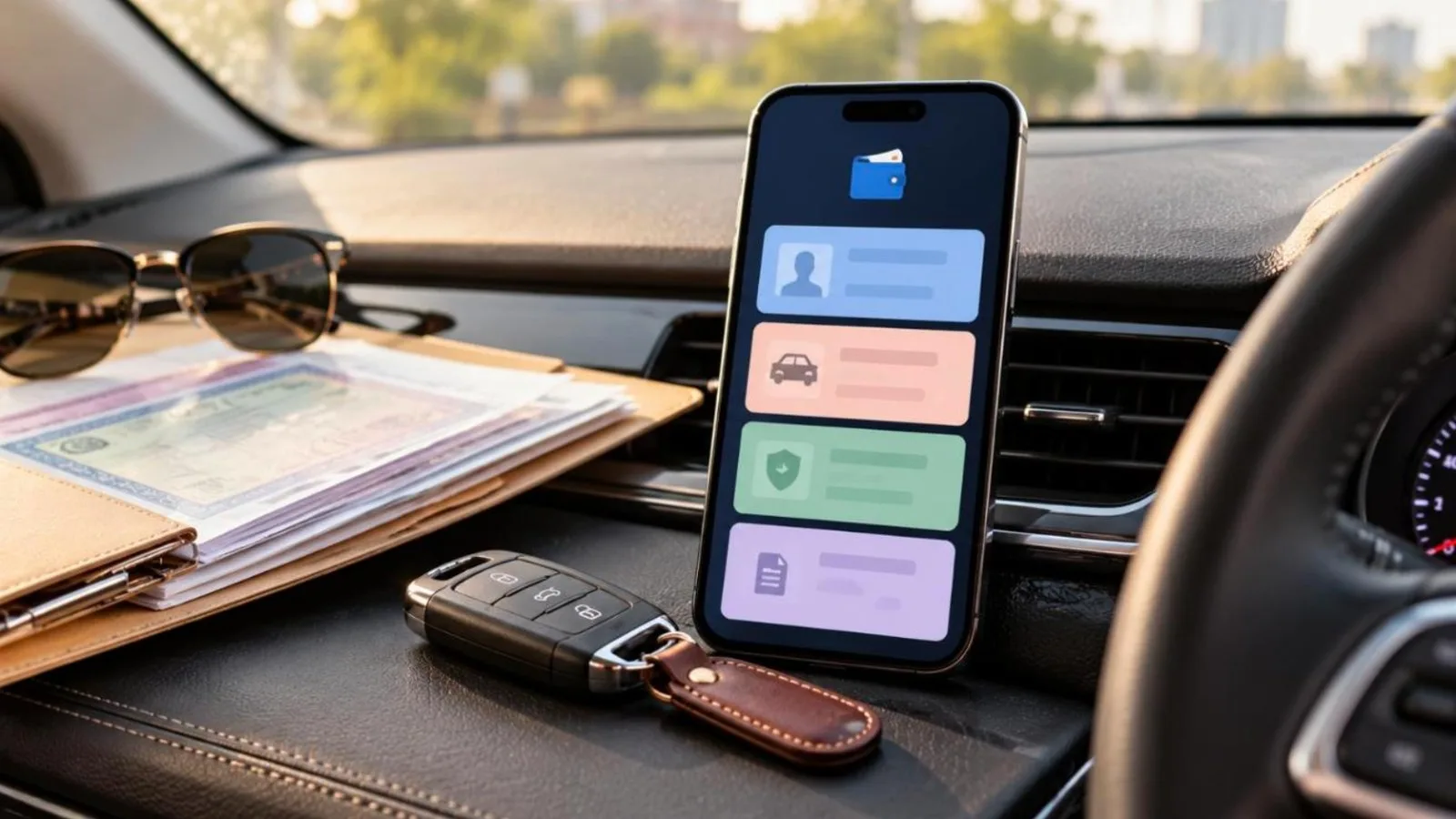
The Ministry of Road Transport and Highways has clarified that documents stored in DigiLocker or the mParivahan app are legally recognised, the same as the originals. Police can verify them on the spot.
- DigiLocker: Fetch your DL and RC directly from the transport database by entering your licence or vehicle number.
- mParivahan: Create a virtual DL and RC, and check vehicle details.
- Many insurers also push policy documents to DigiLocker.
Important: a photo or scanned PDF on your phone gallery is not the same thing. Only documents pulled from the official databases count as valid digital documents.
Keep your records up to date
- Link your mobile number to your DL and vehicle records on the Parivahan portal so you receive challan and renewal alerts.
- Update your address on the RC and DL after a move.
- Check for pending e-challans every few months. See Part 9: Traffic Fines and E-Challans.
- Set calendar reminders for insurance, PUC and licence renewal dates.
Tips for paper documents
- Keep originals safely at home, not in the glovebox, where they can be stolen with the car.
- If you prefer paper, carry clear photocopies along with the digital versions.
- Keep a copy of your insurance policy and the insurer's claim helpline in the car for emergencies. See Part 12: Making an Insurance Claim.
Rules, fees and fines here reflect central rules as of October 2026. States can set their own procedures and compounding amounts, and rules change, so check the Parivahan portal, your state transport department or your RTO before acting.
Next in the series: Part 5: HSRP Plates and Your RC.