This is Part 16 of the Car & Bike Owner's Guide, our 20-part series on owning, running and staying legal with a vehicle in India. New here? Start with Part 1: Choosing Your First Car, or read the previous part, Part 15: Owning a CNG Car.
Electric scooters now make up a large and growing share of new two-wheeler sales in India. Running costs are a fraction of petrol, and there are no oil changes. But battery care and charging habits decide how happy you will be over the years.
Low-speed vs high-speed models
- Low-speed scooters, with a top speed up to 25 km/h and motor power up to 250 W, are exempt from registration, and you do not need a driving licence to ride one.
- All other electric scooters need registration, a green number plate, a valid licence and insurance, just like petrol two-wheelers. See Part 5: HSRP Plates and Your RC and Part 11: Two-Wheeler Insurance.
- Helmet rules apply to everyone.
Safe charging habits
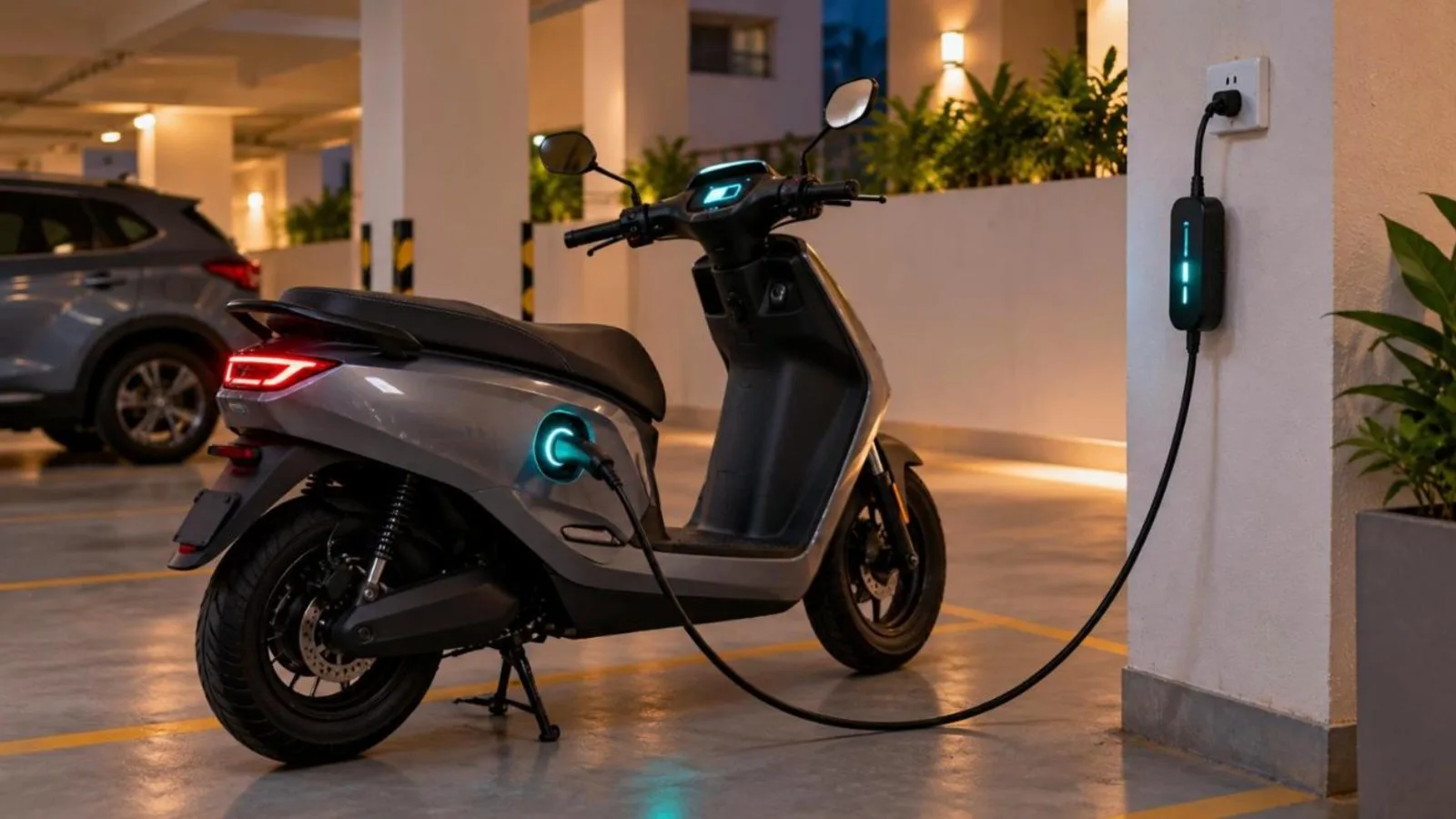
- Use only the charger supplied or approved by the manufacturer.
- Charge in a dry, ventilated place, away from flammable items and direct sun.
- Let the battery cool for 20 to 30 minutes after a long ride before charging.
- Avoid leaving the scooter charging unattended overnight in a closed room.
- Use a properly earthed socket. Avoid long extension cords and loose plugs.
- If the battery swells, smells, smokes or heats unusually, stop charging and contact the service centre.
Making the battery last
- For daily use, many manufacturers suggest keeping charge between roughly 20 and 80 percent, and charging to full before longer trips.
- Do not leave the battery at zero for long periods.
- Heat ages lithium-ion batteries, so park in shade where you can.
- Install software updates, which can improve range and battery management.
- Check the battery warranty terms, usually given in years and kilometres.
Real-world range
Claimed range is measured in ideal conditions. Expect less with a pillion, in sport mode, in hot weather and on hills. Plan around 70 to 80 percent of the claimed figure. Our guide to EV range anxiety has more tips.
Subsidy and incentives
The central PM E-DRIVE scheme was extended in August 2026 to 31 March 2028. It gives up to ₹5,000 per electric two-wheeler, at ₹2,500 per kWh of battery capacity, capped at 15 percent of the ex-factory price, for models priced up to ₹1.5 lakh ex-factory. The scheme is fund-limited and could close earlier. The discount is applied by the dealer on the invoice. Many states also offer road tax or registration fee waivers.
Monsoon care
Electric scooters are built to resist rain, but avoid riding through deep water, and never charge a wet scooter. See our home charging guide for wiring safety.
Rules, fees and fines here reflect central rules as of October 2026. States can set their own procedures and compounding amounts, and rules change, so check the Parivahan portal, your state transport department or your RTO before acting.
Next in the series: Part 17: Motorcycle Chain and Basic Care.