Iron deficiency is the most common nutritional deficiency in the world and a leading cause of anaemia. It can leave you tired, weak and unable to concentrate. Yet too much iron can also be harmful. In Part 3 of Vitamins and Minerals Explained, we look at what iron does, how much you need, the best foods and how to absorb more of it.
What does iron do?
Iron is a mineral the body needs for growth and development. According to the US National Institutes of Health (NIH):
- Haemoglobin: iron is used to make haemoglobin, the protein in red blood cells that carries oxygen from the lungs to every part of the body.
- Myoglobin: it is used to make myoglobin, which supplies oxygen to muscles.
- Hormones: iron is needed to make some hormones.
It also plays roles in energy production, immune function and brain development, especially in babies and young children.
How much iron do you need?
Iron needs vary a lot by age and sex. Women of reproductive age need more because of blood lost through menstruation, and pregnancy greatly increases needs. The NIH recommends:
| Age group | Recommended daily amount |
|---|---|
| Birth to 6 months | 0.27 mg |
| 7–12 months | 11 mg |
| 1–3 years | 7 mg |
| 4–8 years | 10 mg |
| 9–13 years | 8 mg |
| Teen boys 14–18 | 11 mg |
| Teen girls 14–18 | 15 mg |
| Men 19+ | 8 mg |
| Women 19–50 | 18 mg |
| Women 51+ | 8 mg |
| Pregnancy | 27 mg |
| Breastfeeding | 9–10 mg |
The NIH notes that vegetarians who eat no meat, poultry or seafood need almost twice as much iron as listed, because iron from plant foods is not absorbed as well.
Heme vs non-heme iron
There are two types of iron in food:
- Heme iron: found in meat, poultry and seafood. It is absorbed more easily.
- Non-heme iron: found in plant foods such as beans, lentils, spinach and fortified cereals, and also in meat. It is absorbed less efficiently, and absorption is strongly affected by what you eat with it.
Best iron-rich foods
The table below lists top sources from the NIH (the US Daily Value is 18 mg).
| Food | Serving | Iron | % DV |
|---|---|---|---|
| Breakfast cereal fortified with 100% DV | 1 serving | 18 mg | 100% |
| Oysters, cooked | 3 oz | 8 mg | 44% |
| White beans, canned | 1 cup | 8 mg | 44% |
| Beef liver, pan fried | 3 oz | 5 mg | 28% |
| Lentils, boiled | ½ cup | 3 mg | 17% |
| Spinach, boiled | ½ cup | 3 mg | 17% |
| Tofu, firm | ½ cup | 3 mg | 17% |
| Dark chocolate (45–69% cacao) | 1 oz | 2 mg | 11% |
| Kidney beans, canned | ½ cup | 2 mg | 11% |
| Sardines, canned in oil | 3 oz | 2 mg | 11% |
| Chickpeas, boiled | ½ cup | 2 mg | 11% |
| Tomatoes, canned, stewed | ½ cup | 2 mg | 11% |
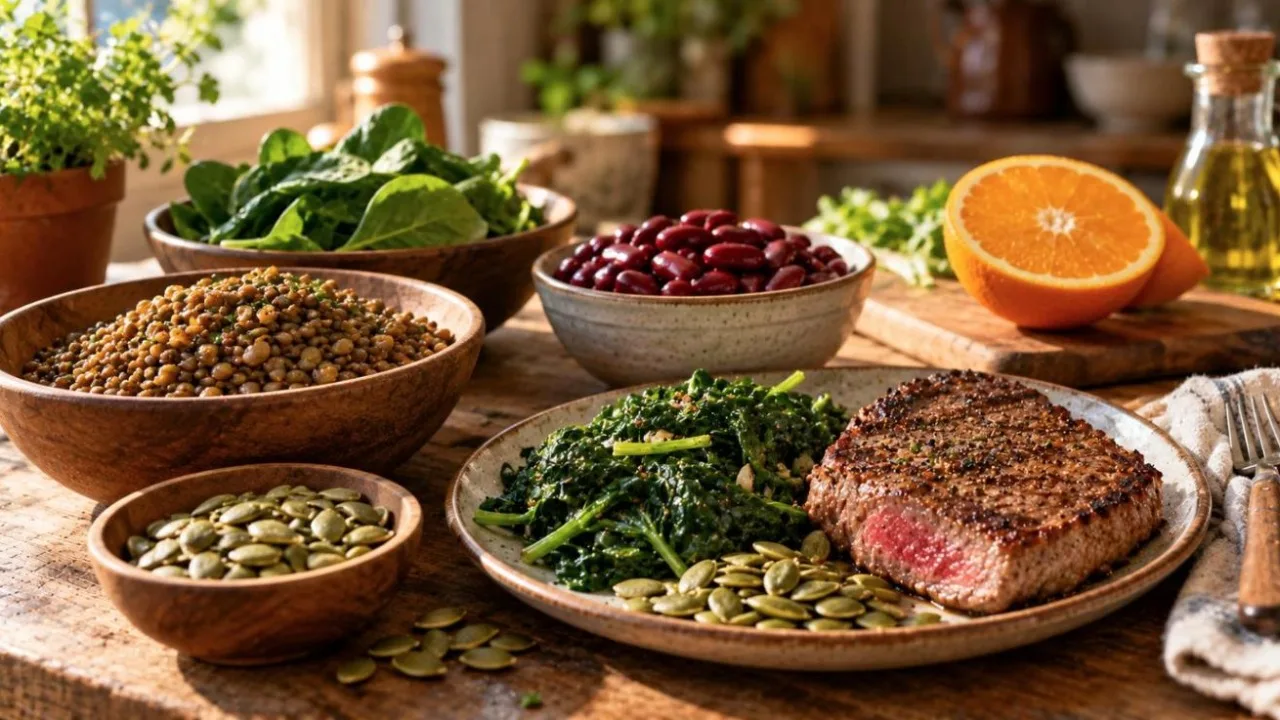
Other good sources include red meat, poultry, nuts, seeds and dried fruits such as raisins and apricots.
How to absorb more iron
Things that help
- Vitamin C: eating vitamin C-rich foods, such as oranges, strawberries, peppers, tomatoes or broccoli, with plant sources of iron greatly improves absorption.
- Meat, fish or poultry: eating these with plant foods also helps you absorb more non-heme iron.
Things that reduce absorption
- Calcium: calcium from dairy or supplements can reduce iron absorption. The NIH suggests taking calcium and iron supplements at different times of day.
- Tea and coffee: compounds called polyphenols and tannins can reduce non-heme iron absorption, so it helps to drink them between meals rather than with iron-rich meals.
- Phytates in whole grains and legumes can also reduce absorption; soaking, sprouting and fermenting can help.
- Acid-reducing medicines: proton pump inhibitors can reduce absorption of non-heme iron by lowering stomach acid.
Who is at risk of iron deficiency?
- Teen girls and women with heavy periods.
- Pregnant women: the NIH notes that about 18% of pregnant women in the US had iron deficiency in national survey data.
- Infants and young children, especially those born prematurely or with low birth weight. About 8% of US toddlers have iron deficiency, according to the NIH.
- Frequent blood donors.
- People with cancer, digestive disorders or heart failure. The NIH notes that about 60% of patients with chronic heart failure have iron deficiency.
- Vegetarians and vegans, who need more iron because of lower absorption.
Symptoms of iron deficiency
In the early stages, the body uses its iron stores, so there may be no symptoms. As stores run out, iron-deficiency anaemia develops: red blood cells become smaller and carry less haemoglobin, so less oxygen reaches the body. Symptoms can include:
- Tiredness, weakness and lack of energy
- Difficulty concentrating and poor memory
- Shortness of breath, especially during exercise
- Pale skin
- Feeling cold
- Getting infections more easily
- Digestive upset
Some people also experience brittle nails, hair loss, a sore tongue or unusual cravings for non-food items such as ice. In children, iron deficiency can affect learning and development. In pregnancy, it raises the risk of premature birth and low birth weight.
Anaemia has many causes, including blood loss, so it is important to see a doctor rather than self-treat. Tests usually include a complete blood count and iron studies such as ferritin. Learn more in Lab Tests Explained: Iron studies and ferritin.
Iron supplements
Iron is found in many multivitamins and in iron-only supplements. Common forms include ferrous sulfate, ferrous gluconate and ferric salts. Doctors often prescribe iron for diagnosed deficiency, sometimes for several months to rebuild stores.
Tips for taking iron supplements, if advised by your doctor:
- Take them separately from calcium supplements, tea and coffee.
- Taking them with vitamin C or orange juice may improve absorption.
- Side effects such as nausea, constipation and stomach pain are common, especially on an empty stomach. Your doctor may suggest a different dose, form or schedule if these occur.
Can you have too much iron?
Yes. The NIH sets the upper limit for adults and teens at 45 mg a day from all sources, and 40 mg for children under 14, unless a doctor prescribes more for a limited time.
- High doses can cause nausea, constipation, abdominal pain, vomiting and diarrhoea, and may irritate the stomach lining.
- Very large doses can be life-threatening. The NIH warns that accidental iron overdose is a leading cause of fatal poisoning in children under 6, so keep iron supplements out of children's reach.
- People with haemochromatosis, an inherited condition that causes iron to build up in the body, should avoid iron and vitamin C supplements, as excess iron can damage the liver and heart.
Medicine interactions
- Iron can reduce absorption of levodopa (used for Parkinson's disease).
- Iron can make levothyroxine (for an underactive thyroid) less effective; take them several hours apart.
- Proton pump inhibitors can reduce iron absorption.
Practical tips
- Include a mix of iron sources: lean meat or fish if you eat them, plus beans, lentils, tofu and leafy greens.
- Pair plant-based iron foods with vitamin C, such as lemon juice on spinach or peppers with beans.
- Drink tea and coffee between meals rather than with iron-rich meals.
- If you are pregnant or have heavy periods, ask your doctor about checking your iron.
- Never take iron supplements without a reason; too much can be harmful.
Frequently asked questions
How long does it take to fix iron deficiency?
Haemoglobin often improves within a few weeks of treatment, but rebuilding iron stores can take several months. Your doctor will usually recheck your blood.
Is spinach really high in iron?
Spinach contains iron, but much of it is poorly absorbed. Pairing it with vitamin C helps.
Can I get enough iron on a vegetarian diet?
Yes, with planning. Eat legumes, tofu, fortified cereals, nuts and seeds, and pair them with vitamin C-rich foods.
In Part 4, we look at magnesium, a mineral involved in hundreds of processes in the body.
Sources
- NIH Office of Dietary Supplements – Iron (consumer fact sheet)
- NIH Office of Dietary Supplements – Iron (health professional fact sheet)
Vitamins and Minerals Explained: the full series
- Part 1: Vitamin D
- Part 2: Vitamin B12
- Part 3: Iron (you are here)
- Part 4: Magnesium
- Part 5: Vitamin C
- Part 6: Calcium
- Part 7: Zinc
- Part 8: Omega-3 Fatty Acids
- Part 9: Folate and Folic Acid
- Part 10: Vitamin A
- Part 11: Vitamin E
- Part 12: Vitamin K
- Part 13: Potassium
- Part 14: Iodine
- Part 15: Biotin
- Part 16: Do You Need Supplements?
This article is for general information only and is not medical advice. Recommended amounts shown are US figures from the NIH Office of Dietary Supplements; guidance in other countries may differ slightly. Talk to a doctor or pharmacist before starting supplements, especially if you are pregnant, take medicines or have a health condition.