Zinc is a trace mineral, meaning we need only small amounts, but it is involved in hundreds of processes in the body. It is essential for immunity, growth, wound healing and even our senses of taste and smell. In Part 7 of Vitamins and Minerals Explained, we look at zinc.
What does zinc do?
According to the US National Institutes of Health (NIH), zinc:
- Is needed by hundreds of enzymes that drive chemical reactions in the body.
- Supports the immune system in fighting bacteria and viruses.
- Helps make proteins and DNA.
- Supports wound healing.
- Is needed for normal growth and development during pregnancy, infancy and childhood.
- Helps maintain the senses of taste and smell.
The body has no specialised storage system for zinc, so a regular daily intake is important.
How much zinc do you need?
| Age group | Recommended daily amount |
|---|---|
| Birth to 6 months | 2 mg |
| 7 months–3 years | 3 mg |
| 4–8 years | 5 mg |
| 9–13 years | 8 mg |
| Teen boys 14–18 | 11 mg |
| Teen girls 14–18 | 9 mg |
| Men 19+ | 11 mg |
| Women 19+ | 8 mg |
| Pregnancy | 11–12 mg |
| Breastfeeding | 12–13 mg |
Best food sources of zinc
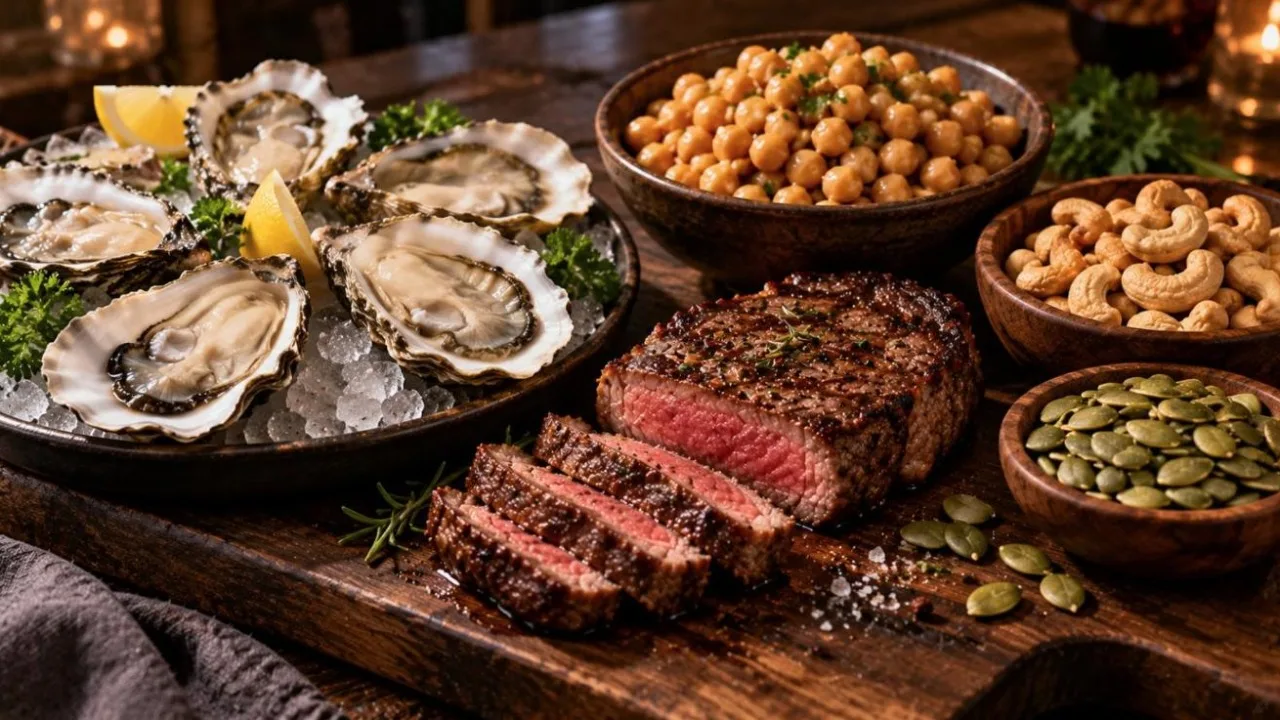
Oysters contain far more zinc per serving than any other food. Red meat, poultry and seafood are major sources in most diets, while beans, nuts, seeds and whole grains provide zinc for vegetarians. The table below shows top sources from the NIH (the US Daily Value is 11 mg).
| Food | Serving | Zinc | % DV |
|---|---|---|---|
| Oysters, Eastern, raw | 3 oz | 32 mg | 291% |
| Oysters, Pacific, cooked | 3 oz | 28.2 mg | 256% |
| Beef sirloin, roasted | 3 oz | 3.8 mg | 35% |
| Blue crab, cooked | 3 oz | 3.2 mg | 29% |
| Breakfast cereal fortified with 25% DV | 1 serving | 2.8 mg | 25% |
| Oats, cooked | 1 cup | 2.3 mg | 21% |
| Pumpkin seeds, roasted | 1 oz | 2.2 mg | 20% |
| Pork loin, broiled | 3 oz | 1.9 mg | 17% |
| Turkey breast, roasted | 3 oz | 1.5 mg | 14% |
| Cheddar cheese | 1.5 oz | 1.5 mg | 14% |
| Shrimp, cooked | 3 oz | 1.4 mg | 13% |
| Lentils, boiled | ½ cup | 1.3 mg | 12% |
Zinc from animal foods is generally absorbed better than zinc from plant foods, because grains and legumes contain phytates that bind zinc. Soaking, sprouting, fermenting and leavening bread can reduce phytates.
Who is at risk of zinc deficiency?
- People with digestive diseases: the NIH notes 15% to 40% of people with inflammatory bowel disease have zinc deficiency, and about half of people newly diagnosed with coeliac disease are at high risk.
- People who have had weight-loss surgery involving the intestine.
- Vegetarians and vegans, who tend to eat less zinc and absorb less because of phytates.
- Pregnant and breastfeeding women, who need more zinc.
- Older breastfed infants: after about six months, breast milk alone does not provide enough zinc.
- People with alcohol use disorder: 30% to 50% have low zinc status, according to the NIH.
- Children with sickle cell disease.
Signs of zinc deficiency
- Slow growth in children and delayed sexual development in teens
- Frequent infections and weakened immunity
- Diarrhoea
- Hair loss
- Loss of appetite
- Reduced sense of taste and smell
- Slow wound healing
- Skin rashes and eye problems
In pregnancy, low zinc has been associated with a higher risk of preterm birth and low birth weight. Mild zinc deficiency is hard to detect with blood tests, so doctors consider diet, risk factors and symptoms.
Zinc and the common cold
Zinc lozenges and syrups are popular cold remedies. According to the NIH, a 2024 Cochrane review found that zinc taken soon after cold symptoms start may shorten colds by about two days, but it has little or no effect on preventing colds, and the quality of the evidence is low. Side effects of lozenges can include a bad taste and nausea.
Zinc nasal sprays and gels are not recommended. Some products have been linked to a loss of the sense of smell, which may be permanent, and US regulators issued warnings about certain products.
Zinc and eye health
In a large US study called AREDS, people at high risk of advanced age-related macular degeneration (AMD) who took a supplement containing 80 mg of zinc with antioxidants and copper had a 25% lower risk of developing advanced AMD over five years. The US National Eye Institute recommends this formula for people with intermediate AMD. It is not recommended for preventing AMD in people without the condition.
Zinc supplements
Zinc is found in most multivitamins and as a single supplement, in forms such as zinc gluconate, zinc sulfate, zinc acetate and zinc citrate. Labels show the amount of "elemental zinc," which is what counts.
Can you have too much zinc?
Yes. The NIH sets the upper limit for adults at 40 mg a day (lower for children: 7 mg at ages 1 to 3, 12 mg at 4 to 8, 23 mg at 9 to 13 and 34 mg at 14 to 18).
- Too much zinc can cause nausea, vomiting, loss of appetite, stomach cramps, diarrhoea and headaches.
- Taking 50 mg or more a day for weeks can reduce copper absorption, lower immune function and reduce "good" HDL cholesterol. Copper deficiency can cause anaemia and nerve problems.
- Overuse of some denture creams containing zinc has caused nerve problems and anaemia.
Food rarely provides enough zinc to cause toxicity; problems usually come from supplements.
Medicine interactions
- Some antibiotics (quinolones and tetracyclines): take the antibiotic at least two hours before or four to six hours after zinc.
- Penicillamine (used for rheumatoid arthritis and Wilson's disease): separate from zinc by at least an hour.
- Thiazide diuretics increase zinc loss in urine.
Practical tips
- Include zinc-rich foods regularly: seafood, lean meat, poultry, dairy, beans, nuts, seeds and whole grains.
- If vegetarian, eat legumes, nuts, seeds and fortified foods, and use soaking or sprouting to improve absorption.
- For colds, zinc lozenges started early may help slightly; avoid nasal zinc products.
- Do not take more than 40 mg a day from supplements without medical advice.
Frequently asked questions
Does zinc boost immunity?
Zinc is essential for immune function, and correcting a deficiency helps. Extra zinc in people who already have enough has not been shown to prevent infections.
Can zinc help acne or hair loss?
Some studies suggest zinc may help certain types of acne, and deficiency can cause hair loss, but evidence for supplements in people with normal zinc levels is limited.
Should I take zinc with food?
Taking zinc with food can reduce nausea, though some foods reduce absorption. Follow product instructions.
In Part 8, we look at omega-3 fatty acids, the healthy fats found in fish, nuts and seeds.
Sources
- NIH Office of Dietary Supplements – Zinc (health professional fact sheet)
- NIH Office of Dietary Supplements – Zinc (consumer fact sheet)
Vitamins and Minerals Explained: the full series
- Part 1: Vitamin D
- Part 2: Vitamin B12
- Part 3: Iron
- Part 4: Magnesium
- Part 5: Vitamin C
- Part 6: Calcium
- Part 7: Zinc (you are here)
- Part 8: Omega-3 Fatty Acids
- Part 9: Folate and Folic Acid
- Part 10: Vitamin A
- Part 11: Vitamin E
- Part 12: Vitamin K
- Part 13: Potassium
- Part 14: Iodine
- Part 15: Biotin
- Part 16: Do You Need Supplements?
This article is for general information only and is not medical advice. Recommended amounts shown are US figures from the NIH Office of Dietary Supplements; guidance in other countries may differ slightly. Talk to a doctor or pharmacist before starting supplements, especially if you are pregnant, take medicines or have a health condition.