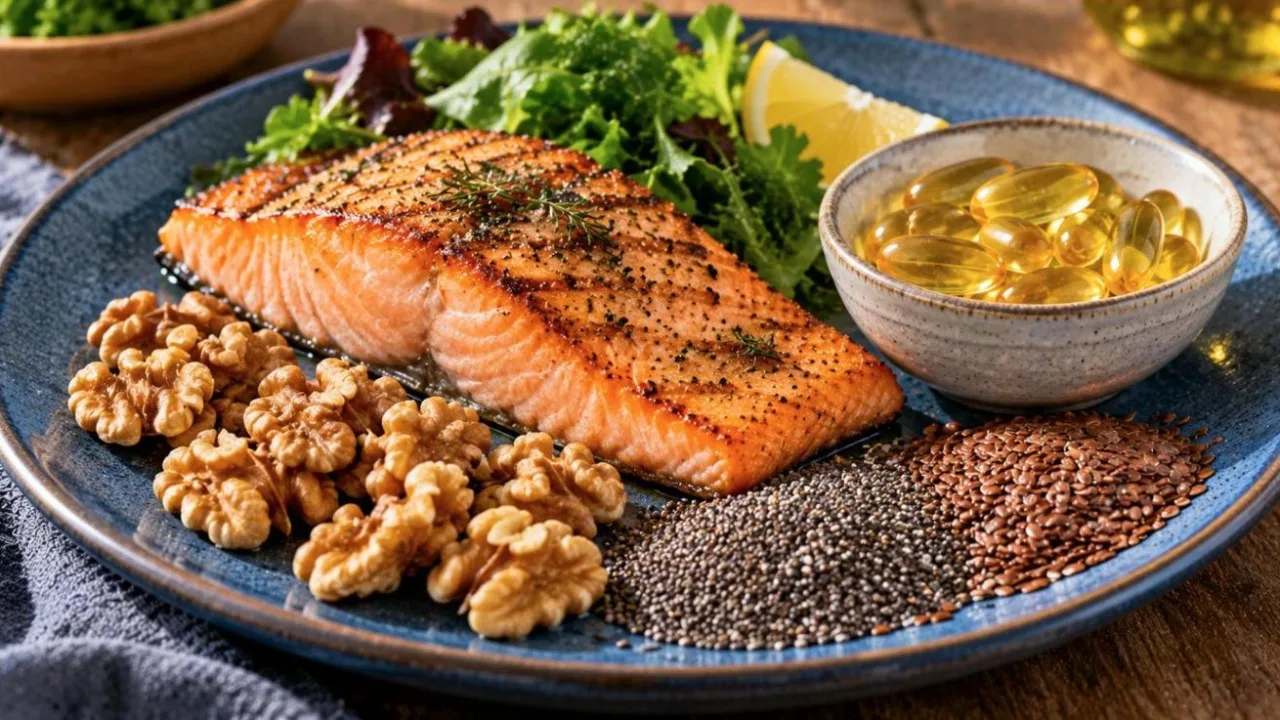
Omega-3 fatty acids are among the most researched nutrients in the world, and fish oil is one of the most popular supplements. They are important for the heart, brain and eyes. But the evidence for supplements is more mixed than many advertisements suggest. In Part 8 of Vitamins and Minerals Explained, we look at omega-3s.
What are omega-3 fatty acids?
Omega-3s are a family of polyunsaturated fats. The three main types are:
- ALA (alpha-linolenic acid): found mainly in plant foods such as flaxseed, chia seeds, walnuts and canola and soybean oils. ALA is "essential," meaning the body cannot make it, so we must get it from food.
- EPA (eicosapentaenoic acid) and DHA (docosahexaenoic acid): found mainly in fish, seafood and algae.
The body can convert some ALA into EPA and DHA, but only in small amounts: the NIH notes about 15% or less. So eating EPA and DHA directly is the practical way to raise their levels.
What do omega-3s do?
- They are important parts of cell membranes throughout the body.
- DHA is especially concentrated in the brain and the retina of the eye.
- They help produce hormones that regulate blood clotting, blood vessel function and inflammation.
- They play roles in heart, lung, immune and hormone systems.
How much omega-3 do you need?
There is no official recommended amount for EPA and DHA. For ALA, the NIH lists Adequate Intakes:
| Age group | ALA daily (Adequate Intake) |
|---|---|
| Infants | 0.5 g (total omega-3s) |
| 1–3 years | 0.7 g |
| 4–8 years | 0.9 g |
| Boys 9–13 | 1.2 g |
| Girls 9–13 | 1.0 g |
| Men 14+ | 1.6 g |
| Women 14+ | 1.1 g |
| Pregnancy | 1.4 g |
| Breastfeeding | 1.3 g |
For EPA and DHA, many health organisations recommend eating fish, especially oily fish, about twice a week. The American Heart Association advises one to two seafood meals a week, and about 1 gram a day of EPA plus DHA for people with existing heart disease, under medical guidance.
Best food sources of omega-3s
EPA and DHA (oily fish and seafood)
| Food (3 oz / 85 g, cooked) | DHA | EPA |
|---|---|---|
| Salmon, Atlantic, farmed | 1.24 g | 0.59 g |
| Salmon, Atlantic, wild | 1.22 g | 0.35 g |
| Herring, Atlantic | 0.94 g | 0.77 g |
| Sardines, canned | 0.74 g | 0.45 g |
| Mackerel, Atlantic | 0.59 g | 0.43 g |
ALA (plant sources)
| Food | Serving | ALA |
|---|---|---|
| Flaxseed oil | 1 tablespoon | 7.26 g |
| Chia seeds | 1 oz | 5.06 g |
| Walnuts | 1 oz | 2.57 g |
| Flaxseed, whole | 1 tablespoon | 2.35 g |
| Canola oil | 1 tablespoon | 1.28 g |
According to the NIH, US adults get only about 90 mg a day of EPA and DHA from food on average, far below what two servings of oily fish a week would provide.
Omega-3 deficiency
True omega-3 deficiency is rare in healthy people. It can cause rough, scaly skin and a rash. It has mainly been seen in patients fed intravenously without fats in the past. However, many people have low intakes of EPA and DHA relative to recommendations.
Fish oil and other supplements
- Fish oil: the most common supplement. A typical 1,000 mg capsule provides about 180 mg EPA and 120 mg DHA, according to the NIH, so check labels for EPA and DHA content rather than total oil.
- Krill oil: another marine source.
- Cod liver oil: also contains vitamins A and D, so watch total vitamin A intake.
- Algal oil: made from algae, a vegetarian and vegan source of DHA (and sometimes EPA), typically 100 to 300 mg DHA per serving.
- Prescription omega-3s: high-dose products used to lower very high triglycerides.
What does the research say?
Heart health
Results from large trials are mixed:
- The VITAL trial (1 g a day) found no significant reduction in major cardiovascular events overall, although heart attacks were 28% lower.
- The REDUCE-IT trial, using 4 g a day of a purified EPA prescription drug in high-risk people, found a 25% reduction in cardiovascular events.
- The STRENGTH trial, using 4 g a day of a different omega-3 product, found no benefit and was stopped early.
Omega-3s reliably lower triglycerides, a type of blood fat. But for people without heart disease, supplements have not consistently been shown to prevent heart attacks or strokes. Eating fish as part of a healthy diet is still widely recommended.
Pregnancy and infants
A 2018 Cochrane review of almost 20,000 women found that omega-3s in pregnancy reduced the risk of preterm birth by 11% and early preterm birth by 42%. Pregnant women are encouraged to eat 8 to 12 ounces (about 225 to 340 g) of lower-mercury seafood per week. Studies have not shown consistent benefits for children's intelligence or vision from supplements.
Brain health and dementia
Trials have not found that omega-3 supplements protect memory in healthy older adults or treat Alzheimer's disease.
Eyes
Adding omega-3s to the AREDS formula did not provide additional benefit for macular degeneration. Results for dry eye disease are mixed, with a large study finding no benefit.
Joints
In rheumatoid arthritis, omega-3s may help some patients reduce the use of pain medicines, though effects on symptoms vary.
Safety
- Common side effects of fish oil include a fishy taste, bad breath, heartburn, nausea, digestive discomfort and diarrhoea.
- The US FDA states that supplements providing up to 5 g a day of EPA plus DHA are safe when used as directed. European authorities reached a similar conclusion.
- High doses may slightly prolong bleeding time. Two trials using 4 g a day found a small increase in the risk of atrial fibrillation (an irregular heart rhythm) in people with heart disease or at high risk.
- People taking blood thinners such as warfarin should talk to their doctor before taking fish oil and may need monitoring.
What about mercury?
Some large predatory fish contain mercury. Fish oil supplements are processed to remove it, according to the NIH. For pregnant women and young children, choose lower-mercury fish such as salmon, sardines, anchovies, trout and Pacific oysters.
Practical tips
- Eat oily fish such as salmon, sardines, mackerel or herring about twice a week.
- Add flaxseed, chia seeds or walnuts to breakfast or snacks for ALA.
- If you are vegetarian or vegan, consider an algal oil supplement.
- If choosing fish oil, check the EPA and DHA content per serving.
- Talk to your doctor before high-dose omega-3s, especially if you take blood thinners.
Frequently asked questions
Is plant-based omega-3 as good as fish oil?
Plant ALA is healthy, but little converts to EPA and DHA. Algal oil provides DHA directly for those who avoid fish.
When should I take fish oil?
Taking it with a meal can improve absorption and reduce fishy burps.
Can omega-3 lower cholesterol?
Omega-3s lower triglycerides but do not significantly lower LDL "bad" cholesterol.
In Part 9, we look at folate and folic acid, essential before and during pregnancy.
Sources
- NIH Office of Dietary Supplements – Omega-3 Fatty Acids (health professional fact sheet)
- NIH Office of Dietary Supplements – Omega-3 Fatty Acids (consumer fact sheet)
Vitamins and Minerals Explained: the full series
- Part 1: Vitamin D
- Part 2: Vitamin B12
- Part 3: Iron
- Part 4: Magnesium
- Part 5: Vitamin C
- Part 6: Calcium
- Part 7: Zinc
- Part 8: Omega-3 Fatty Acids (you are here)
- Part 9: Folate and Folic Acid
- Part 10: Vitamin A
- Part 11: Vitamin E
- Part 12: Vitamin K
- Part 13: Potassium
- Part 14: Iodine
- Part 15: Biotin
- Part 16: Do You Need Supplements?
This article is for general information only and is not medical advice. Recommended amounts shown are US figures from the NIH Office of Dietary Supplements; guidance in other countries may differ slightly. Talk to a doctor or pharmacist before starting supplements, especially if you are pregnant, take medicines or have a health condition.