Anaemia is one of India's most widespread health problems. According to the National Family Health Survey (NFHS-5, 2019–21), about 57% of women aged 15 to 49 and around two-thirds of young children are anaemic. Iron deficiency is the most common cause. If your CBC shows low haemoglobin, your doctor may order iron studies to find out why.
What iron studies include
| Test | Typical adult range | What it shows |
|---|---|---|
| Serum iron | about 60 – 170 µg/dL | Iron circulating in the blood right now |
| TIBC (total iron-binding capacity) | about 250 – 450 µg/dL | How much iron your blood could carry |
| Transferrin saturation | about 20 – 50% | How "full" the iron transport protein is |
| Serum ferritin | Men about 24 – 336 ng/mL; women about 11 – 307 ng/mL | Your body's iron stores |
Ferritin: the most useful single test
Ferritin reflects how much iron your body has in storage. A low ferritin, often below about 30 ng/mL, strongly suggests iron deficiency, even before haemoglobin drops. However, ferritin also rises during infection, inflammation, liver disease and obesity, so a "normal" ferritin does not always rule out iron deficiency. Doctors interpret it together with transferrin saturation and the CBC.
The typical iron deficiency pattern
- Low haemoglobin and small red cells (low MCV) on the CBC
- Low ferritin
- Low serum iron
- High TIBC
- Low transferrin saturation
Common causes of iron deficiency
- Diets low in iron or poor absorption, especially in vegetarian diets low in vitamin C
- Heavy menstrual periods
- Pregnancy and breastfeeding
- Blood loss from the gut, such as ulcers, piles or, in older adults, bowel conditions
- Worm infestations, especially in children
- Frequent tea or coffee with meals, which reduces iron absorption
Symptoms to watch for
Tiredness, breathlessness on exertion, pale skin, hair fall, brittle nails, headaches, restless legs and cravings for ice or mud (pica) can all signal iron deficiency.
Iron-rich Indian foods
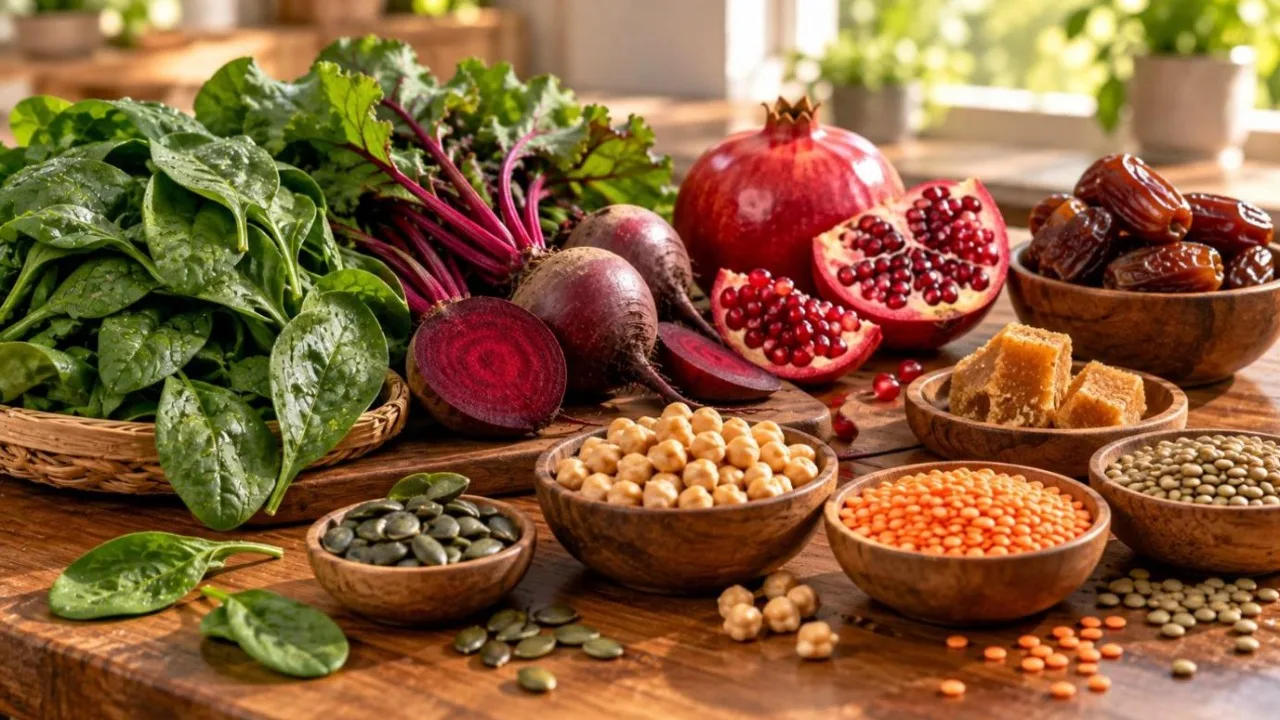
- Green leafy vegetables such as spinach, amaranth (chaulai), drumstick leaves and methi
- Pulses and legumes: rajma, chana, lentils and soybean
- Ragi, bajra and poha
- Dates, raisins, jaggery and sesame seeds
- Eggs, fish, chicken and red meat for non-vegetarians
Tip: eat iron-rich foods with vitamin C sources like amla, lemon, guava or oranges, and keep tea and coffee at least an hour away from meals.
Treatment
Doctors usually prescribe iron tablets for several months to rebuild stores, and sometimes intravenous iron if tablets are not tolerated or the deficiency is severe. Always find the cause, especially in men and older women, rather than only treating the numbers. Do not take high-dose iron without testing, as excess iron can be harmful.
Lab Tests Explained: the full series
- Part 1: CBC (Complete Blood Count)
- Part 2: Lipid Profile
- Part 3: Liver Function Test
- Part 4: Kidney Function Test
- Part 5: Urine Routine Test
- Part 6: Iron Studies and Ferritin (you are here)
- Part 7: Vitamin B12
- Part 8: Full-Body Checkup by Age
Related reads: Blood sugar levels and HbA1c · Thyroid tests · Vitamin D test · Uric acid
Disclaimer: This article is for general information only and is not medical advice. Reference ranges vary between laboratories, so always read your report against the range printed on it and discuss results with a qualified doctor.