Vitamin C is probably the world's best-known vitamin, famous for oranges and for being taken at the first sign of a cold. It does play important roles in immunity, skin health and iron absorption. But many claims about it go beyond the evidence. In Part 5 of Vitamins and Minerals Explained, we separate fact from fiction.
What does vitamin C do?
Vitamin C, also called ascorbic acid, is a water-soluble vitamin that humans cannot make, so we must get it from food. It:
- Helps make collagen, a protein needed for healthy skin, blood vessels, cartilage, bones and wound healing.
- Acts as an antioxidant, helping protect cells from damage caused by free radicals.
- Improves absorption of non-heme iron from plant foods (see Part 3).
- Supports the immune system.
- Helps make some neurotransmitters and hormones.
How much vitamin C do you need?
The NIH recommends:
| Age group | Recommended daily amount |
|---|---|
| Birth to 6 months | 40 mg |
| 7–12 months | 50 mg |
| 1–3 years | 15 mg |
| 4–8 years | 25 mg |
| 9–13 years | 45 mg |
| Teen boys 14–18 | 75 mg |
| Teen girls 14–18 | 65 mg |
| Men 19+ | 90 mg |
| Women 19+ | 75 mg |
| Pregnancy | 80–85 mg |
| Breastfeeding | 115–120 mg |
Smokers need an extra 35 mg a day, because smoking increases oxidative stress and uses up vitamin C.
Best food sources of vitamin C
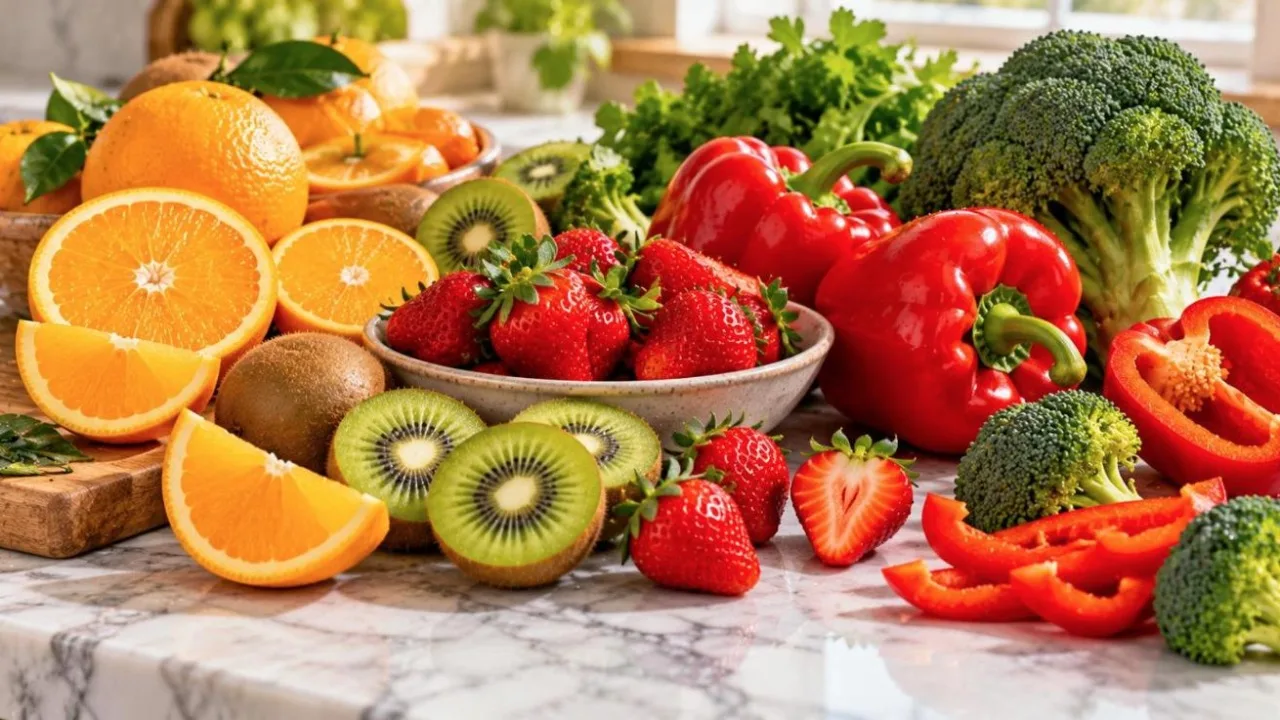
Fruits and vegetables are the best sources. According to the NIH, eating five varied servings of fruits and vegetables a day can provide more than 200 mg. The table below lists top sources (the US Daily Value is 90 mg).
| Food | Serving | Vitamin C | % DV |
|---|---|---|---|
| Red pepper, raw | ½ cup | 95 mg | 106% |
| Orange juice | ¾ cup | 93 mg | 103% |
| Orange | 1 medium | 70 mg | 78% |
| Grapefruit juice | ¾ cup | 70 mg | 78% |
| Kiwifruit | 1 medium | 64 mg | 71% |
| Green pepper, raw | ½ cup | 60 mg | 67% |
| Broccoli, cooked | ½ cup | 51 mg | 57% |
| Strawberries, sliced | ½ cup | 49 mg | 54% |
| Brussels sprouts, cooked | ½ cup | 48 mg | 53% |
| Grapefruit | ½ medium | 39 mg | 43% |
| Broccoli, raw | ½ cup | 39 mg | 43% |
| Tomato juice | ¾ cup | 33 mg | 37% |
Other good sources include guava, papaya, mango, pineapple, cauliflower, cabbage, potatoes and leafy greens.
Cooking matters
Vitamin C is sensitive to heat, light and air, and it dissolves in water. Long cooking, boiling and storage reduce the amount in food. The NIH notes that steaming or microwaving may limit losses, and eating some fruits and vegetables raw helps preserve vitamin C.
Vitamin C deficiency and scurvy
Severe vitamin C deficiency causes scurvy, a disease that once killed many sailors on long voyages until citrus fruits were found to prevent it. Today it is rare in developed countries but still occurs.
According to the NIH, signs of scurvy can appear within about a month of very low intake (below about 10 mg a day). Symptoms include:
- Fatigue and feeling unwell
- Inflamed, swollen or bleeding gums and tooth loss
- Small red or purple spots on the skin and easy bruising
- Joint pain
- Poor wound healing
- Corkscrew-shaped hairs
- Depression
- Iron-deficiency anaemia
Untreated scurvy can be fatal, but it responds quickly to vitamin C.
Who is at risk of low vitamin C?
- Smokers and people regularly exposed to second-hand smoke.
- People with a very limited diet, such as some older adults, people with alcohol or drug dependence, and people who eat very few fruits and vegetables.
- Infants fed evaporated or boiled cow's milk, which contains little vitamin C.
- People with certain medical conditions, including severe malabsorption, some cancers and kidney disease requiring dialysis.
Does vitamin C prevent or cure colds?
This is the most common question about vitamin C. The NIH summarises research as follows:
- Prevention in the general population: taking 200 mg or more a day regularly does not reduce how often most people catch colds.
- Extreme physical stress: in people under heavy physical stress, such as marathon runners, skiers and soldiers in very cold conditions, regular vitamin C (250 mg to 1 g a day) cut the number of colds by about half.
- Duration: taking vitamin C regularly reduced the length of colds by about 8% in adults and 14% in children, which may mean around a day less of symptoms per year.
- Treatment after symptoms start: taking vitamin C only after a cold begins did not change how long it lasted or how bad it was.
In short, vitamin C is not a cold cure, but regular adequate intake may slightly shorten colds.
Vitamin C and skin
Vitamin C is essential for collagen, which is why deficiency causes poor wound healing and skin problems. It is also widely used in skincare serums, where it is applied directly to the skin as an antioxidant. Research on topical vitamin C is promising for brightening and sun damage, but results vary between products and formulations.
Other research
- Heart disease and cancer: people who eat lots of fruits and vegetables tend to have lower risk, but clinical trials of vitamin C supplements have generally not shown clear benefits.
- Eye health: vitamin C is part of the AREDS supplement formula used to slow advanced age-related macular degeneration in people at high risk.
Vitamin C supplements
Vitamin C supplements usually contain ascorbic acid, which is as well absorbed as vitamin C from food. Other forms such as sodium ascorbate, calcium ascorbate and "ester" forms are available, but research has not consistently shown them to be better. The body absorbs a smaller percentage as doses increase, and excess is removed in urine.
Can you have too much vitamin C?
The NIH sets an upper limit of 2,000 mg a day for adults (lower for children). Too much can cause diarrhoea, nausea and stomach cramps.
- Kidney stones: high doses may increase oxalate in urine, which may raise kidney stone risk, especially in people who already have certain kidney conditions.
- Iron overload: people with haemochromatosis should avoid high-dose vitamin C supplements because they increase iron absorption.
Medicine interactions
- Cancer treatment: antioxidant supplements might affect how chemotherapy or radiation works. People undergoing cancer treatment should talk to their oncologist before taking vitamin C supplements, especially high doses.
- Cholesterol medicines: vitamin C combined with other antioxidants may reduce the beneficial effect of certain cholesterol-lowering combinations.
Practical tips
- Eat at least five servings of fruits and vegetables a day, including some raw.
- Add peppers, tomatoes or a squeeze of lemon to iron-rich meals to boost iron absorption.
- Steam or microwave vegetables rather than boiling them for long periods.
- If you smoke, aim for extra vitamin C, and consider quitting.
- High-dose supplements are rarely necessary for healthy people.
Frequently asked questions
Is natural vitamin C better than synthetic?
Ascorbic acid in supplements is chemically identical to that in food. Food has the advantage of other nutrients and fibre.
Can I take vitamin C every day?
Yes, getting vitamin C every day is important because the body does not store much. Most people can get enough from food.
Does vitamin C boost immunity?
Adequate vitamin C supports normal immune function, but extra doses do not seem to prevent infections in most people.
In Part 6, we look at calcium and its role in strong bones.
Sources
- NIH Office of Dietary Supplements – Vitamin C (health professional fact sheet)
- NIH Office of Dietary Supplements – Vitamin C (consumer fact sheet)
Vitamins and Minerals Explained: the full series
- Part 1: Vitamin D
- Part 2: Vitamin B12
- Part 3: Iron
- Part 4: Magnesium
- Part 5: Vitamin C (you are here)
- Part 6: Calcium
- Part 7: Zinc
- Part 8: Omega-3 Fatty Acids
- Part 9: Folate and Folic Acid
- Part 10: Vitamin A
- Part 11: Vitamin E
- Part 12: Vitamin K
- Part 13: Potassium
- Part 14: Iodine
- Part 15: Biotin
- Part 16: Do You Need Supplements?
This article is for general information only and is not medical advice. Recommended amounts shown are US figures from the NIH Office of Dietary Supplements; guidance in other countries may differ slightly. Talk to a doctor or pharmacist before starting supplements, especially if you are pregnant, take medicines or have a health condition.