Walk into any pharmacy and you will find shelves of "hair, skin and nails" gummies built around one ingredient: biotin. Many contain 5,000 or even 10,000 micrograms per dose, while the body needs about 30. Biotin is a real and essential vitamin, but the marketing has run far ahead of the science, and very high doses carry a risk that has nothing to do with toxicity. In Part 15 of Vitamins and Minerals Explained, we separate the facts from the hype.
What is biotin?
Biotin is a water-soluble B vitamin, sometimes called vitamin B7 (and in older texts vitamin H, from the German words Haar und Haut, hair and skin). It acts as a helper molecule (a cofactor) for five enzymes called carboxylases, which the body needs to:
- Break down fats and make new fatty acids
- Produce glucose, especially between meals
- Process certain amino acids from protein
In short, biotin helps turn the food you eat into usable energy. It also plays roles in gene regulation and cell signalling.
How much biotin do you need?
There is not enough evidence to set an RDA, so experts use Adequate Intakes (AIs):
| Life stage | Adequate Intake (mcg/day) |
|---|---|
| Birth to 6 months | 5 |
| Infants 7–12 months | 6 |
| Children 1–3 years | 8 |
| Children 4–8 years | 12 |
| Children 9–13 years | 20 |
| Teens 14–18 years | 25 |
| Adults 19+ | 30 |
| Pregnancy | 30 |
| Breastfeeding | 35 |
Compare 30 mcg with the 5,000–10,000 mcg (5–10 mg) found in many beauty supplements, and the gap is obvious: these products provide 160 to 330 times the daily requirement.
Best food sources of biotin
Biotin is found in a wide range of foods, so most people get enough. The US Daily Value is 30 mcg.
| Food | Serving | mcg | % DV |
|---|---|---|---|
| Beef liver, cooked | 3 oz | 30.8 | 103% |
| Egg, whole, cooked | 1 large | 10.0 | 33% |
| Salmon, pink, canned | 3 oz | 5.0 | 17% |
| Pork chop, cooked | 3 oz | 3.8 | 13% |
| Hamburger patty, cooked | 3 oz | 3.8 | 13% |
| Sunflower seeds, roasted | ¼ cup | 2.6 | 9% |
| Sweet potato, cooked | ½ cup | 2.4 | 8% |
| Almonds, roasted | ¼ cup | 1.5 | 5% |
Smaller amounts are found in tuna, spinach, broccoli, cheese, milk, yoghurt, oats, bananas and wholewheat bread. Bacteria in the large intestine also produce biotin, though it is unclear how much of it the body absorbs.
The raw egg white problem
Eggs are a good source of biotin, but raw egg whites contain a protein called avidin that binds biotin tightly and stops it being absorbed. Eating two or more raw egg whites daily for months has caused biotin deficiency. Cooking destroys avidin, so cooked eggs are not a problem. This is one more reason, alongside food safety, to avoid regular raw egg drinks.
Biotin deficiency
True deficiency is rare and has not been reported in healthy people eating a normal mixed diet. When it occurs, the signs include:
- Thinning hair, sometimes progressing to loss of all body hair
- A scaly red rash around the eyes, nose, mouth and genital area
- Conjunctivitis (pink eye)
- Brittle nails
- Depression, lethargy, hallucinations and tingling in the hands and feet
- In infants, seizures and developmental delay
Who may run low?
- People with biotinidase deficiency, a rare inherited disorder in which the body cannot recycle biotin. Untreated, it causes seizures, hearing loss and developmental problems, but lifelong biotin treatment prevents symptoms. Newborns in the US and many other countries are screened for it.
- People with chronic alcohol use, since alcohol blocks biotin absorption. Around 15% of people with chronic alcoholism have low blood biotin.
- Pregnant and breastfeeding women. At least a third of pregnant women develop marginal biotin deficiency, and levels fall during breastfeeding. What this means for mother and baby is still being studied, but it is one reason prenatal vitamins usually include biotin.
- People on long-term anti-seizure medicines such as carbamazepine, phenytoin, primidone and phenobarbital, which speed up biotin breakdown and reduce absorption.
Does biotin help hair, skin and nails?
This is the claim that sells most biotin supplements, so the evidence deserves a careful look. According to the NIH fact sheet, the support comes from case reports and small studies:
- Nails: a few small studies found that 2.5 mg a day improved brittle nails, but they had no placebo groups, so the improvement could have had other causes.
- Hair: evidence comes mainly from case reports in children with rare conditions such as uncombable hair syndrome, or from people who were actually deficient.
- Skin: benefits were seen in case reports of infants with rare inherited disorders or deficiency.
The pattern is consistent: biotin helps hair, skin and nails when someone is deficient or has a specific rare condition. There is no good evidence that extra biotin improves hair growth or skin in healthy people who already get enough. Hair loss has many causes, including genetics, thyroid problems, iron deficiency (see Part 3 on iron), stress and hormonal changes, and a biotin gummy will not fix them.
The hidden risk: biotin and lab tests
Biotin itself is remarkably non-toxic. No upper limit has been set, and studies have found no side effects at doses of 10–50 mg a day, with no toxicity seen even at 200 mg a day. The real concern is something different.
Many laboratory blood tests use a technology based on biotin and streptavidin, which bind to each other very strongly. When a person has a lot of biotin in their blood, it can interfere with these tests and produce falsely high or falsely low results. Tests that can be affected include:
- Thyroid tests (TSH, T4, T3). High biotin intake has led to false diagnoses of Graves' disease, an overactive thyroid. A single 10 mg dose has been shown to distort thyroid results within 24 hours.
- Troponin, the key blood test used to diagnose heart attacks. The FDA reported a death in a patient taking high-dose biotin whose troponin result was falsely low, so a heart attack was missed.
- Vitamin D and some hormone tests.
The FDA has issued a safety warning about this. If you take a biotin supplement, especially a high-dose beauty product, tell your doctor before any blood test. Many labs advise stopping biotin for a day or more beforehand, but follow the specific advice you are given.
Practical tips
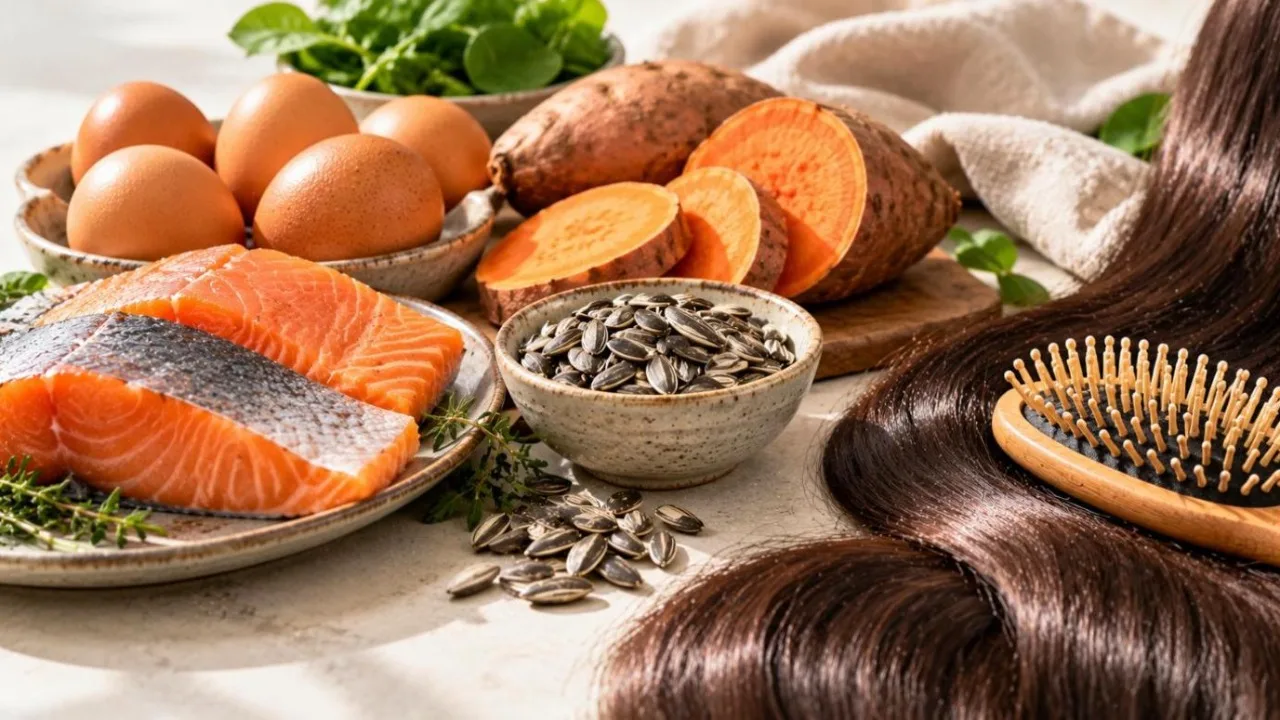
- Most people get enough biotin from eggs, fish, meat, seeds, nuts and vegetables.
- Do not expect biotin supplements to transform healthy hair or nails; see a doctor about unexplained hair loss.
- If you take biotin, mention it to your doctor and the lab before blood tests.
- Avoid eating raw egg whites regularly.
Frequently asked questions
How long does biotin take to work for hair?
If you are deficient, improvements may appear over a few months as new hair grows. If you are not deficient, there is no good evidence that it works at all.
Is 10,000 mcg of biotin safe?
Biotin has not shown toxicity even at very high doses, but at this level it can seriously distort blood test results. There is also little reason to take so much.
Can biotin cause acne?
Some people report breakouts after starting high-dose biotin, but this has not been well studied.
Should I stop biotin before a blood test?
Ask your doctor or the laboratory. Many recommend pausing it beforehand; at the very least, make sure they know you take it.
Sources
- NIH Office of Dietary Supplements – Biotin (consumer fact sheet)
- NIH Office of Dietary Supplements – Biotin (health professional fact sheet)
Vitamins and Minerals Explained: the full series
- Part 1: Vitamin D
- Part 2: Vitamin B12
- Part 3: Iron
- Part 4: Magnesium
- Part 5: Vitamin C
- Part 6: Calcium
- Part 7: Zinc
- Part 8: Omega-3 Fatty Acids
- Part 9: Folate and Folic Acid
- Part 10: Vitamin A
- Part 11: Vitamin E
- Part 12: Vitamin K
- Part 13: Potassium
- Part 14: Iodine
- Part 15: Biotin (you are here)
- Part 16: Do You Need Supplements?
This article is for general information only and is not medical advice. Recommended amounts shown are US figures from the NIH Office of Dietary Supplements; guidance in other countries may differ slightly. Talk to a doctor or pharmacist before starting supplements, especially if you are pregnant, take medicines or have a health condition.