Billions of people now use the internet every day to work, learn, shop and stay in touch. Yet it began as a small research project linking a handful of university computers. In Part 9 of Inventions That Changed Everything, we look at how the internet and the World Wide Web were built.
Packet switching
In the early 1960s, researchers including Paul Baran in the US and Donald Davies in the UK proposed a new way to send data: break messages into small "packets" that travel independently through a network and are reassembled at the destination. If one route fails, packets can take another. This idea, called packet switching, is the foundation of the internet.
ARPANET
The US Department of Defense's Advanced Research Projects Agency (ARPA) funded a network to let researchers share computing resources. On 29 October 1969, a computer at the University of California, Los Angeles, tried to send the word "LOGIN" to a computer at the Stanford Research Institute. The system crashed after "LO", but the connection worked shortly afterwards. By the end of 1969, ARPANET linked four sites.
Email arrived in the early 1970s, when Ray Tomlinson sent messages between computers and chose the @ symbol to separate user and computer names.
A common language: TCP/IP
As other networks appeared, they needed a way to connect. Vint Cerf and Bob Kahn designed TCP/IP, a set of rules, or protocols, that allowed different networks to communicate as one "network of networks". On 1 January 1983, ARPANET officially switched to TCP/IP, often seen as the birth of the modern internet. The domain name system, with addresses such as .com and .org, followed in the mid-1980s.
The World Wide Web
The internet and the web are not the same thing. The internet is the global network; the web is a system of linked pages that runs on top of it.
In 1989, British scientist Tim Berners-Lee, working at CERN in Switzerland, proposed a system to share information using hypertext links. By 1990 to 1991 he had created the key pieces: HTML for pages, URLs for addresses, HTTP for transferring pages, the first web browser and the first website. In 1993 CERN released the web software into the public domain, allowing anyone to use it freely.
That same year, the Mosaic browser made the web visual and easy to use, and the web grew explosively.
The internet goes mainstream
- 1990s: dial-up connections, early search engines and online shopping.
- 2000s: broadband, social networks, online video and Wi-Fi.
- 2010s: smartphones and mobile data put the internet in billions of pockets.
- 2020s: cloud computing, streaming and AI services rely on global networks.
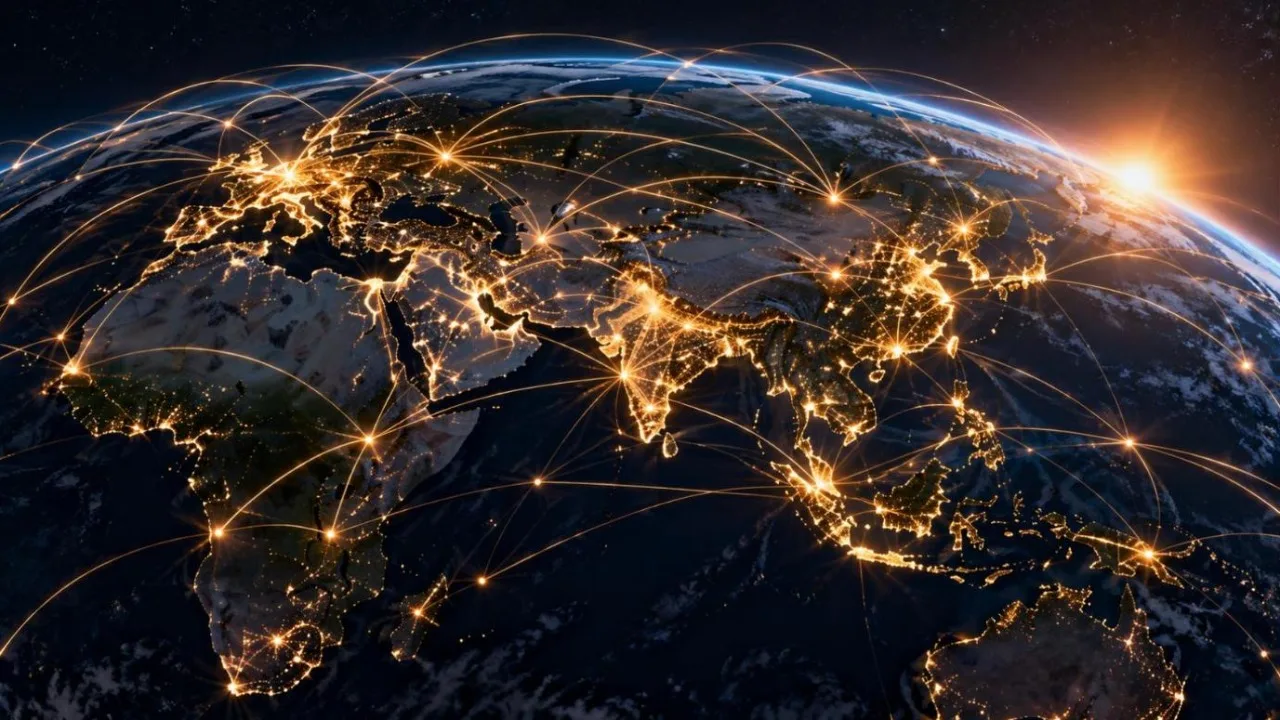
Much of the world's internet traffic travels through undersea fibre optic cables that cross the oceans.
How the internet changed the world
- Communication: instant messages, video calls and social media.
- Information: vast knowledge available to anyone with a connection.
- Business: e-commerce, remote work and digital services.
- Society and politics: new ways to organise, but also misinformation and polarisation.
Why it still matters
Like the printing press in Part 1, the internet made sharing information cheap and fast, with huge benefits and new risks. Billions of people still lack reliable access, and issues such as privacy, cybersecurity and online safety are major challenges.
In Part 10, we finish with the device that put all of this in our hands: the mobile phone.
Inventions That Changed Everything: the full series
- Part 1: The Printing Press
- Part 2: The Steam Engine
- Part 3: Electricity and the Light Bulb
- Part 4: The Telephone
- Part 5: Penicillin and Antibiotics
- Part 6: The Aeroplane
- Part 7: Radio and Television
- Part 8: The Computer
- Part 9: The Internet (you are here)
- Part 10: The Mobile Phone
Dates and figures are commonly cited historical values and may vary slightly between sources, as many inventions had several contributors.