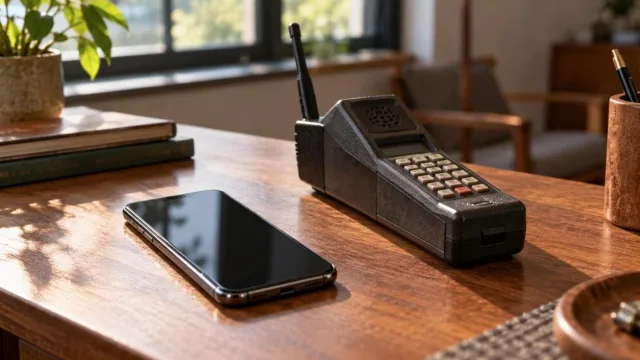
Today we video-call people on the other side of the planet without thinking twice. But until the late 1800s, the only way to send a message quickly over long distances was by telegraph, in dots and dashes. In Part 4 of Inventions That Changed Everything, we look at the invention that carried the human voice through wires: the telephone.
Before the telephone: the telegraph
In the 1830s and 1840s, inventors including Samuel Morse in the US and William Cooke and Charles Wheatstone in Britain developed the electric telegraph. Messages were sent as electrical pulses, using codes such as Morse code. By 1866 a cable across the Atlantic carried telegraph messages between Europe and North America.
The telegraph was revolutionary, but it needed trained operators, and messages were short and expensive. Many inventors wondered whether wires could carry speech itself.
Alexander Graham Bell
Alexander Graham Bell was born in Edinburgh, Scotland, in 1847. His mother was deaf, and his father taught speech, so Bell grew up fascinated by sound and voice. He moved to North America and taught deaf students in Boston, while experimenting with sending multiple telegraph messages over one wire.
Working with his assistant Thomas Watson, Bell explored how sound vibrations could be turned into changes in electric current and back again.
The famous patent race
On 14 February 1876, Bell's lawyer filed his patent application for the telephone at the US Patent Office. On the same day, another inventor, Elisha Gray, filed a notice describing a similar idea. Bell received patent number 174,465 on 7 March 1876.
Who truly invented the telephone first is still debated. Italian-born inventor Antonio Meucci had worked on voice communication devices years earlier, but lacked money to secure a full patent. Bell's patent survived hundreds of legal challenges.
"Mr. Watson, come here"
On 10 March 1876, Bell spoke the first clear words through his device to Watson in another room: "Mr. Watson, come here, I want to see you." Later that year, he demonstrated the telephone at the Centennial Exhibition in Philadelphia, impressing visitors and judges.
Building networks
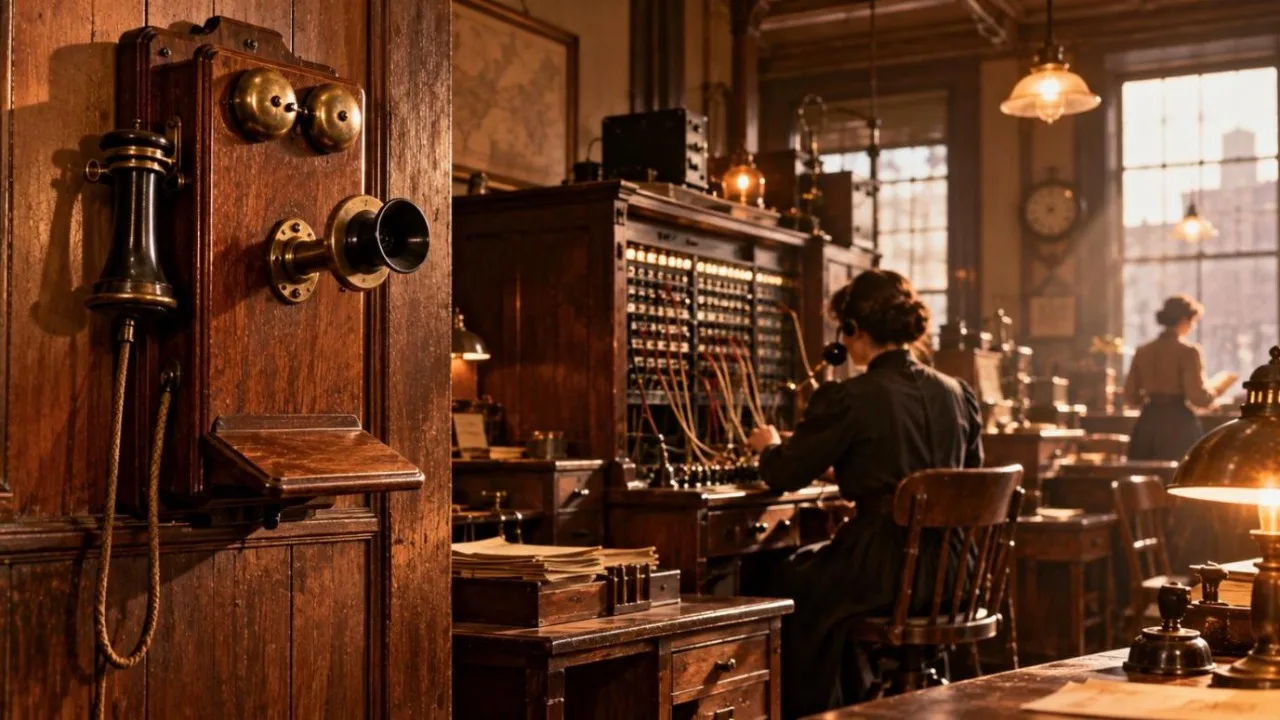
A telephone is only useful if other people have one too. The Bell Telephone Company was founded in 1877. In 1878 the first commercial telephone exchange opened in New Haven, Connecticut, where operators connected calls by hand using switchboards. Many of the first operators were young women.
Long-distance lines, automatic exchanges and undersea cables followed over the next decades. The first transatlantic telephone cable began service in 1956.
How the telephone changed life
- Business: companies could coordinate instantly across cities, speeding up trade and decisions.
- Emergencies: people could call doctors, police and fire services quickly.
- Cities: phones helped make skyscrapers practical by reducing the need for messengers.
- Family and social life: people could stay in touch across distances in real time.
- Jobs: telephone operators became a major source of employment for women.
Why it still matters
The telephone's networks of wires, exchanges and cables became the backbone for later technologies, including fax machines, early internet connections and today's mobile networks. We return to the phone's story in Part 10.
In Part 5, we look at a discovery that saved millions of lives: penicillin.
Inventions That Changed Everything: the full series
- Part 1: The Printing Press
- Part 2: The Steam Engine
- Part 3: Electricity and the Light Bulb
- Part 4: The Telephone (you are here)
- Part 5: Penicillin and Antibiotics
- Part 6: The Aeroplane
- Part 7: Radio and Television
- Part 8: The Computer
- Part 9: The Internet
- Part 10: The Mobile Phone
Dates and figures are commonly cited historical values and may vary slightly between sources, as many inventions had several contributors.