Not long ago, a small cut, a sore throat or childbirth could lead to a deadly infection, and doctors had few ways to stop it. That changed with penicillin, the first widely used antibiotic. In Part 5 of Inventions That Changed Everything, we look at one of the most important medical breakthroughs in history.
A world of deadly infections
Before antibiotics, bacterial infections such as pneumonia, blood poisoning, tuberculosis and infected wounds killed huge numbers of people. During World War I, many soldiers died not from their wounds but from the infections that followed. Doctors could clean wounds and use antiseptics, but they could not cure an infection once it spread inside the body.
A lucky accident
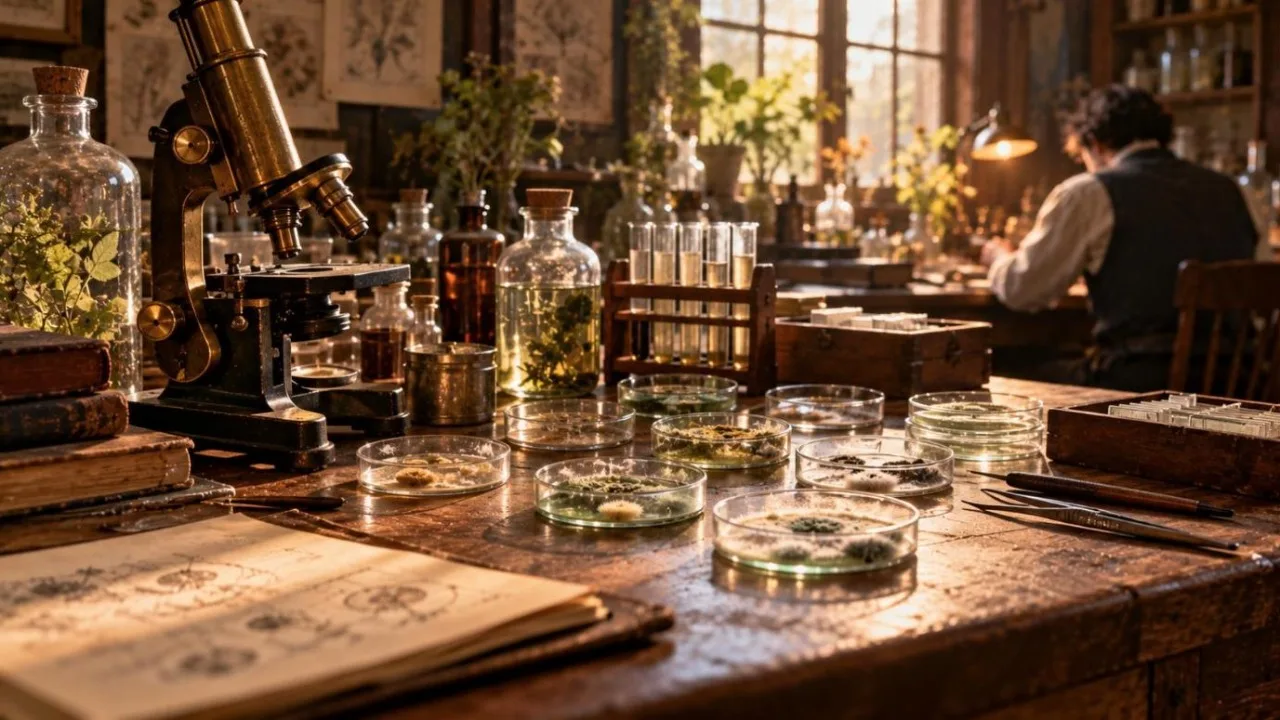
In September 1928, Scottish scientist Alexander Fleming returned from holiday to his laboratory at St Mary's Hospital in London. He noticed that one of his petri dishes of Staphylococcus bacteria had been contaminated by a mould. Around the mould, the bacteria had been killed.
Fleming identified the mould as Penicillium and named the bacteria-killing substance penicillin. He published his findings in 1929, but penicillin was hard to purify and unstable, and he could not produce enough to treat patients.
From discovery to medicine
About a decade later, a team at the University of Oxford led by Australian scientist Howard Florey and German-born biochemist Ernst Chain, with key contributions from Norman Heatley, took up the work. In 1940 they showed that penicillin protected infected mice. In 1941 they treated their first human patient, a police officer with a severe infection. He improved dramatically, but supplies ran out and he later died, showing how much more penicillin was needed.
Mass production in wartime
With Britain under wartime pressure, Florey and Heatley travelled to the United States to seek help. American laboratories and drug companies developed ways to grow penicillin in large deep tanks, and found a more productive mould strain reportedly on a mouldy melon from a market in Illinois.
Production soared. By D-Day in June 1944, large supplies of penicillin were available to treat Allied soldiers. In 1945 Fleming, Florey and Chain shared the Nobel Prize in Physiology or Medicine.
The antibiotic age
Penicillin's success inspired the search for more antibiotics, such as streptomycin, which became the first effective treatment for tuberculosis. Antibiotics made many surgeries, cancer treatments, organ transplants and premature baby care far safer, because infections could be prevented or treated.
The rising threat of resistance
Even in his Nobel lecture, Fleming warned that bacteria could become resistant if penicillin was misused. He was right. When antibiotics are overused or not taken as prescribed, bacteria that survive can multiply and spread resistance.
Today, antimicrobial resistance is considered a serious global health threat. Health organisations urge people to:
- Take antibiotics only when prescribed by a qualified health professional.
- Complete the course as instructed.
- Never share antibiotics or use leftover medicine.
- Remember that antibiotics do not work against viruses such as colds and flu.
Why it still matters
Penicillin shows how curiosity, teamwork and industry together turn a discovery into a lifesaver. Protecting antibiotics for future generations is now just as important as discovering new ones.
In Part 6, we take to the skies with the Wright brothers and the invention of the aeroplane.
Inventions That Changed Everything: the full series
- Part 1: The Printing Press
- Part 2: The Steam Engine
- Part 3: Electricity and the Light Bulb
- Part 4: The Telephone
- Part 5: Penicillin and Antibiotics (you are here)
- Part 6: The Aeroplane
- Part 7: Radio and Television
- Part 8: The Computer
- Part 9: The Internet
- Part 10: The Mobile Phone
Dates and figures are commonly cited historical values and may vary slightly between sources, as many inventions had several contributors.