Most adults in the world now own a mobile phone, and for many it is their main way to access the internet, pay for things and stay in touch. In the final part of Inventions That Changed Everything, we look at how the mobile phone went from a heavy luxury to an everyday essential, and what this whole series teaches us about invention.
The idea of cells
Car phones and radio telephones existed from the 1940s, but they could serve only a few users in each area. In 1947, engineers at Bell Labs proposed dividing areas into small "cells", each with its own low-power transmitter. The same frequencies could be reused in different cells, allowing many more users. This is why we call them cellular phones.
The first handheld call
On 3 April 1973, Martin Cooper, an engineer at Motorola, made the first public handheld mobile phone call on a New York street. He reportedly called a rival at Bell Labs. His prototype weighed about a kilogram and could manage only a short call before needing a long recharge.
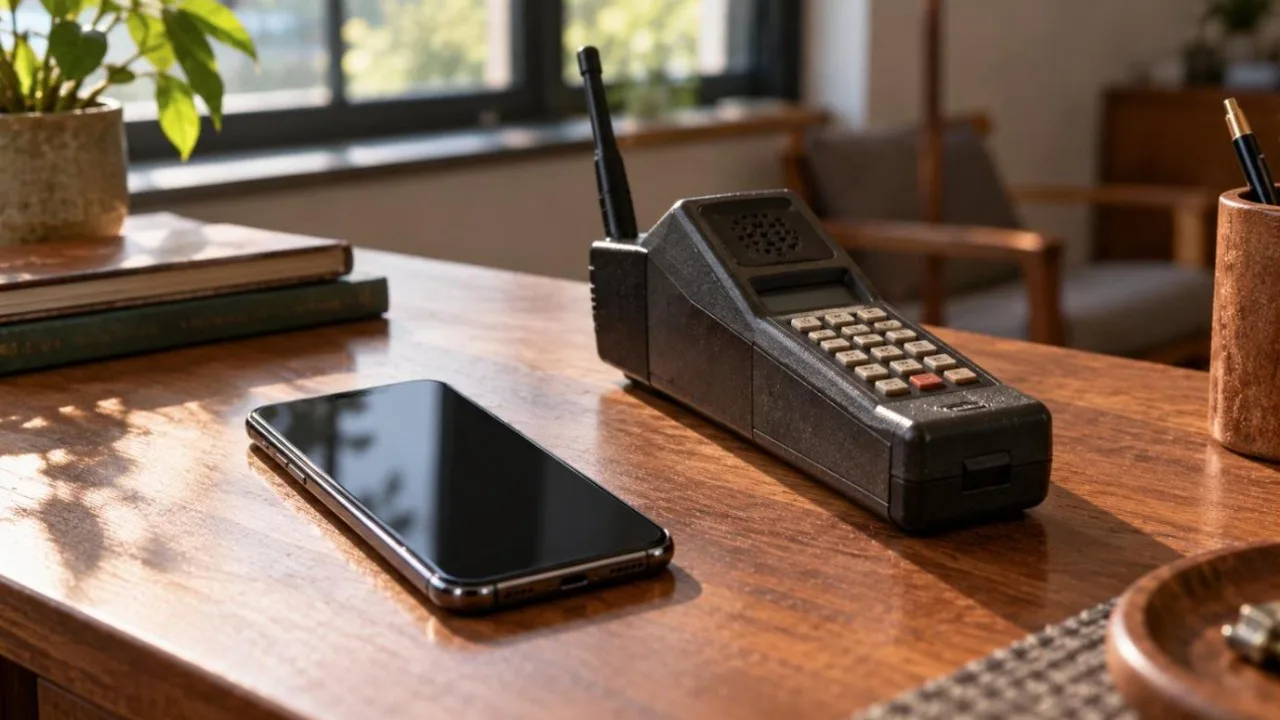
The first commercial cellular networks launched in Japan in 1979 and in parts of Europe and the US in the early 1980s. The first commercial handheld phones, released in 1983, cost several thousand dollars and earned the nickname "brick phones".
Smaller, cheaper, digital
In the 1990s, second-generation (2G) digital networks such as GSM improved sound quality, security and battery life, and introduced text messaging. The first SMS message, "Merry Christmas", was sent in the UK in December 1992. Phones became smaller and more affordable, and prepaid plans helped mobile phones spread rapidly across developing countries, often skipping landlines altogether.
The smartphone revolution
Early smartphones, such as IBM's Simon in 1994 and later business devices with email and keyboards, combined phones with computer features. In 2007, Apple's iPhone popularised the large touchscreen and easy-to-use apps. In 2008, the first phones running Google's Android launched, and Android became the world's most used mobile operating system.
Faster 3G, 4G and now 5G networks turned smartphones into powerful pocket computers for video, maps, banking, shopping and social media.
How mobile phones changed the world
- Communication: calls, messages and video calls from almost anywhere.
- Financial inclusion: mobile money services, such as M-Pesa in Kenya from 2007, gave millions access to payments without bank branches.
- Information: news, education and maps in your pocket.
- Work and business: new jobs, from ride-hailing to online selling.
- Daily life: cameras, music, health tracking and more in one device.
- Challenges: distraction, screen time, privacy and online safety.
What all ten inventions teach us
Looking back across this series, from the printing press to the smartphone, some patterns stand out:
- Inventions build on each other. Electricity enabled the telephone, radio and computers; computers enabled the internet; all of them led to the smartphone.
- Few inventions have a single inventor. The telephone, light bulb, radio and computer all involved rival inventors and teams.
- Systems matter as much as devices. Edison's power grid, telephone exchanges and the internet's protocols made inventions useful.
- Cost and access decide impact. Change came when inventions became cheap enough for ordinary people.
- Every breakthrough brings new problems. Pollution, misinformation and antibiotic resistance remind us to use inventions wisely.
Thank you for following Inventions That Changed Everything. The next world-changing invention may already be taking shape in a lab, a garage or a classroom somewhere.
Inventions That Changed Everything: the full series
- Part 1: The Printing Press
- Part 2: The Steam Engine
- Part 3: Electricity and the Light Bulb
- Part 4: The Telephone
- Part 5: Penicillin and Antibiotics
- Part 6: The Aeroplane
- Part 7: Radio and Television
- Part 8: The Computer
- Part 9: The Internet
- Part 10: The Mobile Phone (you are here)
Dates and figures are commonly cited historical values and may vary slightly between sources, as many inventions had several contributors.