This is Part 9 of HorizonDesk's chronological series on Tamil history, from prehistory to modern Tamil Nadu. The previous instalment was Part 8: Karikala Chola and the Kallanai.
Around two thousand years ago the poet Mangudi Kizhar summed up a small settlement in twelve lines (Purananuru 335). It had only four flowers worth naming, four foods (two millets, horse gram and field beans) and four kudi, or hereditary groups: drummers of the small tudi, singers called panan, drummers of the big parai, and the kadamban. And it had no god to whom people offered paddy, except the memorial stone of a warrior who fell while killing an enemy's elephant.
Parts 7 and 8 followed kings. This part looks at the people they ruled: how the poets divided their world into landscapes, how people earned a living, what they ate and wore, and how they celebrated and remembered their dead.
A word on the evidence
Most of what follows comes from the Sangam poems (introduced in Part 6) and the Tolkappiyam, the oldest surviving Tamil grammar, whose third book sets the rules of poetic subject matter. Three cautions apply. Most scholars place the bulk of the poems between about the 3rd century BCE and the 3rd century CE, but single poems cannot be dated precisely and the Tolkappiyam grew in layers. The poems follow strict conventions, so a detail can be a formula. And the poets wrote for patrons, so we hear far more about chiefs and bards than about labourers. Archaeology is the essential cross-check.
The five tinai: a map of land and feeling
The central idea of Sangam poetry is tinai, a word for both a type of landscape and the kind of poem set in it. The Tolkappiyam sorts a love poem's material into three layers: mutal ("first things": land, season and hour), karu ("native elements": god, people, food, animals, plants, drum and occupation) and uri (the human situation the landscape stands for). One sutra names four lands by their gods: the forest of Mayon, the dark mountains of Seyon (Murugan), the sweet-water country of Vendan (identified with Indra) and the wide sands of Varunan. Each tinai is named after a typical flower.
| Tinai | Landscape | Season and hour | Deity | People | Livelihood | Love theme |
|---|---|---|---|---|---|---|
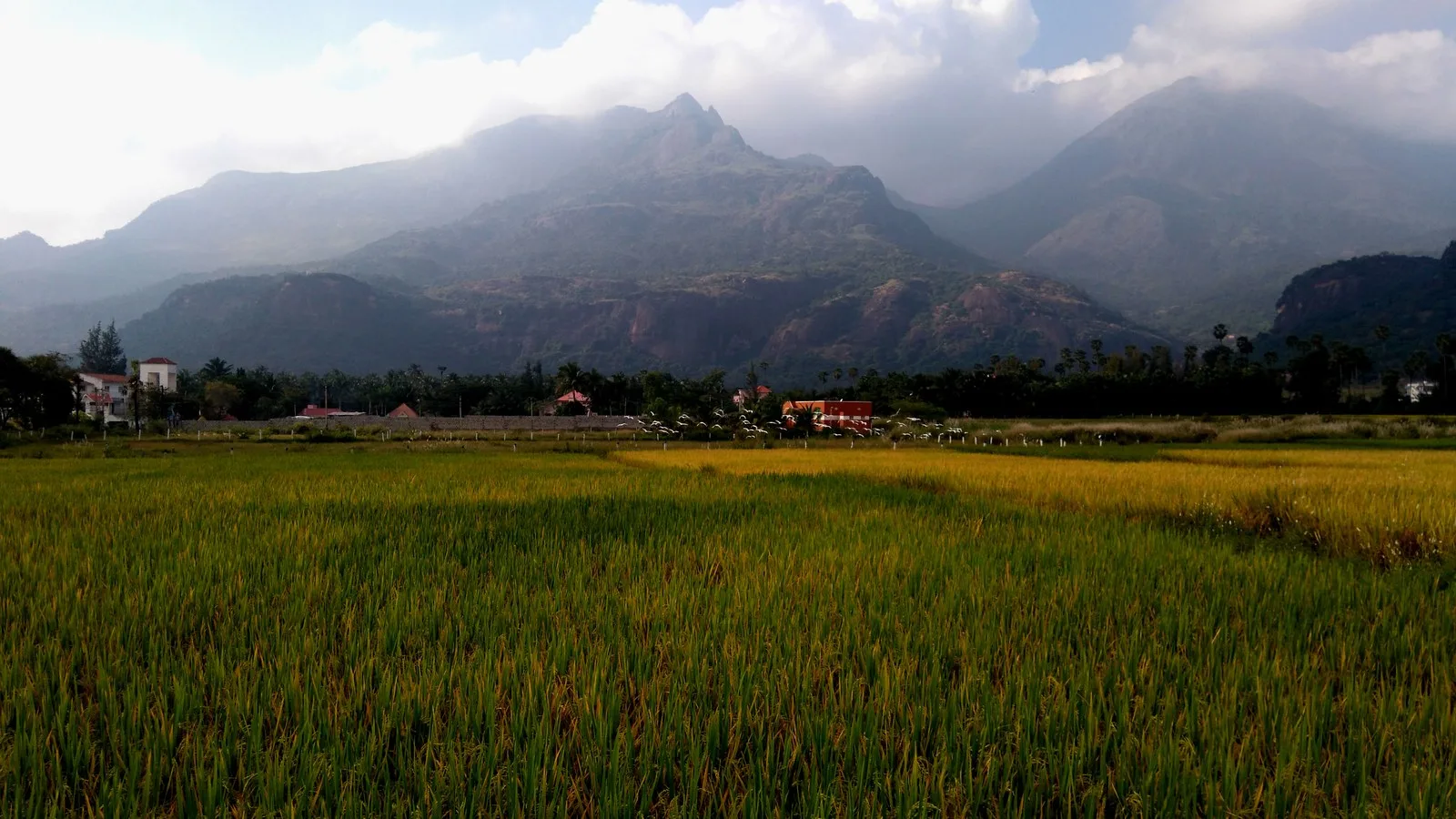
| Kurinji | Mountains | Cold season; midnight | Murugan | Kuravar, kanavar (hill folk) | Hunting, honey, hill millet | Secret union |
| Mullai | Forest and pasture | Rains; evening | Mayon (Tirumal) | Ayar, kovalar (herders) | Cattle, milk, curd, ghee | Patient waiting |
| Marutam | River plains | Any season; dawn | Vendan (Indra) | Uzhavar (ploughmen) | Paddy, sugarcane, tanks | Sulking over infidelity |
| Neytal | Seashore | Any season; sunset | Varunan | Paratavar (fishers) | Fish, salt, pearls | Anxious pining |
| Palai | Parched wasteland | Summer; midday | Korravai (later sources) | Eyinar, maravar (hunters, raiders) | Raiding travellers and herds | Separation |
Palai is the odd one out. The Tolkappiyam gives it no land of its own; the later epic Silappathikaram explains that mullai and kurinji, scorched by summer, "take the form called palai". In poems it is the road a man takes when he leaves home to earn wealth.
Literary code or social reality?
A. K. Ramanujan, whose translations introduced the poems to many English readers, stressed the tinai as a poetic code in which a flower or bird signals a mood, and the old commentators accepted tinai mayakkam, the mixing of elements from different landscapes. In 1974, however, Karthigesu Sivathamby argued that the tinai reflect real eco-zones with different economies, and Rajan Gurukkal and R. Champakalakshmi later read them as evidence of unevenly developed economies existing side by side. A sensible middle view: the system is stylised, but it rests on real coexistence of hunting, herding, farming and fishing. A poem's landscape is not a census.
Akam and puram
Akam ("inner") poems deal with love and never name real people; the speakers are types such as the heroine, her friend and her mother. Puram ("outer") poems deal with war, kings, death and generosity, and name real chiefs and places. Puram is the historian's main source, but akam poems, with their backgrounds of harvests, markets and gossip, are full of incidental social history.
Making a living
River valleys, hills and pastures
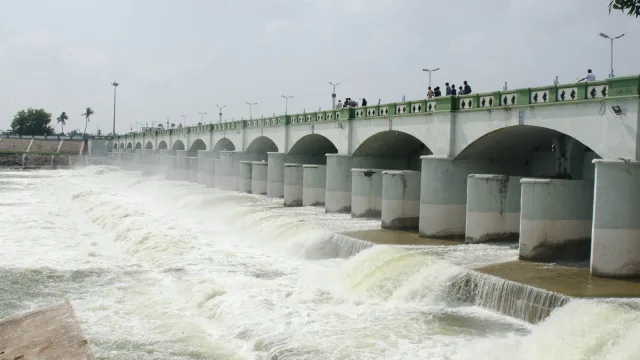
Marutam country, above all the Kaveri delta and the Vaigai valley, fed the big kingdoms with paddy and sugarcane. Water management was a royal duty: in Purananuru 18 the poet Kudapulaviyanar urges a Pandya king to build tanks wherever the land dips, the same ideal that made Karikala famous (Part 8).
In the hills, families burned forest patches to grow millet; a stock kurinji scene shows a girl on a platform scaring parrots from the crop, which is where she meets her lover. Herders kept cattle, sheep and goats and traded milk products; in Kurunthokai 221 a herder girl "comes with milk and leaves with porridge".
The coast: fish, salt and pearls
Neytal poems show boats, nets and fish drying on the sand. Salt from shore pans was carried inland by the umanar, salt merchants travelling with their families in bullock-cart caravans. In Akananuru 140 a salt-seller's daughter walks the streets calling "white salt, equal measure for paddy!" The Pandya port of Korkai was famed for pearls.
Barter, markets and merchants
Much exchange was barter. In Akananuru 126 a bard's daughter turns down a measure of old red rice for her fish and holds out for pearls and jewels; in other poems hunters swap venison and herders swap curd for grain. Cities had markets too. The Maduraikkanchi, a 782-line poem on Madurai, describes a crowded day market and a noisy night market selling cloth, flowers, perfume, gold, gems, conch bangles and food. The Pattinappalai praises the merchants of the Chola port of Puhar: they took no more than their due and gave no less. Coins circulated, but grain was the everyday measure of value.
Crafts
Weaving was a major industry; one poem compares fine cotton to a snake's sloughed skin. Poems also mention potters (the woman poet Venni Kuyathiyar seems from her name to have come from a potter family), blacksmiths with leather bellows, goldsmiths with touchstones and conch-cutters sawing bangles.
People and status
Wandering performers were everywhere: panar (singers with the yazh harp), viraliyar (women dancers and singers), porunar and kinaiyar (drummers) and kuttar (actors). A whole genre, the arruppadai ("guide poem"), has one performer directing another to a generous patron.
Was there caste? This is among the most argued questions in early Tamil history. Purananuru 335 names hereditary occupational groups, and Purananuru 183, attributed to a Pandya king, mentions "four divisions", adding that if a man of the lower one becomes learned, a man of the higher one will defer to him. Brahmins appear, and some kings performed Vedic sacrifices. George L. Hart argued that purity-and-pollution ideas, tied to a dangerous sacred power called ananku, already ranked some groups as low; Rajan Gurukkal and others see kin-based kudi and occupational status, but not the rigid hierarchy and untouchability of later centuries. What is safe to say: hereditary occupations and status differences existed, but the medieval caste order cannot simply be read back into this period.
Daily life
Food and drink
The guide poem Perumpanarruppadai is practically a menu of the landscapes: red rice with fried iguana in the hunters' forts, varagu millet with beans among the herders, white rice with crab in the farming villages. A wedding in Akananuru 136 begins with guests fed white rice glistening with ghee. Toddy (kal) appears constantly and without embarrassment; Avvaiyar recalls that her patron Athiyaman gave her his toddy when he had little, and drank with her while she sang when he had plenty (Purananuru 235).
Dress and houses
People wore cotton and the wealthy wore silk; girls in the hills wore skirts of leaves and flowers. Garlands, flowers in the hair and conch bangles completed the look. Most homes were thatched huts; cities had multi-storey mansions, walls and wide streets.
Festivals and worship
Akananuru 141 describes a festival of lamps when the Pleiades rise, an ancestor of today's Karthigai Deepam, and the Maduraikkanchi mentions the Onam festival of Mayon in Madurai. When a hill girl pined for a secret lover, her mother might call the velan, a priest who danced in a frenzy for Murugan to diagnose her "illness" (Akananuru 138). Weddings were fixed for a day when the moon was in Rohini, with drums, a pavilion strewn with new sand and worship of a god (Akananuru 136).
Hero stones
The most distinctive Sangam monument is the nadukal, a memorial stone for a man who died in battle, often in a cattle raid. The Tolkappiyam lists six stages, from choosing the stone to planting and praising it. Akananuru 131 describes stones along wasteland paths "with names and deeds written", decorated with peacock feathers, with spears and shields beside them. At Pulimankombai near the Vaigai, hero stones inscribed in Tamil-Brahmi (see Part 5) were found in 2006; one records a man killed in a cattle raid. Epigraphists date them between roughly the 3rd and 1st centuries BCE.
Women's voices
Around 30 named Sangam poets were women, though counts vary. They include Avvaiyar, Vellivithiyar, Kakkaipadiniyar Nachellaiyar and Okkur Masathiyar, whose Purananuru 279 shows a woman who has lost a kinsman (her father or elder brother, depending on the reading) and then her husband in battle sending her only son to war. Women in the poems trade, guard fields and speak their minds, but widows faced harsh rules: cropped hair, plain food and a bed of pebbles. In Purananuru 246 a queen chooses her husband's pyre rather than that life.
What archaeology adds
- Keezhadi, near Madurai, has brick buildings, ring wells, drains, dyeing vats, spindle whorls, beads and sherds inscribed with names (Part 3). Its dates are disputed: the excavator's report places the earliest phase in the 8th–5th centuries BCE, while the Archaeological Survey of India says it can at most be placed "somewhere in pre-300 BCE".
- Kodumanal, near Erode, was a village of bead-makers and iron- and steel-workers, very likely the "Kodumanam" praised in the Pathitrupathu (Part 4).
Timeline
| Date (approx.) | Development | How firm? |
|---|---|---|
| c. 6th–3rd century BCE | Early phases of Keezhadi and Kodumanal | Debated |
| c. 3rd–1st century BCE | Tamil-Brahmi inscriptions; Pulimankombai hero stones | Fairly firm |
| c. 3rd century BCE–3rd century CE | Bulk of the Sangam poems | Broad consensus, with dissent |
| c. 5th century CE | Final redaction of the Tolkappiyam (Zvelebil) | Debated |
| c. 11th–14th century | Commentators systematise the tinai | Firm |
What we can say with confidence
- Confident: hill cultivation, herding, rice farming, fishing, salt-making, crafts and trade coexisted; bards lived on patronage; hero stones were planted and worshipped; women composed poetry; towns had brick buildings and workshops.
- Uncertain: exact dates, how literally the tinai describe real regions, and how far caste hierarchy had developed.
Next part
Part 10, Yavana Trade: Arikamedu, Muziris and Rome, follows the ships that, in the words of Akananuru 149, "came with gold and left with pepper". For the wider picture of ancient trade routes, see our guide to the Silk Road.
Sources
- Tolkappiyam, Porulathikaram (Tamil text), Project Madurai via GRETIL
- Vaidehi Herbert, translations: Purananuru 1–200 and 201–400; Akananuru 121–300; Kurunthokai 201–400; Perumpanarruppadai; Maduraikkanchi; Pattinappalai
- Tamil Virtual Academy, lesson on the tinai in Ainkurunuru
- K. Sivathamby, "Early South Indian Society and Economy: The Tinai Concept", Social Scientist 3(5), 1974
- George L. Hart, The Poems of Ancient Tamil (University of California Press, 1975)
- A. K. Ramanujan, The Interior Landscape (1967) and Poems of Love and War (1985); Kamil Zvelebil, The Smile of Murugan (Brill, 1973)
- Rajan Gurukkal, Social Formations of Early South India (OUP, 2010); R. Champakalakshmi, Trade, Ideology and Urbanization: South India 300 BC to AD 1300 (OUP, 1996); K. A. Nilakanta Sastri, A History of South India (OUP)
- The Indian Express, Keezhadi excavation report under review, time bracket not justified: Minister (2025)
- The Hindu, Kodumanal excavation yields a bonanza again
Featured image: Ripening paddy at the foot of the Western Ghats near Kutralam (Courtallam), Tenkasi district, where marutam fields meet kurinji hills; egrets fly over the field. Photo: "Kutralam paddy field" by Dr.mohaideen, via Wikimedia Commons, CC BY-SA 4.0, cropped.